Whole Roast Chicken with Garlic and Herbs
There is something about a whole roast chicken that no other chicken dinner can match. It is not just the food — though the food is wonderful — it is the whole experience. The smell that fills the house as it roasts. The sight of that golden, crispy-skinned bird coming out of the oven. The quiet moment at the table when everyone stops talking because the first bite is that good. A whole roast chicken with garlic and herbs is the kind of meal that turns an ordinary Sunday into a small occasion, and it asks remarkably little of you in return.
I learned to roast a chicken from my grandmother, who never measured anything and never owned a meat thermometer, and whose roast chicken was perfect every single time. Her method was simple: a good bird, plenty of salt, garlic, herbs, and a hot oven. She would stuff the cavity with a lemon and a head of garlic, rub the skin with butter and herbs, and slide it into the oven while the rest of dinner came together around it. When I started cooking for myself, I tried to be cleverer than her method — brines, complicated rubs, roasting bags, upside-down tricks — and every single one of those experiments was worse than her simple version. This recipe is her method, refined with a few things I have learned along the way, like the importance of drying the skin and letting the chicken rest. It is not fancy. It is just good.
What surprises most people about roasting a whole chicken is how easy it actually is. The active work takes about fifteen minutes: pat the chicken dry, season it generously, stuff the cavity, tie the legs, and put it in the oven. Then the oven does the work for the next hour and a bit, and all you have to do is baste it once or twice and resist the urge to open the door every ten minutes to check on it. While it roasts, you can make the sides, set the table, or just sit down for a few minutes — something that never happens with a stir fry or a skillet dinner. A roast chicken is, in many ways, the most relaxing dinner you can cook.
And then there are the leftovers, which are almost as good as the roast itself. Cold roast chicken in a sandwich the next day, shredded chicken stirred into soup or pasta, the carcass simmered into stock — a single roast chicken can feed a family twice, sometimes three times. It is one of the most economical meals you can make, and it tastes like luxury. If you have only ever cooked chicken pieces, this is the recipe that will convince you to buy the whole bird. For more ideas on what to do with chicken, the roast chicken recipes at BBC Good Food are a great place to start.
Why You’ll Love This Recipe
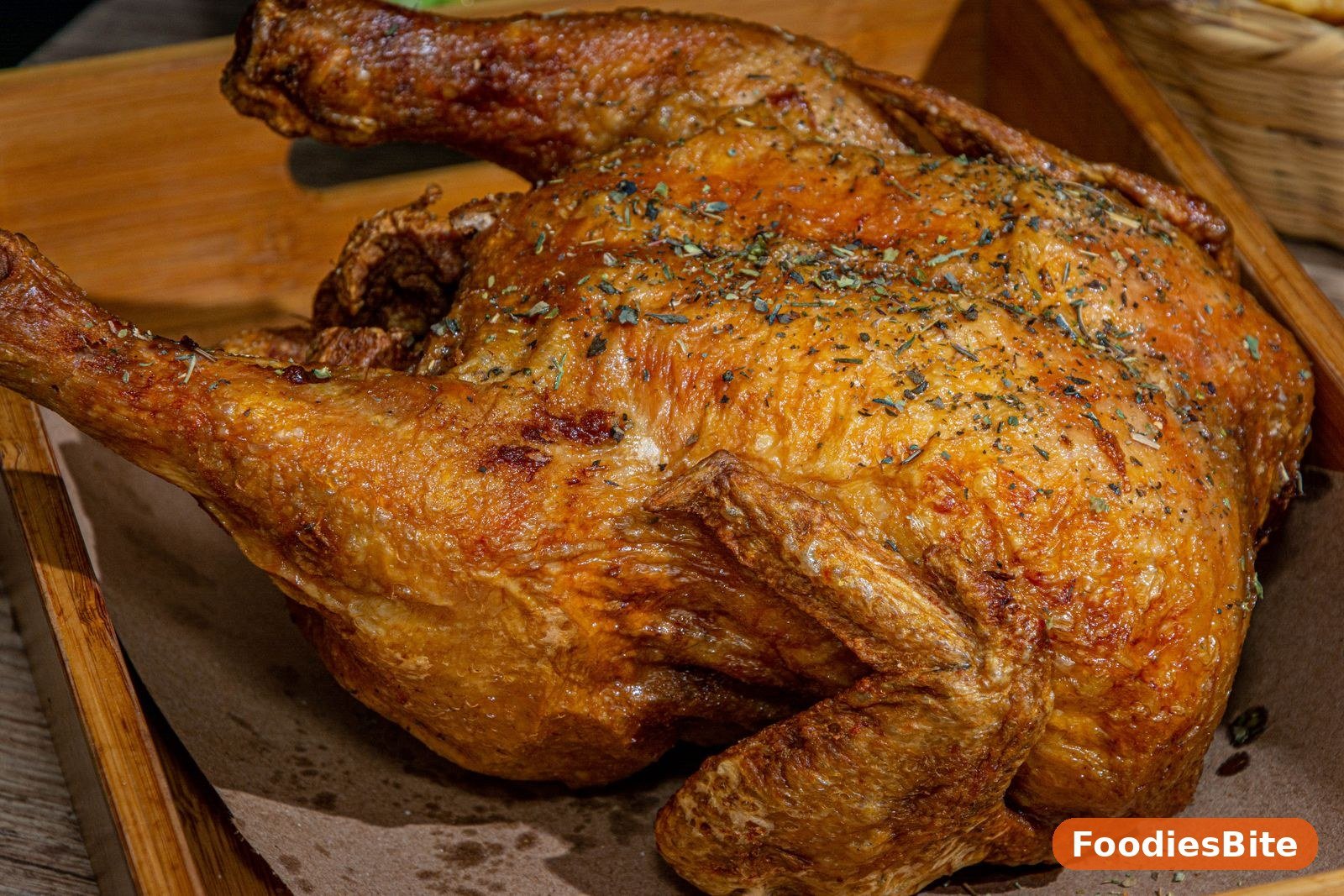
The first reason is the skin. There is nothing in the world quite like properly roasted chicken skin: golden, crackling, salty, and fragrant with garlic and herbs. Getting it right is not difficult — it mostly comes down to drying the skin thoroughly before it goes in the oven and roasting at a high enough temperature — but the result feels like a small miracle every time. If you have ever eaten roast chicken with pale, flabby skin, you know how much difference this makes. This recipe gets the skin right.
The second reason is the flavor. Garlic and herbs do something magical to a roast chicken. The garlic softens inside the cavity and perfumes the meat from the inside out. The herbs — rosemary, thyme, and a little sage if you have it — crisp up on the skin and fill the kitchen with a smell that is, frankly, irresistible. The lemon inside the cavity steams gently as it roasts, keeping the breast meat moist and adding a bright note that cuts through the richness. It is a simple combination, but it is a classic for a reason. If you like garlic-forward chicken, you will also love our easy lemon garlic chicken thighs, which use the same flavors in a much faster weeknight format.
It is also a wonderfully forgiving recipe. A roast chicken does not care if your oven runs a little hot or a little cool, or if you forget to baste it, or if the herbs are dried instead of fresh. It is a sturdy, generous dish that tolerates imperfection gracefully. And it scales beautifully: a small chicken feeds two with leftovers, a large one feeds six, and the method is exactly the same either way. That reliability is why roast chicken has been a Sunday dinner staple for generations, and why it deserves a place in your regular rotation.
Finally, there is the value. A whole chicken is one of the cheapest ways to buy good-quality chicken, and a single bird gives you a roast dinner, sandwiches the next day, and a pot of stock from the carcass. If you are feeding a family on a budget, few meals stretch as far as this one. And unlike a lot of budget cooking, it never feels like a compromise — it feels like a feast.
Ingredients You’ll Need
For a whole roast chicken serving four to six people, you will need one whole chicken, about four to four and a half pounds, preferably free-range or organic if your budget allows. You will also need two tablespoons of unsalted butter, softened, or olive oil if you prefer, six cloves of garlic — four minced and two left whole — one lemon, halved, one small onion, quartered, a tablespoon of fresh rosemary leaves chopped, a tablespoon of fresh thyme leaves, a teaspoon of fresh sage chopped if you have it, one and a half teaspoons of kosher salt, a teaspoon of black pepper, and a tablespoon of olive oil for the vegetables. For the pan, gather one pound of baby potatoes, halved, two large carrots cut into chunks, and one more onion, quartered.
Choosing the chicken matters more than anything else in this recipe. A good-quality bird — free-range, organic, or from a butcher you trust — will have better flavor, better texture, and skin that crisps beautifully. It will also cost more, and that is a real consideration. A standard supermarket chicken will still make a very good roast; just make sure it is fresh, with no off smell, and that the skin is intact. Take the chicken out of the refrigerator thirty minutes before cooking so it comes closer to room temperature — a cold bird goes into a hot oven and the outside overcooks before the inside catches up.
The herbs are flexible. Rosemary and thyme are the classic pairing, and they are what I use most often, but sage, oregano, and marjoram all work well. Fresh herbs are better than dried here, because they go under the skin and on top of it, and their flavor is brighter and more fragrant. If you only have dried herbs, use a third of the amount — a teaspoon of dried rosemary and a teaspoon of dried thyme — and mix them into the butter rather than scattering them on the skin. The garlic is non-negotiable, though: it softens inside the cavity and flavors the meat from within, and the roasted garlic cloves that come out of the pan are sweet, soft, and absolutely delicious spread on bread.
For the vegetables in the pan, potatoes and carrots are the classic choice, and they are wonderful roasted in the chicken drippings. But you can use whatever you have: parsnips, sweet potatoes, butternut squash, or Brussels sprouts all roast beautifully underneath a chicken. The vegetables cook in the juices that drip from the bird, which is why they taste so much better than vegetables roasted on their own. If you want more ideas for what to roast alongside, the roasted vegetables recipes at BBC Good Food have plenty of inspiration.
How to Make Whole Roast Chicken with Garlic and Herbs
Start by preheating your oven to 425°F (220°C). A hot oven is essential for crispy skin — a cooler oven will cook the chicken through, but the skin will be pale and soft. While the oven heats, take the chicken out of its packaging and remove the giblets from the cavity if there are any. Save the neck for stock if you like, and discard the rest. Pat the chicken dry inside and out with paper towels, and I mean really dry — press the towels against the skin until they come away barely damp. Dry skin is the single most important factor in getting crispy, golden skin, and it is the step most people skip. If you have time, leave the uncovered chicken in the refrigerator for a few hours or overnight before cooking; the dry air in the fridge dries the skin even further, and the result is noticeably crispier.
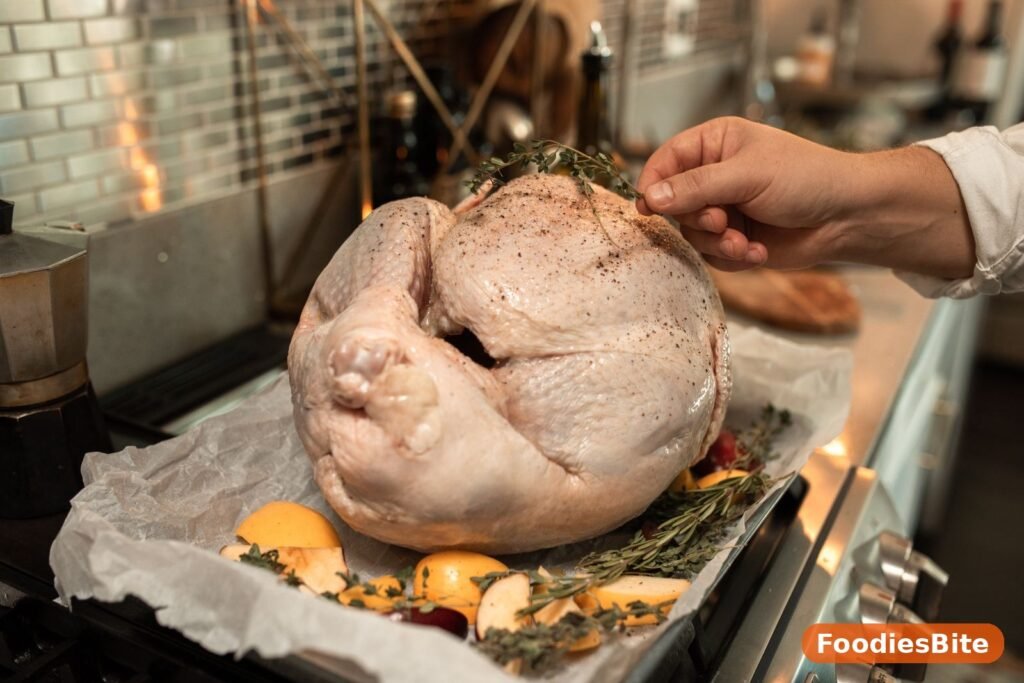
Mix the softened butter with the minced garlic, chopped rosemary, thyme, sage, salt, and pepper in a small bowl. Using your fingers, gently loosen the skin over the breast and thighs, being careful not to tear it, and spread about two-thirds of the herb butter under the skin, massaging it over the meat. Rub the remaining butter all over the outside of the skin. Stuff the cavity with the lemon halves, the whole garlic cloves, and the quartered onion. These aromatics steam gently as the chicken roasts, flavoring the meat from the inside and keeping the breast moist. Tie the legs together with kitchen twine and tuck the wing tips behind the back — this helps the chicken cook evenly and keeps the wing tips from burning.
Toss the potatoes, carrots, and quartered onion with a tablespoon of olive oil, salt, and pepper, and spread them in a single layer in a large roasting pan or a cast iron skillet. Place the chicken on top of the vegetables, breast side up. The chicken will drip juices onto the vegetables as it roasts, and the vegetables will flavor the drippings in return — it is a beautiful arrangement. Slide the pan into the oven and roast for about one hour and fifteen minutes to one hour and thirty minutes, depending on the size of the bird. Baste once or twice during cooking, spooning the pan juices over the breast to keep it moist and help the skin brown.
The chicken is done when the skin is deeply golden and crisp, the juices run clear when you pierce the thickest part of the thigh, and a thermometer inserted into the thickest part of the thigh — without touching the bone — reads 165°F (74°C). The breast should read 165°F as well. If the skin is browning too quickly before the chicken is done, tent the breast loosely with foil for the remaining cooking time. Do not rely on time alone; every oven is different, and a thermometer is the only way to be sure. Once the chicken is done, transfer it to a cutting board and let it rest for fifteen minutes before carving. This rest is not optional: it lets the juices redistribute through the meat, and a chicken carved too soon will lose all of its moisture onto the cutting board. While it rests, toss the vegetables in the pan juices and keep them warm in the turned-off oven.
To carve, cut off the legs and thighs first, then slice the breast meat off the bone in long, even slices. Arrange everything on a platter with the roasted vegetables, spoon some of the pan juices over the top, and scatter with a little extra fresh thyme. Serve it family-style, in the middle of the table, and let everyone help themselves — that is half the joy of a roast chicken. If you have leftover chicken the next day, it makes wonderful quesadillas, and our BBQ chicken quesadillas are a great way to use it up.
Tips for the Best Roast Chicken
The first tip is to dry the skin, and I have said it already, but it bears repeating: dry skin is crispy skin. Pat the chicken dry with paper towels, and if you can, leave it uncovered in the refrigerator for a few hours before cooking. The difference is dramatic. Wet skin steams in the oven and never crisps properly, no matter how hot the oven is.
The second tip is to not overcook the breast. The breast dries out faster than the thighs, and it is the part of the chicken most people judge. A thermometer is your best friend here — pull the chicken from the oven when the thickest part of the thigh reads 165°F, and let carryover heat do the rest during the fifteen-minute rest. The temperature will rise a few degrees while it rests, and the meat will be perfectly juicy. If you are new to cooking chicken in larger cuts, our guide to easy chicken breast recipes with few ingredients has more advice on keeping chicken moist.
Third, do not skip the rest. I know it is tempting to carve the chicken the moment it comes out of the oven — it smells incredible, and everyone is hungry — but fifteen minutes of resting makes an enormous difference. The juices redistribute, the meat relaxes, and the chicken stays moist when you slice it. Use the time to finish the vegetables, make a quick gravy from the pan drippings, or set the table. It is not wasted time; it is part of the cooking.
Finally, save the carcass. After dinner, put the bones, the lemon, and the onion from the cavity into a pot with water, a carrot, a stalk of celery, and a bay leaf, and simmer it for two to three hours. Strain it, and you have homemade chicken stock that is infinitely better than anything from a carton. It freezes well, and it will make your next soup, risotto, or pan sauce taste like you spent all day on it. A roast chicken that gives you dinner, sandwiches, and stock is one of the best value meals in any kitchen.
Variations to Try
The simplest variation is to change the herbs. A Mediterranean version uses oregano, lemon zest, and a little smoked paprika in the butter, and it is wonderful with roasted potatoes and a Greek salad. An autumn version uses sage, a little brown sugar in the butter, and apples and onions in the pan instead of potatoes — the apples soften and caramelize in the chicken drippings, and the result is sweet, savory, and deeply comforting. A spicy version rubs the chicken with harissa or a chili-garlic paste before roasting, and serves it with flatbread and yogurt.
For a stuffed roast chicken, fill the cavity with a simple bread stuffing instead of just aromatics. It takes a little longer to cook, and you need to make sure the stuffing reaches 165°F as well, but the stuffing absorbs the chicken juices and becomes one of the best parts of the meal. Alternatively, roast the chicken on a bed of sliced lemons and fennel instead of potatoes and carrots — the fennel softens and sweetens in the drippings, and it is a lovely change from the usual root vegetables.
If you want a faster version, spatchcock the chicken: cut out the backbone with kitchen shears, press the bird flat, and roast it at 450°F. A spatchcocked chicken cooks in about forty-five minutes, the skin gets even crispier because more of it is exposed to the heat, and the meat cooks more evenly. It looks a little less traditional on the table, but it is the method I use when I am short on time and still want a proper roast. And if you prefer a hands-off, saucy chicken dinner for a busy weeknight, our baked BBQ chicken breast is the easy alternative.
Serving Ideas
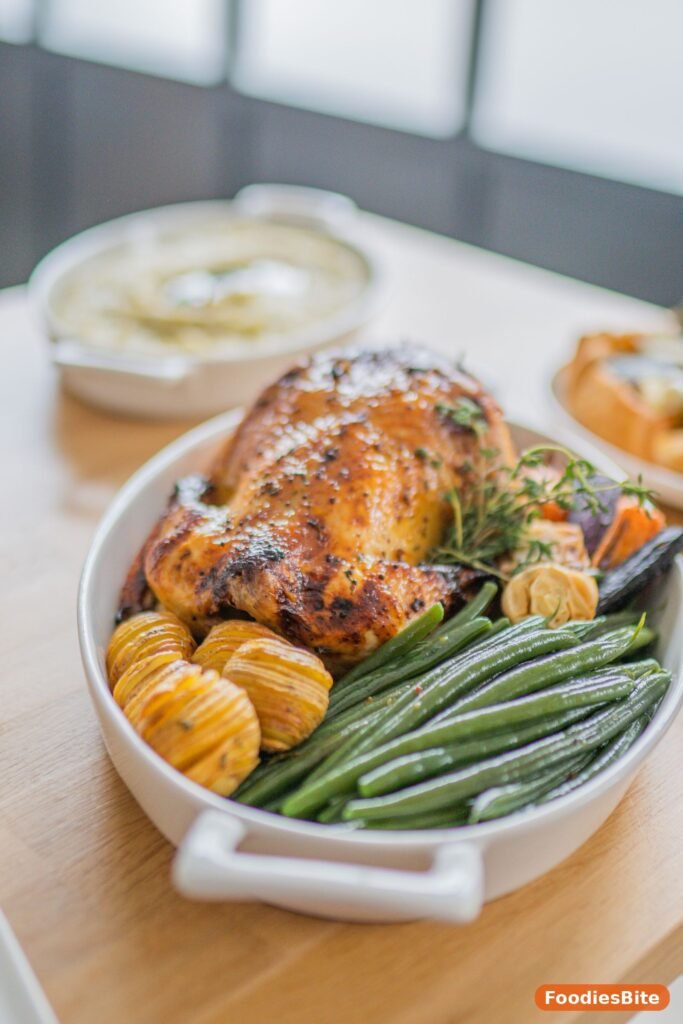
A roast chicken is a centerpiece, so serve it family-style on a large platter, surrounded by the roasted vegetables from the pan, with the pan juices spooned over the top. A simple green salad with a sharp vinaigrette is the perfect contrast to the richness of the chicken, and a basket of crusty bread for mopping up the juices is always welcome. If you want a more traditional Sunday dinner, add creamy mashed potatoes, steamed green beans, and a quick gravy made from the pan drippings — just whisk a tablespoon of flour into the drippings, add a cup of stock, and simmer until thickened.
For a lighter meal, serve the chicken with a big grain salad — farro or couscous with roasted vegetables, herbs, and a lemon dressing — and a simple cucumber salad. The chicken is rich enough that it does not need heavy sides, and a bright, fresh salad makes the whole plate feel balanced. A glass of white wine, like a Chardonnay or a dry Riesling, is a lovely accompaniment, and a sparkling water with lemon is just as good if you are not drinking.
If you are serving a crowd, roast two chickens instead of one large one — they cook faster, the skin gets crispier, and you will have more of the best parts, like the crispy skin and the drumsticks, to go around. Set the table with the platter in the middle, a carving knife and fork, and let everyone help themselves. That is the joy of a roast chicken: it is not a plated, fussy dinner. It is a generous, communal meal.
Storage and Reheating
Leftover roast chicken keeps well in the refrigerator for three to four days. Store the meat in an airtight container, off the bone if you like, and keep the vegetables separately. The skin will lose its crispness in the refrigerator — that is unavoidable — but the meat stays juicy, especially if you store it with a spoonful of the pan juices poured over it.
To reheat, warm the chicken gently in a covered skillet over medium-low heat with a splash of stock, or in a 325°F oven, covered with foil, for about fifteen minutes. The goal is to warm it through without drying it out, so low and slow is the way. If you want to crisp the skin back up, uncover it for the last few minutes and turn the heat up. The microwave works in a pinch, but it tends to make the meat rubbery, so use it only for small portions and reheat in short bursts.
Roast chicken also freezes well. Shred or slice the meat, pack it in freezer bags with a little of the pan juices, and freeze for up to three months. Thaw it overnight in the refrigerator before using it in soups, pasta, sandwiches, or quesadillas. And do not throw away the carcass: simmer it into stock, as described above, and freeze the stock in containers or ice cube trays for future cooking. A roast chicken that gives you three meals is one of the best investments in your kitchen.
Frequently Asked Questions
How long does it take to roast a whole chicken?
A four to four-and-a-half-pound chicken roasted at 425°F takes about one hour and fifteen minutes to one hour and thirty minutes. The general rule is about twenty minutes per pound at this temperature, but every oven is different, and the only reliable test is a thermometer: the thickest part of the thigh should read 165°F, and the juices should run clear. A smaller chicken, around three pounds, will take about an hour; a larger bird, five pounds or more, may need up to one hour and forty-five minutes. Always let the chicken rest for fifteen minutes before carving, which also gives the temperature time to rise a few degrees.
Should I roast a chicken covered or uncovered?
Uncovered, always. Covering the chicken traps steam, and steam is the enemy of crispy skin. An uncovered chicken roasted at a high temperature gets golden, crackling skin and juicy meat. The only exception is if the skin is browning too quickly before the meat is done — in that case, tent the breast loosely with foil for the remaining cooking time, and remove the foil for the last ten minutes so the skin can crisp up again. Do not cover the chicken for the whole roast, or you will end up with pale, soft skin.
What temperature should a roast chicken reach?
The safe internal temperature for chicken is 165°F (74°C), measured in the thickest part of the thigh without touching the bone, and in the thickest part of the breast. The thigh is the best place to check, because it is the last part to cook through. If the thigh reads 165°F, the breast will be done too. Use a quick-read thermometer rather than guessing — it takes the anxiety out of roasting and guarantees juicy, safe chicken every time. Remember that the temperature will rise a few degrees during the fifteen-minute rest, so you can pull the chicken from the oven at 160°F to 162°F if you prefer, though 165°F is the safe target.
Can I roast a chicken without butter?
Yes, absolutely. Olive oil works just as well as butter for rubbing on the skin, and it actually helps the skin crisp up beautifully. You can also use a neutral oil, or a mixture of oil and a little mustard for extra flavor. The butter adds richness and helps the herbs stick to the skin, but it is not essential. If you are avoiding dairy, olive oil is the version to use, and the chicken will still be golden, crispy, and delicious. Just make sure to season generously with salt, because salt is what makes the skin taste good.
Why is my roast chicken dry?
The most common reason is overcooking. Chicken breast dries out quickly once it passes 165°F, so a thermometer is essential — guessing by time alone often leads to an overcooked bird. Another cause is not letting the chicken rest: carving too soon lets all the juices run out onto the cutting board. Skipping the butter or oil under the skin can also contribute, since the fat helps keep the breast moist. Finally, a very lean, small chicken with little fat will dry out more easily than a larger, well-fed bird. Brining can help, but with a good thermometer and a proper rest, most roast chickens come out juicy without any extra steps.
What can I do with leftover roast chicken?
Almost anything. Shred it into soup, stir it into pasta, pile it into sandwiches with mayonnaise and lettuce, or fold it into quesadillas with cheese and barbecue sauce. It is excellent in a chicken salad, tossed with celery, grapes, and walnuts, or in a fried rice. The carcass makes wonderful stock — just simmer it with water, a carrot, a stalk of celery, and a bay leaf for two to three hours, then strain and freeze it. A single roast chicken can easily give you a roast dinner, two days of lunches, and a pot of stock, which is why it is one of the best value meals you can cook.