
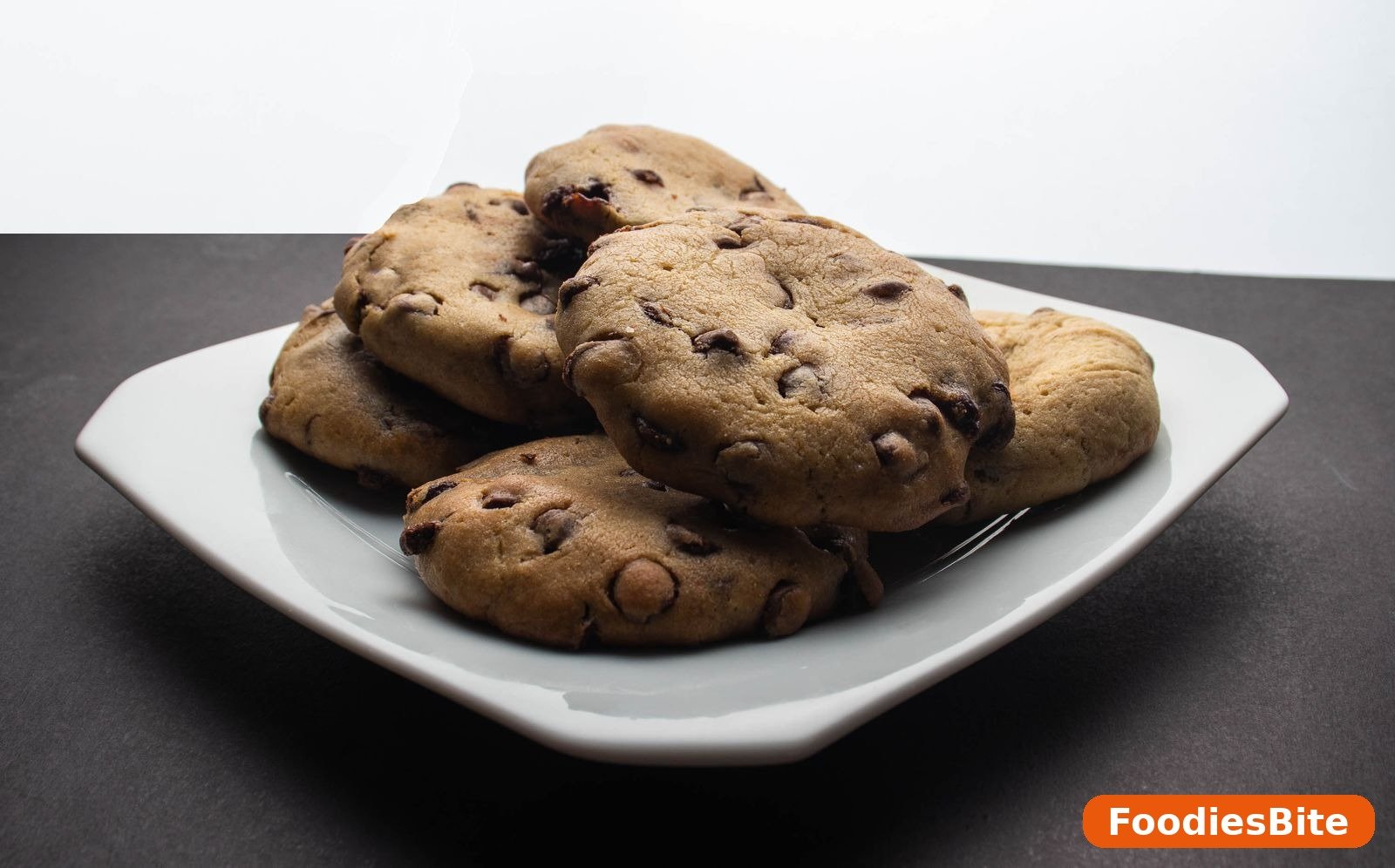
Small Batch Chocolate Chip Cookies Without Brown Sugar
Sometimes the craving is small. You want two warm cookies with a cup of tea, not three dozen sitting on the counter for a week. That is the whole idea behind a small batch: just enough to satisfy the craving, made in one bowl, with ingredients you probably already have.
This recipe makes eight to ten chocolate chip cookies without a single spoonful of brown sugar. That matters on the many evenings when the brown sugar jar turns out to be empty, hard as a brick, or simply absent from the pantry. Granulated white sugar steps in beautifully, giving cookies with lightly crisp edges, soft centres, and plenty of buttery flavour.
Small batch baking has other charms too. There is less measuring, less washing up, and no pressure to eat cookies for days or give them away. You can bake on a whim, on a weeknight, in under half an hour from deciding to first bite. This guide covers the recipe itself, why it works without brown sugar, and every adjustment you might want to try.
Why Brown Sugar Is Not Essential
Traditional chocolate chip cookies often use a mix of white and brown sugar. Brown sugar is simply white sugar with molasses added, and that molasses brings moisture, a hint of caramel flavour, and a chewier texture. It is lovely, but it is not the only path to a good cookie.
White sugar alone produces a slightly different, equally delicious cookie. The edges crisp a little more, the flavour leans more purely buttery and vanilla-forward, and the centres stay soft if you bake them correctly. Many bakers actually prefer this cleaner taste, where the butter and chocolate are the stars rather than the molasses.
The chocolate chip cookie has been adapted countless times since its invention, and sugar variations are among the most common. Using all white sugar is one of the oldest and simplest variations, and it works because the rest of the recipe — butter, egg, flour, leavening — does the structural work regardless of which sugar you choose.
If you ever do have brown sugar and want a chewier result, you can swap half the white sugar for it in this same recipe. But when the jar is empty, there is no need for a grocery trip. The white-sugar version stands on its own.
Ingredients and What Each One Does
You need only a short list, and every item earns its place.
Butter, softened to room temperature, gives flavour and tenderness. It should dent easily when pressed but not look greasy or melted. Butter that is too cold will not cream properly, and melted butter makes cookies spread thin. Take it out of the fridge about thirty minutes before baking.
Granulated sugar provides sweetness and crisp edges. One cup, measured level, is right for this batch size. A pinch of salt sharpens everything and stops the cookies tasting flat — never skip it, even in sweet baking.
One egg binds the dough and adds richness. Use a large egg at room temperature if possible; a cold egg can make the butter seize. Vanilla extract adds the warm, familiar background note that makes cookies smell like cookies. A full teaspoon is worth it.
Plain flour gives structure. Too much flour makes dry, cakey cookies, so spoon the flour into your measuring cup and level it off rather than scooping straight from the bag, which packs it down. Baking soda, just half a teaspoon, gives lift and spread. Finally, chocolate chips — about a cup — provide the melty pockets that define the cookie. Semi-sweet chips are the classic choice, but milk or dark chips work equally well.
A note on measuring: small batches are less forgiving of measuring errors than large ones, because a single extra tablespoon of flour is a bigger proportion of the total. Measure carefully, level off cups, and the recipe will behave.
The Recipe, Step by Step
Start by heating your oven to 180°C (350°F) and lining a baking tray with baking paper. The paper prevents sticking and makes cleanup trivial.
Beat the softened butter and sugar together in a medium bowl until the mixture looks pale and fluffy, about two minutes with a wooden spoon or electric whisk. This creaming step traps tiny air pockets that help the cookies rise and stay light, so do not rush it.
Beat in the egg and vanilla until fully combined, scraping down the sides of the bowl once. Then add the flour, baking soda, and salt, and stir just until no dry flour remains. Overmixing at this stage develops gluten and makes tough cookies, so stop as soon as the dough comes together. Fold in the chocolate chips last, distributing them evenly.
Scoop the dough into balls of about two tablespoons each, spacing them well apart on the tray — they will spread. Eight to ten balls is the right count for this batch. If you like thicker cookies, chill the scooped balls for fifteen minutes before baking; chilled dough spreads less and bakes up chunkier.
Bake for ten to twelve minutes. The cookies are done when the edges look set and lightly golden but the centres still look slightly soft and puffy. They will firm up as they cool, and pulling them at this stage is the secret to soft centres. If you wait until they look fully firm in the oven, they will be hard once cool.
Let the cookies sit on the tray for five minutes, then move them to a wire rack. That resting time lets them set enough to lift without breaking, while keeping the centres tender.

Adjusting Texture to Your Taste
Cookie texture is personal, and small changes shift it predictably.
For chewier cookies, bake at the shorter end of the time and use slightly less flour — two tablespoons less makes a noticeable difference. For crisper cookies, bake a minute or two longer and flatten each dough ball slightly before baking.
For thicker, bakery-style cookies, chill the dough for at least thirty minutes, or even overnight. Cold dough spreads slowly, so the cookies bake up tall with gooey middles. If you chill overnight, let the dough sit at room temperature for ten minutes before scooping so it is workable.
Add-ins are easy in a small batch because you are only risking a few cookies. A handful of chopped nuts adds crunch, a pinch of flaky sea salt on top before baking adds a grown-up contrast, and a spoonful of cocoa powder swapped for flour turns them chocolatey throughout. Keep add-ins to about half a cup total so the dough still holds together.
Common Problems and Fixes
Cookies that spread into thin discs usually mean the butter was too warm or the dough was too warm. Chill the dough, check your oven temperature with a thermometer if you suspect it runs hot, and make sure you measured the flour properly. Warm kitchens in summer make this more likely, so chilling is your friend.
Cookies that stay pale and puffy may be underbaked or made with too much flour. Bake until the edges colour, and measure flour by spooning and levelling rather than scooping.
Cookies that taste bland almost always need more salt or more vanilla. A pinch of extra salt transforms a flat cookie, and real vanilla extract beats imitation for flavour depth.
Dry, crumbly cookies usually mean too much flour or too long in the oven. Remember that cookies continue cooking on the hot tray after you take them out, so pulling them while the centres look soft is correct, not underdone.
Serving and Storing
These cookies are at their best warm, about ten minutes out of the oven, when the chocolate is still soft. A glass of cold milk is the classic pairing, and a scoop of vanilla ice cream between two warm cookies makes an instant dessert.
Stored in an airtight container, the cookies keep for three to four days at room temperature. A slice of bread tucked into the container helps keep them soft, as the cookies absorb moisture from the bread. For longer storage, freeze the baked cookies for up to three months, or freeze scooped dough balls and bake straight from frozen, adding two minutes to the baking time.
Baking a small batch on demand beats storing a large one for most households. The dough comes together in ten minutes, so fresh cookies are never far away. That is the real luxury of this recipe: warm cookies whenever you want them, with no leftovers to manage.

Choosing Your Chocolate
The chocolate you choose shapes the cookie more than any other single ingredient, so it is worth a moment of thought. Semi-sweet chips are the classic for a reason: they are sweet enough to feel like a treat but dark enough to balance the buttery dough. Milk chocolate chips make a sweeter, softer cookie that children tend to prefer, while dark chocolate chunks give a more grown-up result with pools of melted chocolate rather than neat chips.
Chopped chocolate bars behave differently from chips. Chips hold their shape because they contain stabilisers, which is why they stay as distinct drops in the baked cookie. Chopped bar chocolate melts into irregular pools and streaks, which many bakers prefer for a bakery-style look and a more luxurious texture. If you use a bar, chop it roughly so you get a mix of small shards and larger chunks — the variety is part of the pleasure.
Cocoa percentage is a useful guide but not a strict rule. Anything between fifty and seventy percent cocoa works well in this recipe. Below that, the cookies can taste overly sweet; above that, the chocolate can taste bitter against the simple dough. Taste a piece of your chocolate before baking if you are unsure — if you enjoy eating it plain, you will enjoy it in the cookie.
Quantity matters too. A full cup of chips for this small batch gives a generous chocolate presence in every bite. If you prefer a more dough-forward cookie, reduce to three-quarters of a cup. If you want an extra-chocolatey result, go up to a cup and a quarter, but no further, or the dough will struggle to hold together.
Baking for One or Two
Small batch baking suits modern life. Many households are one or two people, and a full recipe’s worth of cookies is simply too much. This recipe respects that. It uses one egg, one bowl, and one tray, and it scales easily: halve it for four cookies, or double it when friends are coming.
It is also a gentle introduction to baking for beginners. The steps are short, the ingredients are familiar, and the result arrives quickly enough to keep a new baker encouraged. If you are teaching a child to bake, a small batch is the perfect size — short attention spans and warm cookies are a good match.
The broader world of cookies is enormous, from crisp biscotti to soft shortbread, but the chocolate chip cookie remains the benchmark. Master this small, brown-sugar-free version and you have a foundation for dozens of variations.
For a savoury balance to your baking day, try our easy chicken skillet recipes for dinner and the crispy potatoes as a side. And for more sweet ideas, browse the full Desserts & Baking collection or return to the FoodiesBite homepage for fresh inspiration.
Frequently Asked Questions
Can I really make chocolate chip cookies without brown sugar?
Yes. Granulated white sugar works perfectly well and produces cookies with crisp edges, soft centres, and a clean buttery flavour. Brown sugar adds moisture and caramel notes, but it is not required for structure or taste. This recipe is built around white sugar from the start.
How many cookies does a small batch make?
This recipe makes eight to ten cookies, depending on how large you scoop them. That is enough for two to four people to enjoy fresh cookies without leftovers piling up. You can halve it for four cookies or double it for a crowd.
Why did my cookies spread flat?
The most common causes are butter that was too soft or melted, warm dough, or too little flour. Chill the scooped dough for fifteen to thirty minutes before baking, measure flour by spooning and levelling, and make sure your butter is soft but not greasy.
How do I keep the centres soft?
Pull the cookies from the oven while the centres still look slightly soft and puffy, even if the edges are golden. They firm up on the hot tray over the next five minutes. Waiting until they look fully firm in the oven guarantees hard cookies once cooled.
Can I freeze the dough?
Yes. Scoop the dough into balls, freeze them on a tray until solid, then store in a bag for up to three months. Bake straight from frozen at the same temperature, adding about two minutes to the baking time. Fresh cookies on demand, with no extra effort.




One Comment