Baked BBQ Chicken Breast Easy
Baked BBQ chicken breast is proof that you do not need a grill, a smoker, or a sunny afternoon to enjoy barbecue chicken. With a simple spice rub, a good bottle of barbecue sauce, and a hot oven, you get juicy chicken with a sticky, caramelized glaze in about thirty minutes, using one baking dish and almost no attention. It is the kind of dinner that works on a Tuesday night just as well as it does at a weekend gathering, and it is forgiving enough for a beginner cook.
The reason so many baked chicken breasts turn out dry is not the oven. It is uneven thickness. A chicken breast is naturally thick at one end and thin at the other, so the thin end overcooks long before the thick end is done. This recipe fixes that first, by pounding the breasts to an even thickness, and then everything else becomes easy. The spice rub builds flavor, the sauce goes on in two layers so it glazes instead of burning, and a short rest at the end keeps the juices where they belong. If you enjoy straightforward chicken dinners, you will find more of them in our Chicken Recipes collection.
This guide walks through the whole method: choosing and preparing the chicken, the spice rub, the two-stage saucing technique, oven temperature and timing, and the sides that turn it into a complete meal. No special equipment is needed, and the cleanup is a single baking dish and a brush.
Why Baked BBQ Chicken Breast Works
Baking is the most reliable way to cook chicken breast evenly, because the oven surrounds the meat with steady heat rather than blasting it from one side the way a pan does. That gentle, even heat is exactly what a lean cut like breast needs. The risk with baking is dryness, but that risk is managed here in three ways: even thickness, a rub that includes a little oil and sugar for moisture and browning, and sauce applied late so it glazes rather than drying out.
The two-stage sauce method is the key detail. Barbecue sauce contains sugar, and sugar burns quickly at high oven temperatures. If you coat the chicken in sauce from the start and bake it for half an hour, the sauce can turn dark and bitter before the chicken is cooked. Instead, this recipe bakes the rubbed chicken mostly plain, then brushes on the first layer of sauce for the last ten minutes and a second layer for the final few minutes. The sauce heats through, thickens, and caramelizes just enough to turn sticky and glossy, without ever getting the chance to burn.
Another advantage of baking is that it scales effortlessly. Two breasts or eight, the method is the same, and the oven does the work while you prepare the sides. That makes baked BBQ chicken breast a strong choice for family dinners and for meal prep, because the cooked chicken slices beautifully for sandwiches, salads, and wraps through the week.
Choosing and Preparing the Chicken
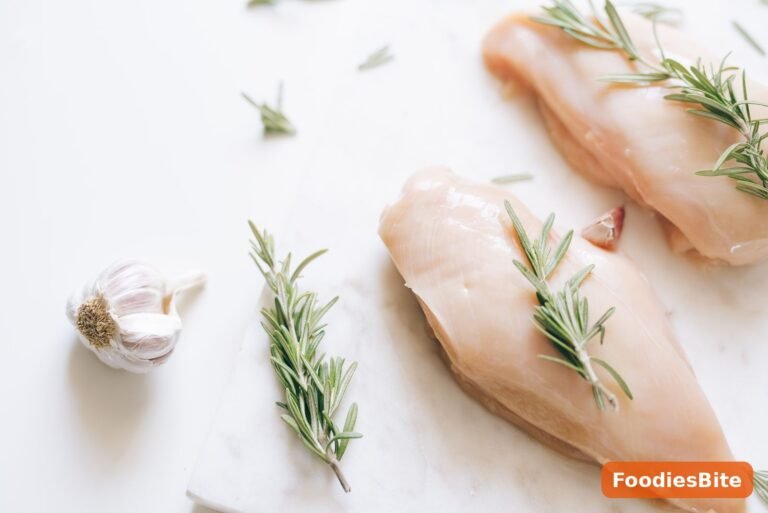
Start with boneless, skinless chicken breasts of roughly similar size, about six to eight ounces each. If they vary a lot in size, the smaller ones will finish sooner, so either buy a matched pack or plan to pull the smaller pieces out a few minutes early. Place each breast between two sheets of parchment paper or inside a zip-top bag and pound it gently with a rolling pin or the flat side of a meat mallet until it is an even three-quarter inch thick. Focus on the thick end, and stop when the breast is uniform. This single step does more for juicy results than any marinade.
Pat the chicken dry with paper towels before seasoning. Dry surfaces brown better and hold the rub more evenly. If you have time, you can season the chicken up to a day ahead and refrigerate it uncovered; the dry air of the fridge dries the surface further and the salt penetrates the meat, which improves both flavor and texture. If you are cooking tonight, ten minutes at room temperature after seasoning is enough to take the chill off and help the chicken cook evenly.
Always cook chicken breast until it reaches 74°C (165°F) at the thickest part, measured with an instant-read thermometer. This is the safe internal temperature, and it is also the point where the meat is fully cooked but still juicy, provided the thickness was even. Do not rely on color or on cutting into the meat to check, because both methods are unreliable and cutting releases juices. A thermometer takes two seconds and removes all doubt.
The Spice Rub
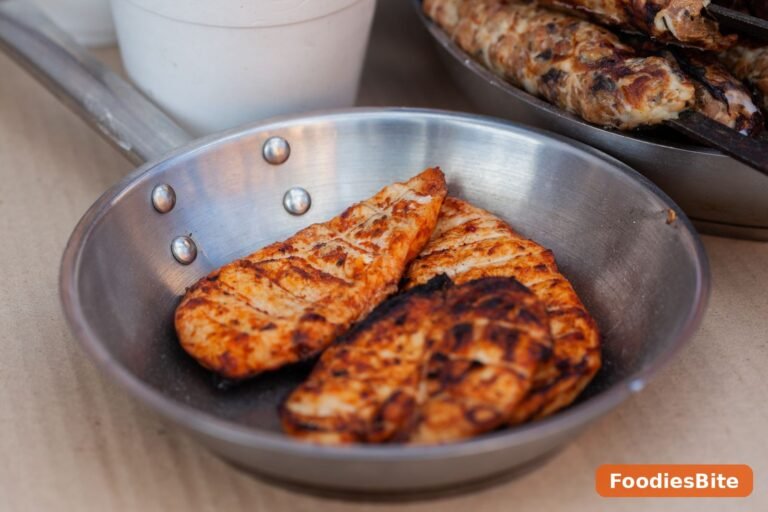
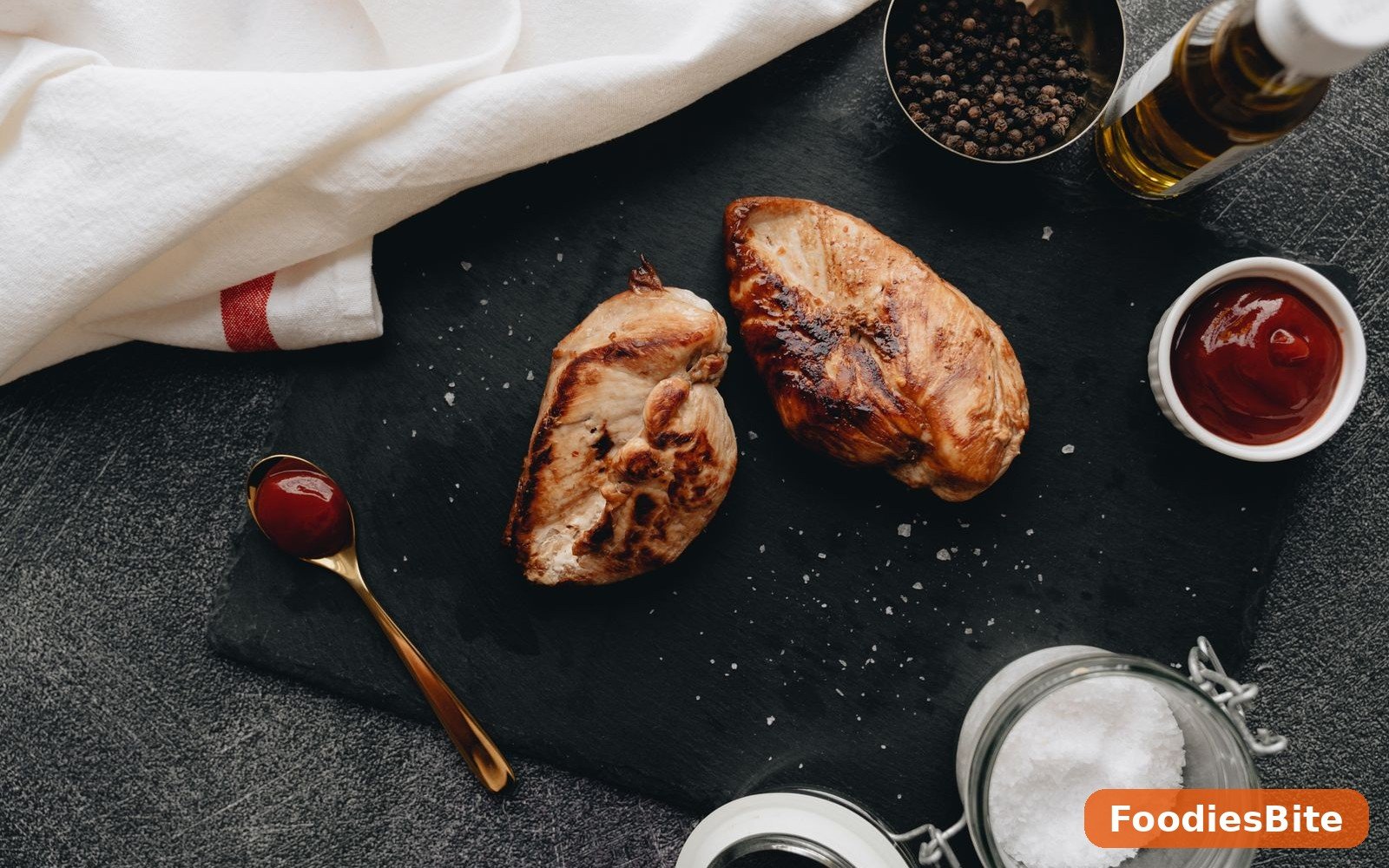
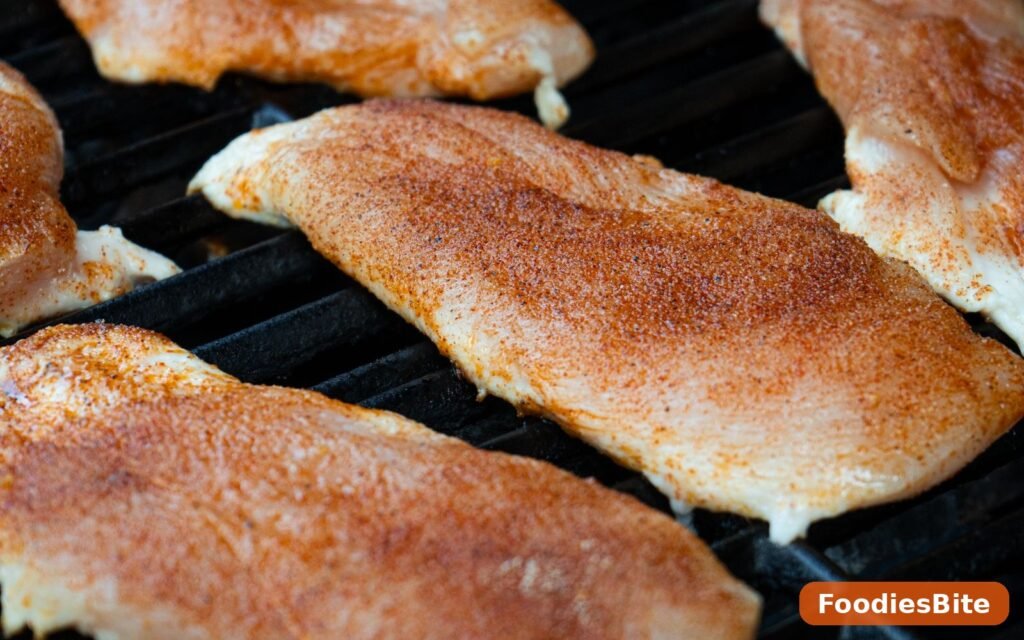
The spice rub for baked BBQ chicken breast is simple on purpose: one teaspoon of smoked paprika, one teaspoon of garlic powder, half a teaspoon of onion powder, half a teaspoon of salt, half a teaspoon of black pepper, and a quarter teaspoon of cayenne pepper if you like a little heat. That is enough for four breasts. Rub the mixture over the chicken with a drizzle of olive oil, about one tablespoon in total, which helps the spices stick and encourages browning.
Smoked paprika is the ingredient that gives the chicken its barbecue character even without a grill. It adds a warm, smoky depth that regular paprika does not provide, and it colors the chicken a beautiful reddish brown. If you only have sweet paprika, use it, but the smoky version is worth buying for this recipe and for many others. Garlic and onion powder build a savory base, while the small amount of cayenne adds warmth without making the dish spicy. Leave it out entirely if you are cooking for children.
You can also add half a teaspoon of brown sugar to the rub if you like a sweeter, more caramelized crust. The sugar helps the surface brown and complements the barbecue sauce, but it also burns more easily, so keep the oven temperature at 200°C (400°F) rather than higher. If you prefer a sugar-free version, skip it; the sauce will provide the sweetness. Store any leftover rub in a small jar for up to three months, and you will have the seasoning ready for the next batch.
How to Make Baked BBQ Chicken Breast
Preheat the oven to 200°C (400°F) and line a baking dish or rimmed baking tray with foil or parchment paper for easy cleanup. Place the pounded, seasoned breasts in the dish with a little space between them. Crowding steams the chicken and prevents browning, so use a dish large enough that the pieces do not touch. If you are doubling the recipe, use two dishes rather than squeezing everything into one.
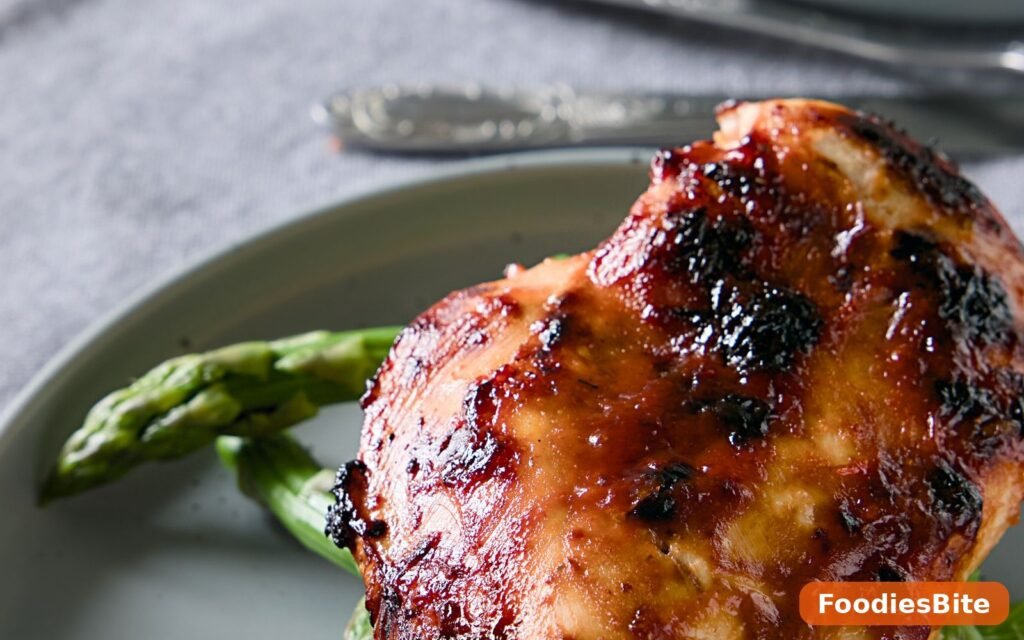
Bake the chicken uncovered for fifteen minutes. At this point the chicken will be mostly cooked but pale. Remove the dish from the oven and brush each breast generously with barbecue sauce. Return the dish to the oven for five minutes, then brush on a second layer of sauce and bake for a further five minutes, or until the thickest part reads 74°C (165°F). The total baking time is usually twenty-five to thirty minutes, depending on the size of the breasts. If your oven runs hot, check the temperature at twenty-two minutes.
Let the chicken rest for five minutes before slicing, tented loosely with foil. Resting lets the juices redistribute through the meat instead of running out onto the cutting board. This is especially important for breast meat, which has little fat to keep it moist. Slice against the grain for the most tender bite, and spoon any sauce from the dish over the sliced chicken. The sauce in the dish is perfectly good to serve, since it cooked alongside the chicken and picked up its flavor.
Barbecue Sauce Choices
Barbecue sauce comes in many regional styles, and almost any bottled sauce works well in this recipe. Kansas City style sauces are thick, sweet, and tomato-based, and they glaze beautifully. Carolina-style sauces are thinner and vinegar-based, with a tangier flavor that cuts through the richness of the chicken. Smoky or chipotle sauces add heat and depth, while honey barbecue sauces lean sweeter and are popular with children. Choose the style your household likes best, because the sauce is the dominant flavor in the finished dish.
If you want to make your own sauce, a quick version takes ten minutes: simmer one cup of tomato ketchup with two tablespoons of brown sugar, one tablespoon of apple cider vinegar, one teaspoon of smoked paprika, half a teaspoon of garlic powder, and a pinch of salt until it thickens slightly. It will not taste identical to a long-simmered sauce, but it is fresh, it has no preservatives, and you control the sweetness. Homemade sauce also lets you adjust the heat precisely, which is useful when cooking for mixed ages.
One caution: do not use sauce straight from the brush back into the bottle. Once a brush has touched raw or partially cooked chicken, it carries bacteria, so pour the sauce you need into a small bowl and discard any leftover from that bowl. This is a small food-safety habit that matters, and it applies to any recipe where sauce is brushed onto meat during cooking.
Serving Ideas
Baked BBQ chicken breast pairs naturally with classic barbecue sides. Coleslaw adds cool crunch and a tangy contrast to the sweet glaze, and it takes five minutes to make from shredded cabbage, carrot, mayonnaise, vinegar, and a pinch of sugar. Corn on the cob, baked beans, and potato salad are all traditional partners, and they turn the dinner into a cookout-style meal without anyone having to stand at a grill.
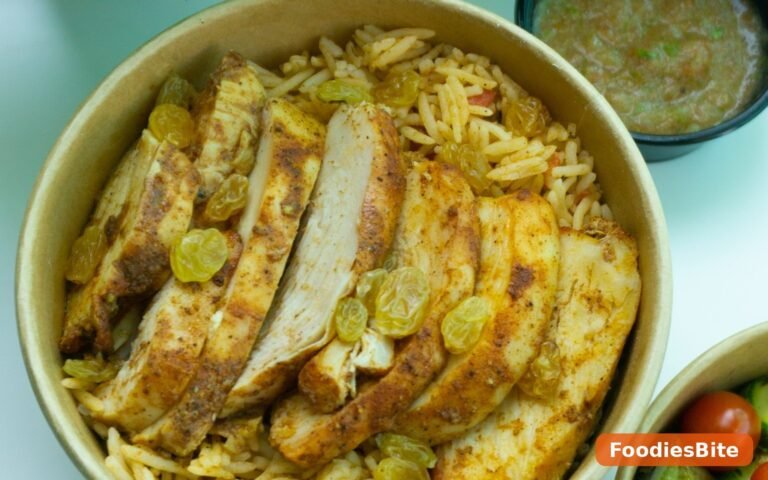
For a lighter weeknight plate, serve the chicken with roasted vegetables and a simple green salad, or slice it over a grain bowl with rice, black beans, and avocado. The sliced chicken is also excellent in sandwiches: pile it onto a toasted bun with extra sauce, pickles, and coleslaw for a barbecue chicken sandwich that rivals a restaurant version. Leftover chicken keeps in the refrigerator for up to three days and is wonderful cold in wraps with lettuce and a smear of sauce.
If you are building a repertoire of beginner-friendly chicken dinners, our guide to easy skillet chicken recipes for beginners covers stovetop methods that complement this oven recipe, and our easy chicken skillet recipes without oven collection is useful for nights when the oven is busy.
Variations Worth Trying
Once the basic baked BBQ chicken breast is comfortable, it adapts easily. For a Hawaiian twist, top the sauced chicken with a pineapple ring and a slice of cheese during the last five minutes of baking, so the cheese melts and the pineapple warms through. For a spicy version, mix a tablespoon of hot sauce into the barbecue sauce before brushing, and add extra cayenne to the rub. For a smoky bacon version, wrap each breast in two slices of bacon before baking and add five minutes to the cooking time; the bacon bastes the chicken as it cooks.
You can also turn this recipe into BBQ chicken pizza topping or a topping for baked potatoes. Dice the cooked chicken, toss it with extra sauce, and pile it onto a baked potato with cheese and spring onions for a filling lunch. Or shred it for BBQ chicken nachos, layering it over tortilla chips with cheese and baking until the cheese melts. These uses make the recipe do double duty, which is a practical bonus when you are cooking for a busy household.
For a lower-sugar version, choose a sugar-free barbecue sauce and skip the brown sugar in the rub. The chicken will still glaze nicely, because most sugar-free sauces contain thickeners that caramelize, though the color will be a little less deep. Taste and adjust the seasoning, and remember that the safe temperature target stays the same: 74°C (165°F).
Common Mistakes to Avoid
The most common mistake with baked BBQ chicken breast is skipping the pounding step. Uneven breasts mean one end dries out while the other finishes, and no sauce can rescue dry meat. The second mistake is saucing too early, which burns the sugar in the sauce and turns it bitter. Wait until the last ten minutes, and use two thin layers rather than one thick one. The third mistake is overcooking out of caution. Breast meat goes from juicy to dry quickly past 74°C (165°F), so use a thermometer and pull the chicken as soon as it reaches temperature; carryover heat will add a degree or two during the rest.
The fourth mistake is slicing immediately. Resting for five minutes makes a real difference in juiciness, so use that time to finish the sides and set the table. Finally, do not forget to line the baking dish. Barbecue sauce bakes onto unlined dishes stubbornly, and cleanup becomes the worst part of an otherwise easy dinner. Foil or parchment paper turns it into a thirty-second job.
Frequently Asked Questions
How long do you bake BBQ chicken breast?
At 200°C (400°F), an even three-quarter-inch breast usually takes twenty-five to thirty minutes in total: fifteen minutes plain, then ten minutes with sauce applied in two layers. Always confirm with a thermometer rather than relying on time alone, because breast size and oven accuracy vary. The target is 74°C (165°F) at the thickest part.
Can I use chicken thighs instead of breasts?
Yes, boneless skinless thighs work very well and are more forgiving, because their extra fat keeps them juicy even if they cook a little longer. Pound them to an even thickness as well, and expect a similar baking time, though thighs often need a few extra minutes. Check the temperature in the same way: 74°C (165°F) at the thickest part.
Do I need to marinate the chicken first?
No marinade is needed for this recipe. The spice rub and the two layers of sauce provide plenty of flavor, and pounding the chicken to an even thickness does more for juiciness than a short marinade. If you want to marinate, a simple mixture of barbecue sauce and a little oil for one to four hours works, but do not marinate longer than that in a sugary sauce, because the sugar can make the surface burn.
How do I keep baked chicken breast from drying out?
Pound it to an even thickness, do not overcook it past 74°C (165°F), and rest it for five minutes before slicing. Using a baking dish that fits the chicken without crowding also helps, because crowded chicken steams instead of roasting. Chicken breast is a lean cut, so these three steps matter more here than with darker, fattier cuts.
What should I serve with baked BBQ chicken breast?
Coleslaw, corn on the cob, baked beans, potato salad, roasted vegetables, and rice all pair beautifully. For a quick plate, choose one starchy side and one fresh vegetable side, and let the chicken and its glaze be the star. You can find more weeknight ideas on the FoodiesBite homepage, where new recipes are added regularly.