Easy Chicken Fajitas Skillet
Easy chicken fajitas skillet is the dinner that turns an ordinary weeknight into something fun. Sizzling strips of chicken, sweet peppers, and onions, all cooked in one pan, served with warm tortillas and a table full of toppings that everyone can choose for themselves. It is fast, it is colorful, it is interactive, and it is one of the most reliable crowd-pleasers you can make in thirty minutes. If your family has different tastes, fajitas are the answer, because everyone builds their own.
The beauty of a skillet fajita is that the cooking is simple and the serving is the event. The chicken and vegetables cook in a single pan with a smoky, cumin-scented seasoning, and then the pan goes to the table, still sizzling, while tortillas, salsa, sour cream, guacamole, and cheese wait nearby. Children love choosing their own toppings, adults love that dinner is ready fast, and the cook loves that there is only one pan to wash. This guide covers the seasoning, the slicing, the searing, and the toppings, so your fajitas taste like they came from a good Mexican restaurant. If you enjoy skillet dinners, our easy chicken skillet recipes without oven has more one-pan ideas, and you will find similar meals in our One-Pan & Skillet Meals collection.
What Makes a Fajita a Fajita
A fajita is, at its simplest, grilled meat and vegetables served with tortillas and toppings, and its history is part of its charm. The dish comes from the ranching culture of Texas, where workers were given less prized cuts of beef, which they grilled over open fires, sliced thin, and wrapped in tortillas. The name comes from the Spanish word for a strip or belt, referring to the strips of meat. Over time, chicken fajitas became just as popular as beef, because chicken cooks faster, is more affordable, and takes seasoning beautifully.
What distinguishes a fajita from a stir-fry or a taco filling is the combination of elements: well-seasoned, seared strips of meat, charred peppers and onions, warm flour tortillas, and fresh toppings. Each part matters. The meat should be sliced thin and cooked quickly over high heat, so it stays tender. The peppers and onions should be softened but still have a little bite, with charred edges that add smokiness. The tortillas should be warm and pliable, so they wrap without tearing. And the toppings should be fresh and varied, so every person can build a fajita that suits them.
Chicken fajitas are a particularly good weeknight choice, because chicken cooks in minutes and the whole dish comes together in one pan. Unlike beef fajitas, which traditionally need a tougher cut sliced very thin and cooked very fast, chicken is forgiving. Breast or thigh meat both work, the seasoning is simple, and the result is juicy and flavorful even if your timing is not perfect. For a family dinner that feels like an occasion without requiring occasion-level effort, chicken fajitas are hard to beat.
Ingredients You Need
For four servings of easy chicken fajitas skillet, you need one and a half pounds of boneless chicken, three bell peppers in different colors, one large onion, and tortillas and toppings. For the chicken, breasts or thighs both work, sliced into thin strips about half an inch wide. For the peppers, a mix of red, yellow, and green looks beautiful and tastes slightly different in each color: red and yellow are sweeter, green is a little sharper. One large onion, sliced into thin strips, completes the vegetables.
The fajita seasoning is a simple blend you can mix from pantry spices: one teaspoon of chili powder, one teaspoon of cumin, one teaspoon of paprika, half a teaspoon of garlic powder, half a teaspoon of onion powder, half a teaspoon of salt, and half a teaspoon of black pepper. A pinch of cayenne pepper is optional, for those who like heat. You will also need two tablespoons of olive oil, the juice of one lime, and a handful of fresh cilantro for finishing. Cumin is the signature flavor here. Its warm, earthy character is what makes fajita seasoning taste like fajita seasoning, so do not skip it, and use fresh spices if yours have been sitting in the cupboard for years.
For serving, you need eight to twelve flour tortillas, warmed, and toppings of your choice. The classics are salsa, sour cream, guacamole or sliced avocado, shredded cheese, and extra lime wedges. Shredded lettuce, diced tomatoes, and sliced jalapeños are also welcome. You do not need every topping; even three good ones make a complete meal. The key is freshness: a bright salsa and a ripe avocado do more for fajitas than any number of elaborate extras.
Slicing the Chicken and Vegetables
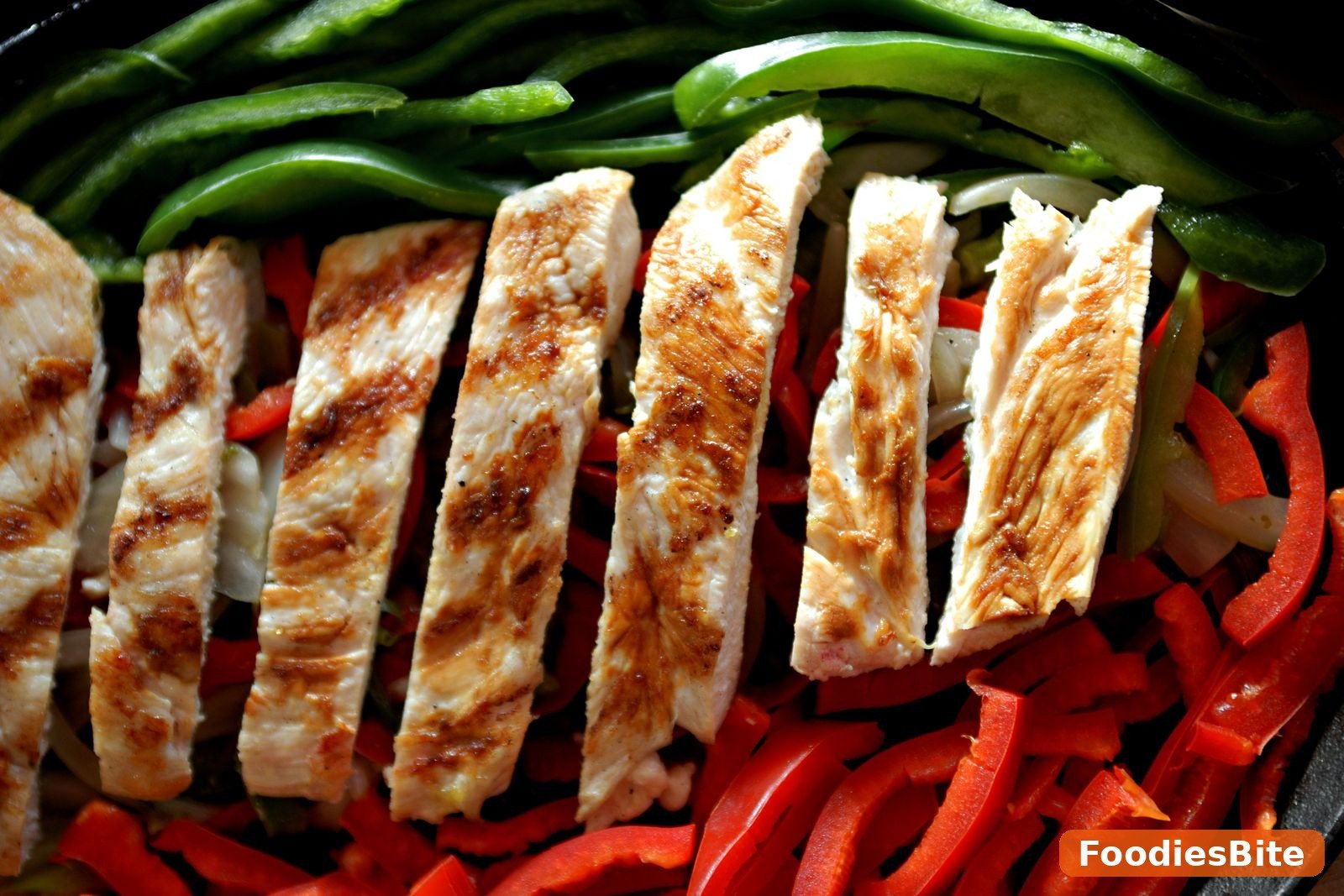
How you slice the ingredients affects how fajitas cook and eat, and it is worth doing carefully. For the chicken, slice across the grain into thin strips, about half an inch wide and two to three inches long. Slicing across the grain shortens the muscle fibers, which makes the meat more tender to eat, and thin strips cook in just a few minutes, which keeps them juicy. If the chicken is partially frozen, it is actually easier to slice thinly, so you can slice it straight from a short stay in the freezer if you like. Just make sure it is fully thawed before cooking, and always cook chicken to 74°C (165°F) at the thickest part.
For the peppers, remove the seeds and white membranes, then slice them into thin strips similar in size to the chicken. Uniform strips cook evenly, and matching the size of the chicken strips means every bite has a good mix of chicken and pepper. For the onion, cut it in half from root to tip, peel it, and slice it into thin half-moons. Onion strips soften and sweeten as they cook, and their flavor is essential to a good fajita. Keep the chicken and the vegetables separate until cooking, because they go into the pan at different times.
A useful tip: slice everything before you start cooking, and have the seasoning, oil, and lime juice ready by the stove. Fajita cooking moves fast once the pan is hot, and you do not want to be slicing peppers while the chicken overcooks. This kind of preparation, having everything ready before the heat goes on, is one of the most useful habits in weeknight cooking, and it makes the difference between a relaxed dinner and a frantic one.
Cooking the Fajitas in One Skillet
Heat a large cast-iron skillet or heavy frying pan over high heat until it is very hot. A cast-iron skillet is ideal for fajitas, because it holds heat well and creates the charred edges that make peppers taste smoky, but any heavy skillet works. Add one tablespoon of olive oil and swirl it around the pan. When the oil shimmers and just begins to smoke, add the chicken strips in a single layer. Do not crowd the pan; if your skillet is small, cook the chicken in two batches. Crowded chicken steams instead of searing, and searing is what gives fajitas their flavor.
Sprinkle half the seasoning over the chicken as it cooks, and let it sear undisturbed for two to three minutes, until the underside is browned. Then stir and cook for another two to three minutes, until the chicken is cooked through. Squeeze half the lime juice over the chicken, stir once more, and remove the chicken to a plate. Tent it loosely with foil while you cook the vegetables in the same pan. Do not wipe the pan; the browned bits and seasoning left behind will flavor the peppers and onions.
Add the remaining oil to the pan, then the peppers and onions, and sprinkle over the rest of the seasoning. Cook over high heat, stirring occasionally, for four to five minutes, until the vegetables are softened but still have a little bite, with charred edges in places. This is the sizzle that makes fajitas exciting, and a very hot pan is what creates it. Return the chicken to the pan, squeeze over the remaining lime juice, scatter the cilantro, and toss everything together for one final minute. The whole cooking process takes about fifteen minutes, and the pan is ready to go to the table.
Warming the Tortillas
Warm tortillas make a real difference to fajitas, and cold, stiff tortillas are one of the most common disappointments in a homemade fajita dinner. A tortilla that is warm is soft, pliable, and wraps without tearing, while a cold one cracks and spills its filling. Warming them takes only a few minutes, and it is worth doing properly.
The simplest method is a dry skillet over medium heat. Place one tortilla at a time in the dry pan, heat for about thirty seconds until it puffs slightly, flip, and heat for another thirty seconds. Stack the warmed tortillas in a clean kitchen towel or a tortilla warmer, which keeps them warm and soft while you finish the rest. A microwave also works: stack the tortillas, wrap them in a slightly damp paper towel, and microwave for thirty to forty-five seconds. The damp towel steams them gently and keeps them pliable.
If you have a gas stove, you can warm tortillas directly over a low flame for a few seconds per side, turning them with tongs. This gives them lightly charred spots and a wonderful flavor, but it needs attention, because they can burn quickly. Whichever method you choose, warm the tortillas while the chicken rests, so everything is ready at the same time. Keep them covered until serving, because tortillas cool and stiffen quickly when left exposed.
Serving Ideas
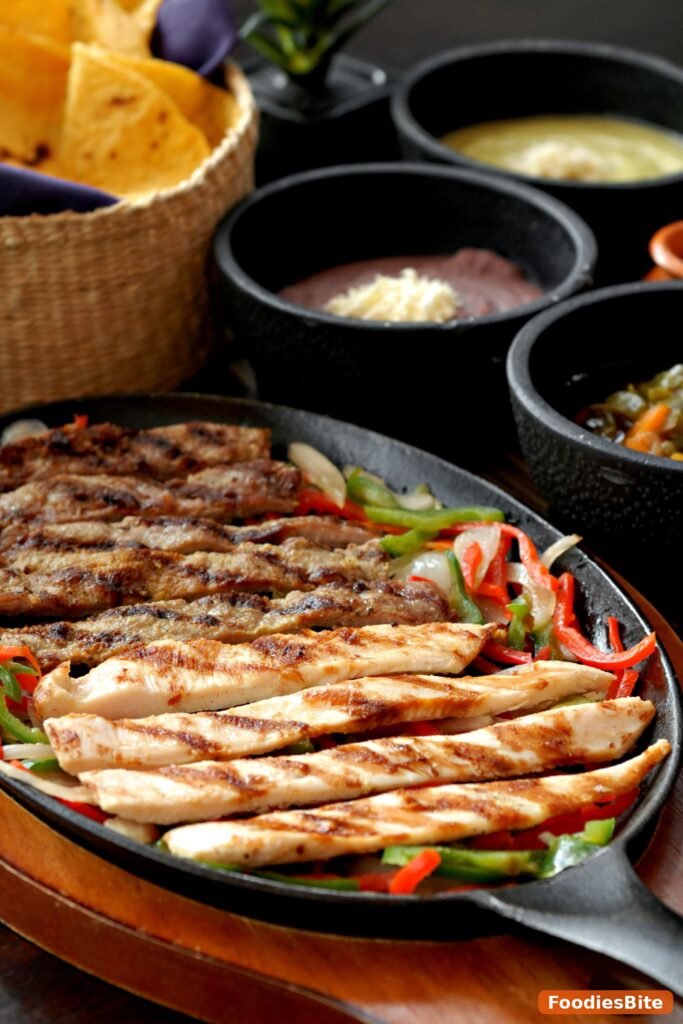
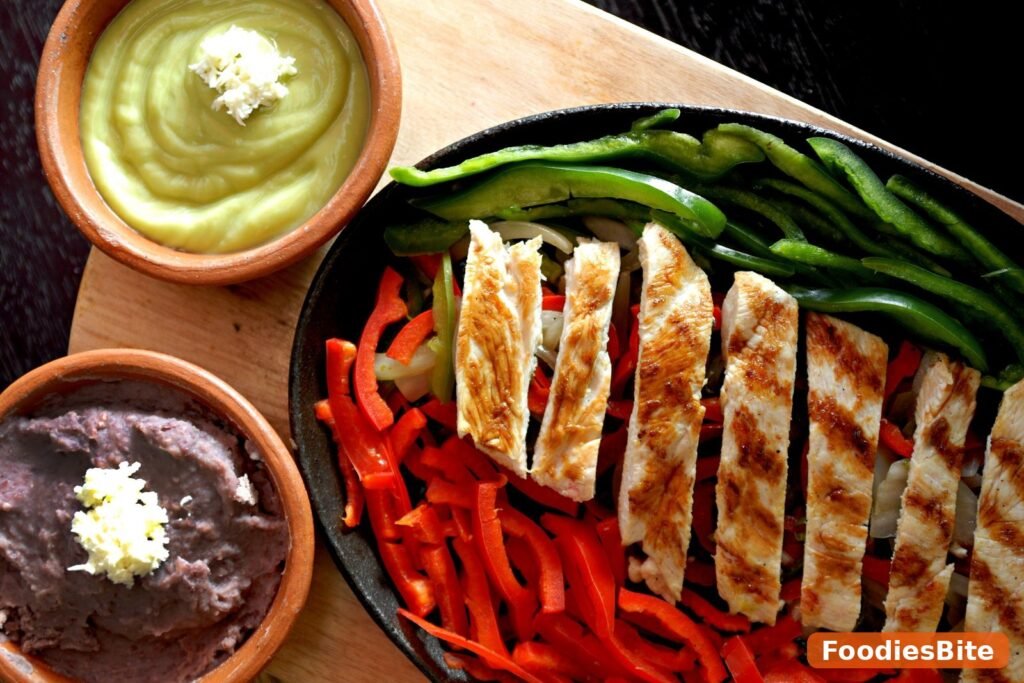
Serving easy chicken fajitas skillet is half the fun, because the meal is built at the table. Bring the hot skillet to the table on a heatproof mat, with the warmed tortillas wrapped in a towel and the toppings arranged in small bowls. Let everyone build their own fajita: a warm tortilla, a spoonful of chicken and peppers, and whatever toppings they like. This interactive style suits families with different tastes, because a child who only wants chicken and cheese and an adult who wants everything spicy can both be happy from the same pan.
For toppings, the essentials are salsa, sour cream, and guacamole or avocado. Salsa adds freshness and acidity, sour cream adds cool richness, and guacamole adds creaminess and depth. Shredded cheese melts slightly against the hot filling, which is satisfying, and extra lime wedges let people brighten their fajita to taste. Shredded lettuce adds crunch, diced tomatoes add juiciness, and sliced jalapeños or hot sauce add heat for those who want it. You do not need all of these; choose the ones your family enjoys, and keep the spread simple.
For sides, fajitas are filling enough that you may not need one, but a bowl of Mexican rice, a pot of refried beans, or a simple corn salad all pair beautifully. A cold drink, such as sparkling water with lime, iced tea, or a light beer for adults, complements the smoky, spiced flavors. And if you have leftover chicken and peppers, they are excellent the next day: pile them into a wrap for lunch, scatter them over nachos, or toss them with rice and beans for a quick burrito bowl. Fajita leftovers are some of the most useful leftovers you can have.
Variations Worth Trying
Once you know the basic method, chicken fajitas adapt to many tastes. For a smoky version, add a chopped chipotle pepper in adobo sauce to the pan with the peppers, which adds deep, smoky heat. For a sweeter version, add a sliced mango or a handful of pineapple chunks to the vegetables in the last two minutes of cooking. The fruit caramelizes slightly and pairs surprisingly well with the cumin seasoning. For a lighter version, serve the chicken and peppers over a salad instead of in tortillas, with the same toppings as a dressing, and you have a fajita salad that is just as satisfying.
You can also change the protein. Steak fajitas use the same method, with thinly sliced beef cooked very quickly over high heat, and shrimp fajitas cook in just three to four minutes total. A vegetarian version with portobello mushrooms, zucchini, and extra peppers is excellent, because mushrooms develop a savory, meaty flavor when seared in a hot pan. The seasoning and method stay the same across all these versions, which means learning fajitas once gives you a whole family of dinners.
For a different skillet chicken dinner entirely, our air fryer chicken tenders without breadcrumbs use a similar seasoning with a crispy texture, and you can find more weeknight ideas on the FoodiesBite homepage. The more one-pan dinners you know, the easier weeknights become, and fajitas are one of the best to start with.
Common Mistakes to Avoid
The most common mistake with chicken fajitas is overcrowding the pan, which steams the chicken instead of searing it. Cook in batches if needed, and give each strip contact with the hot pan. The second mistake is cooking the vegetables too long. Peppers and onions should be softened with charred edges, not cooked down to mush. High heat and a short cooking time, four to five minutes, give the best texture. If your vegetables are swimming in liquid, the heat is too low or the pan is too crowded.
The third mistake is using stale spices. Fajita seasoning depends on cumin, chili powder, and paprika, and spices lose their potency after a year or so in the cupboard. If your spices smell faint when you open the jar, they will taste faint in the dish. Replace them, and you will notice the difference immediately. The fourth mistake is skipping the lime. Lime juice, added at the end of cooking, brightens the whole dish and balances the smoky seasoning. Without it, fajitas can taste flat, even when everything else is right. Always finish with lime, and serve extra wedges at the table.
Finally, do not forget to rest the chicken briefly before returning it to the pan. Even a two-minute rest under foil lets the juices settle, so the chicken stays juicy when it is tossed with the hot vegetables. And always check the temperature: chicken is safe at 74°C (165°F) at the thickest part. Thin strips reach this quickly, but it is still worth checking the largest piece, especially if you are cooking for children or guests.
Frequently Asked Questions
Can I use chicken thighs for fajitas?
Yes, and many cooks prefer them. Thighs stay juicier than breasts under high heat, and their richer flavor suits the smoky seasoning. Slice boneless, skinless thighs into thin strips, just as you would breasts, and cook them the same way. Check the thickest piece reaches 74°C (165°F), and rest the chicken briefly before tossing it with the vegetables.
What is the best pan for chicken fajitas?
A cast-iron skillet is ideal, because it holds high heat and creates charred edges on the peppers and chicken. A heavy stainless steel or carbon steel pan also works well. Avoid thin non-stick pans for fajitas, because they do not get hot enough for a proper sear, and high heat can damage their coating. Whatever pan you use, it should be large enough to hold the chicken in a single layer.
Can I make fajita seasoning ahead of time?
Yes. Mix a double or triple batch of the spice blend and store it in an airtight jar away from heat and light for up to six months. It is useful for many dishes beyond fajitas, including roasted vegetables, grilled chicken, and tacos. Label the jar with the date, and replace the blend when the spices no longer smell strong when you open it.
How do I keep tortillas warm for serving?
Stack warmed tortillas in a clean kitchen towel or a tortilla warmer, and keep them covered until serving. The towel traps steam and keeps them soft. If they cool and stiffen, reheat them briefly in a dry skillet or microwave with a damp paper towel. Warming them just before serving, while the chicken rests, means everything is ready at the same time.
What toppings go best with chicken fajitas?
The classics are salsa, sour cream, guacamole or sliced avocado, shredded cheese, and lime wedges. Shredded lettuce, diced tomatoes, and sliced jalapeños are also popular. Choose three or four toppings your family enjoys rather than trying to offer everything. Fresh, good-quality toppings matter more than quantity, and a ripe avocado and a bright salsa will carry the meal.