

One-Pan Beef Stroganoff
There are dinners that feel like a project, and then there are dinners that feel like a small kindness to yourself after a long day. This one-pan beef stroganoff sits firmly in the second group. It takes the comfort of the classic — tender strips of beef, earthy mushrooms, and a sour-cream sauce that coats every noodle — and it cooks the whole thing in a single skillet, noodles and all. No separate pot of pasta water, no colander, no pile of dishes waiting in the sink while you are trying to enjoy your food.
I first made a version of this on a weeknight when the fridge was nearly empty and the only sensible protein I had was a pack of sirloin that needed using. I had mushrooms that were a day past their best, half a tub of sour cream, and a bag of egg noodles. Forty minutes later we were sitting down to something that tasted like it had taken far longer, and the pan was the only thing to wash. It has been in regular rotation ever since, and it is the dinner I reach for when friends are coming over and I want the house to smell wonderful without spending the afternoon cooking.
What makes this version work so well is the order of things. The beef gets a proper sear first, which builds flavour in the pan. The mushrooms cook down in that same pan and pick up all the browned bits left behind. Then the broth goes in, the noodles cook right in the sauce, and the sour cream finishes everything at the end, off the heat, so it stays silky instead of splitting. Every step builds on the last one, and because the noodles absorb the sauce as they cook, the whole dish tastes more deeply seasoned than a version where the sauce and the pasta only meet on the plate.
Why You’ll Love This Recipe
The first reason is the obvious one: one pan. Everything cooks in a single large skillet, from the first sizzle of the beef to the last stir of sour cream. On a busy evening, that matters more than almost anything else. You can have dinner on the table in about forty minutes and the washing up takes five.
The second reason is the flavour. Cooking the egg noodles directly in the broth means they soak up all the savoury, mushroomy goodness instead of just sitting under a sauce. The result is richer and more unified than the traditional two-pot version, and most people who try it say they would never go back to cooking the noodles separately.
It is also a forgiving recipe, which is a quality I value more every year. If your beef is a little thicker, it just needs an extra minute. If you only have half the mushrooms the recipe calls for, the dish still works beautifully. If someone at your table does not eat mushrooms, you can leave them out and add a little extra onion instead. The bones of this recipe are strong, and small changes will not break it.
Finally, it is the kind of dinner that suits almost any occasion. It is easy enough for a Tuesday, but it is also the sort of thing you can put in a serving bowl in the middle of the table on a Friday night with a loaf of bread and a simple salad, and everyone will think you made an effort. Leftovers reheat well too, which is more than you can say for a lot of creamy pasta dishes.
Ingredients You’ll Need
- 1 1/2 pounds sirloin steak, sliced into thin strips against the grain
- 1 teaspoon salt, divided
- 1/2 teaspoon black pepper
- 1/2 teaspoon garlic powder
- 1/2 teaspoon paprika
- 3 tablespoons olive oil, divided
- 1 medium yellow onion, finely diced
- 12 ounces cremini mushrooms, sliced
- 4 cloves garlic, minced
- 2 tablespoons tomato paste
- 1 tablespoon Worcestershire sauce
- 1 teaspoon Dijon mustard
- 4 cups low-sodium beef broth
- 8 ounces wide egg noodles
- 1 cup sour cream, at room temperature
- 2 tablespoons all-purpose flour
- 2 tablespoons fresh parsley, chopped, for serving
- 1 tablespoon butter (optional, for extra richness)
How to Make One-Pan Beef Stroganoff
Start by getting everything ready before the pan gets hot, because once this dish starts moving it moves quickly. Slice the beef into thin strips, cutting against the grain so the meat stays tender rather than chewy, and pat the strips dry with paper towels. Wet beef steams instead of browning, and browning is where so much of the flavour comes from. Season the strips with half the salt, the black pepper, garlic powder, and paprika, and toss them so the seasoning coats every piece.
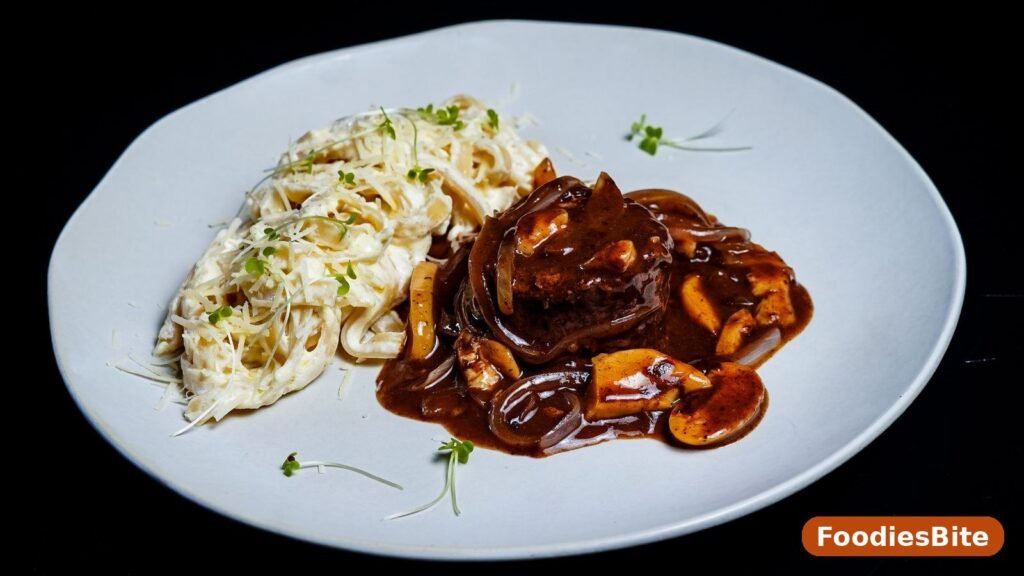
Heat a large, deep skillet over medium-high heat and add two tablespoons of the olive oil. When the oil shimmers, add the beef in a single layer, working in two batches if your pan is not wide enough. Crowding the pan is the enemy here: the meat will release its juices and simmer in them instead of searing. Let each batch cook for about two minutes per side, just until browned on the outside. The beef does not need to be cooked all the way through at this stage, because it will finish in the sauce later. Lift the beef out onto a plate and set it aside, leaving every bit of browned flavour in the pan.
Turn the heat down to medium and add the remaining tablespoon of oil along with the butter if you are using it. Add the diced onion and cook it for three or four minutes, stirring now and then, until it softens and turns translucent. Then add the sliced mushrooms. At first they will seem like far too many for the pan, but they shrink quickly as their moisture cooks out. Give them a good five to six minutes, stirring occasionally, until they are golden brown and the pan looks fairly dry again. This is the step people rush, and it is worth the patience: properly browned mushrooms taste nutty and deep, while pale, undercooked mushrooms taste flat and a bit rubbery.
Stir in the minced garlic and cook for just thirty seconds, until fragrant. Then add the tomato paste, Worcestershire sauce, and Dijon mustard, and stir everything together for about a minute. The tomato paste should darken slightly and coat the mushrooms. This little step, cooking the tomato paste briefly before the liquid goes in, takes away any raw, tinny taste and adds a lovely background richness to the sauce.
Now pour in the beef broth, scraping the bottom of the pan with a wooden spoon as you do. All those browned bits stuck to the pan — the fond — will dissolve into the broth, and that is pure flavour you do not want to waste. Bring the broth to a gentle boil, then stir in the egg noodles, making sure they are mostly submerged. Put a lid on the skillet, turn the heat down to medium-low, and let the noodles simmer for about ten to twelve minutes, stirring once or twice so they do not stick together. The noodles will absorb a good deal of the liquid and release some starch, which thickens the sauce naturally.
When the noodles are tender, return the beef and any juices from the plate to the pan and stir them through. Now for the finishing touch: in a small bowl, whisk the sour cream with the flour until completely smooth. This is a small step that makes a real difference, because the flour helps the sour cream stay stable when it meets the hot sauce. Take the pan off the heat entirely, then stir the sour cream mixture in, a spoonful at a time, until the sauce turns creamy and pale. Taste and add the remaining salt if it needs it, along with another crack of black pepper. The sauce should coat the noodles thickly and look glossy rather than grainy. If it seems too thick, a splash of warm broth will loosen it. Scatter the chopped parsley over the top and serve straight from the pan while it is hot.
Tips for the Best Beef Stroganoff
The cut of beef matters more than almost anything else in this dish. Sirloin is my first choice because it is tender, reasonably priced, and sears beautifully. Tenderloin works too, though it costs more. What I would avoid is stewing beef, which needs long, slow cooking to become tender and will stay tough in a forty-minute dish. Whatever cut you choose, slice it thinly and against the grain, and let it come to room temperature for about fifteen minutes before cooking so it sears evenly.
Do not skip browning the mushrooms properly. It is tempting to move on after two minutes when they have only softened, but the extra three or four minutes of browning are what give the sauce its depth. A dry pan and a little patience are all it takes. If the mushrooms release a lot of water and start to steam, turn the heat up slightly and leave them alone for a minute before stirring.
The sour cream needs two things to behave: it should be at room temperature, and it should go in off the heat. Cold sour cream hitting a boiling sauce is the most common reason stroganoff sauces split or turn grainy. Set the tub out on the counter when you start slicing the beef, and always take the pan off the burner before stirring it in. If your sauce does split a little, a vigorous stir usually brings it back together, and honestly it will still taste wonderful.
If you like a thicker sauce, the flour whisked into the sour cream will do most of the work, but you can also let the dish sit for five minutes after cooking. The noodles continue to absorb liquid as the pan cools, and the sauce thickens naturally. Just do not let it sit too long, or the noodles will soak up too much and turn soft. Serve it within ten minutes of finishing for the best texture.
A note on food safety, since we are cooking beef: it is worth knowing the safe handling basics, and the USDA’s food safety guidance is a good reference if you ever want to double-check temperatures or storage times. For this recipe, the beef is seared and then simmered in the sauce, so it is cooked well past the safe point by the time it reaches the table.
Variations to Try
If you prefer a lighter version, you can swap half the sour cream for plain Greek yogurt, stirred in the same way off the heat. The sauce will be a little tangier and a little less rich, which some people actually prefer. You can also use light sour cream, though the sauce will be slightly thinner.
For a ground beef version that is even quicker and more budget-friendly, brown a pound of ground beef in the pan first, breaking it up as it cooks, then proceed with the recipe exactly as written. It is not quite as elegant as sliced sirloin, but it is a wonderful weeknight dinner and children tend to love it. Ground turkey works in the same way, though you may want an extra splash of Worcestershire sauce to deepen the flavour.
A mushroom-lover’s version is easy too: double the mushrooms to a full pound and a half, skip the beef, and use vegetable broth instead of beef broth. The dish becomes a creamy mushroom stroganoff that is hearty enough to stand on its own, and it is a lovely option for a meatless Monday. Add a handful of spinach at the end if you like, letting it wilt into the sauce just before serving.
If you want a little heat, a pinch of smoked paprika in place of the sweet paprika adds a gentle smokiness, and a few dashes of hot sauce stirred into the finished sauce give it a quiet kick without changing the character of the dish. A splash of dry white wine, added with the broth, is another classic touch — just let it bubble for a minute before adding the noodles.
You can also change the pasta. Wide egg noodles are traditional and they hold the sauce beautifully, but medium shells, rotini, or even fettuccine broken in half will work in this one-pan method. Just keep an eye on the cooking time, since different shapes cook at different speeds, and add a splash more broth if the pan looks dry before the pasta is tender.
Serving Ideas

This stroganoff is a complete meal in a bowl, but a few simple sides make it feel like a proper dinner. A crisp green salad with a sharp vinaigrette is the best partner, because the acidity cuts through the richness of the cream sauce. A simple cucumber and tomato salad does the same job with even less effort.
Crusty bread is almost non-negotiable at our house. There is always sauce left at the bottom of the bowl, and bread is the only sensible way to get it. A warm baguette, a few slices of sourdough, or even buttered dinner rolls all work. If you have garlic bread on hand, so much the better.
For a heartier spread, steamed green beans or roasted broccoli add colour and a bit of freshness to the plate. I like to roast the vegetables while the stroganoff simmers, so everything finishes at the same time. A glass of red wine, something medium-bodied like a Merlot, is a lovely match if you are serving this to adults on a Friday night. And if you want to end the meal on a sweet note, a simple pudding from this collection of dessert recipes makes a fitting finish after such a rich main course.
When I serve this for guests, I bring the whole skillet to the table on a trivet and let people help themselves, with the parsley scattered over the top and a small bowl of extra sour cream on the side. It feels generous and relaxed, and it keeps the food hot far longer than plating it up in the kitchen. If you would like another one-pan dinner to add to your rotation, this one-pan lemon chicken and potatoes is a bright, citrusy contrast to the richness of stroganoff, and the easy chicken and rice skillet is another single-pan favourite in our house. For a pasta night with a different kind of creamy sauce, the creamy garlic chicken pasta is well worth a look, and if you enjoy saucy skillet chicken dishes, the one-pan chicken cacciatore in this same batch is a tomato-based cousin to this recipe.
Storage and Reheating
Leftover stroganoff keeps well in the fridge for up to three days in an airtight container. The noodles will continue to absorb sauce as it sits, so the leftovers will be thicker than the fresh dish. That is completely normal and still delicious — just add a splash of beef broth or milk when you reheat it to loosen the sauce back up.
Reheat gently on the stovetop over low heat, stirring often, until warmed through. Avoid the microwave if you can, because high heat can make the sour cream sauce split, but if the microwave is your only option, use fifty percent power and stir every thirty seconds. Do not let the dish boil during reheating.
I do not recommend freezing this one. Cream-based sauces tend to separate when frozen and thawed, and the noodles turn mushy. If you want to make it ahead, you can cook the beef and mushroom base up to the point before adding the noodles and sour cream, freeze that base for up to a month, and then finish the dish fresh with noodles and sour cream on the day you serve it. That works beautifully and is a smart way to get ahead on a busy week.
Frequently Asked Questions
Can I make beef stroganoff without sour cream?
Yes, you can. Plain Greek yogurt is the closest substitute and gives a similar tang, though the sauce will be a little thinner. Cream cheese, softened and whisked in off the heat, makes a richer sauce. Heavy cream works too, but you will lose the characteristic tang that makes stroganoff taste like stroganoff. If you use yogurt, make sure it is full-fat, because low-fat yogurt is more likely to split when it meets heat.
What is the best cut of beef for stroganoff?
Sirloin is the best balance of tenderness, flavour, and price for this dish. Tenderloin is more tender still but costs significantly more, and its mild flavour can get a little lost in the sauce. Ribeye works if you trim the excess fat, but it is richer than you need. Avoid stewing or chuck steak, which needs hours of slow cooking to become tender and will stay chewy in a quick skillet dish.
Why did my sour cream sauce split?
The most common cause is heat. Sour cream curdles when it is added to a sauce that is too hot, or when it is cold straight from the fridge. Always take the pan off the heat before stirring it in, and let the sour cream come to room temperature first. Whisking a tablespoon of flour into the sour cream before adding it also helps stabilise the sauce. If it does split, remove the pan from the heat and whisk vigorously — it often comes back together.
Can I use ground beef instead of sliced steak?
Absolutely. Brown a pound of ground beef in the pan, breaking it into small crumbles, drain off any excess fat, and then continue with the recipe from the onion step. It is a quicker, cheaper version that is very popular with families. The texture is different from sliced steak, but the flavour is just as comforting.
How do I keep the noodles from getting mushy?
Two things matter. First, keep the heat at a gentle simmer once the noodles go in — a hard boil will overcook them quickly. Second, start checking the noodles a minute or two before the recipe says they should be done, and take the pan off the heat as soon as they are tender. They will continue cooking in the hot sauce for another minute or two, so pulling them slightly early is the safe move. Serve promptly rather than letting the pan sit.



One Comment