
One-Pan Chicken and Vegetable Curry
There is a particular kind of tiredness that arrives at six in the evening, when you are hungry, the day has been long, and the thought of washing three pans feels like too much. That is when a one-pan curry earns its place. This one-pan chicken and vegetable curry is the meal I make on those evenings, because it asks for one pan, one chopping board, and about forty minutes, and in return it gives you something warm, rich, and properly satisfying, with tender chicken, soft vegetables, and a sauce that is creamy without being heavy. It is not a restaurant curry, and it does not pretend to be. It is a home curry, the kind that tastes like someone cooked it for you, and it is better for being simple.
The idea behind it is straightforward. Chicken thighs, browned first so they develop flavour, then simmered gently in a sauce made from onion, garlic, ginger, spices, tomatoes, and coconut milk, with vegetables added at the right time so they cook through without turning to mush. The vegetables are not an afterthought. Carrots, peppers, and peas bring sweetness, colour, and texture, and they soak up the sauce in a way that makes the whole dish feel complete. You do not need a separate vegetable side, because the vegetables are already in the pan, and you do not need a complicated spice list, because a few well-chosen spices, used properly, do more than a dozen used carelessly.
What I like most about this curry is how it fills the house with smell as it cooks. The moment the spices hit the hot oil, the kitchen changes, and by the time the coconut milk goes in and the sauce starts to simmer, the whole house smells warm and inviting. It is a smell that makes people wander into the kitchen to ask what is for dinner, and that is a good sign for any recipe. It is also a forgiving dish. If your chicken is a little larger, it just needs a few more minutes. If you like more heat, add more chili. If you want more vegetables, add them. The method stays the same, and the result stays good.
Why You’ll Love This Recipe
The first reason is that it is genuinely a one-pan meal, and that matters more at the end of a long day than any food writer will admit. One pan to cook in, one lid to wash, one spoon to stir with, and dinner is done. There is no separate pot for rice if you serve it with rice, and that is the only extra, and even that can be a pouch of microwave rice on a busy night without anyone judging you. The washing up takes five minutes, and that is a real part of why I make this as often as I do.
The second reason is the sauce, which is the heart of any curry. This one is made from coconut milk, tomatoes, and spices, and it is creamy, gently spiced, and rich without being oily. The coconut milk softens the heat of the spices and gives the sauce a silky texture, while the tomatoes add a little acidity that keeps it from feeling too rich. It is the kind of sauce you want to mop up with bread or spoon over rice, and there is usually just enough of it to do that without leaving a puddle. If you have ever made a curry that was either too thin and watery or too thick and pasty, this one sits in the middle, and the method below explains how to keep it there.
The third reason is that it is a complete meal in one pan, with protein and vegetables together, which means you do not have to plan a side dish. The chicken gives you something substantial, the vegetables give you colour and freshness, and the sauce ties them together. It is also a good way to use up vegetables that are sitting in the fridge. A pepper that is starting to soften, a couple of carrots, a handful of peas from the freezer, all of them have a place here, and the curry is forgiving enough to take them. That flexibility makes it a useful recipe for the end of the week, when the fridge is looking a little empty and you need to make something from what is left.
Ingredients You’ll Need
- 600g boneless, skinless chicken thighs, cut into bite-sized pieces
- 1 tablespoon vegetable oil
- 1 large onion, finely chopped
- 3 cloves garlic, finely minced
- 1 tablespoon fresh ginger, finely grated
- 2 tablespoons curry powder, mild or medium
- 1 teaspoon ground cumin
- 1 teaspoon ground coriander
- 1/2 teaspoon turmeric
- 1/2 teaspoon chilli powder, or to taste
- 400g tin chopped tomatoes
- 400ml tin coconut milk, full-fat
- 2 medium carrots, peeled and sliced into thin rounds
- 1 red pepper, deseeded and cut into strips
- 100g frozen peas
- 1 teaspoon fine sea salt, plus more to taste
- 1/2 teaspoon black pepper
- 1 tablespoon tomato paste
- Fresh coriander leaves and lime wedges, to serve
Chicken thighs are the right cut for this curry, and it is worth using them rather than breast. Thighs have a little more fat, which keeps them juicy during a gentle simmer, and they have a deeper flavour that stands up to the spices. Chicken breast can work, but it dries out more easily if it simmers for too long, and it needs to be added later and cooked more gently. If you do use breast, cut it into slightly larger pieces and check it early, because it will cook faster than thigh. Cut the thighs into pieces about three centimetres across, so they cook evenly and are easy to eat with a spoon and rice.
The spice mix is simple, and each spice has a role. Curry powder is the base, and it already contains a blend of spices, so it gives you a rounded flavour without needing a dozen jars. Cumin adds warmth and earthiness, coriander adds a citrusy note, turmeric gives colour and a gentle bitterness, and chilli powder gives heat, which you can adjust to your taste. Use a mild curry powder if you are cooking for children, and a medium one if you like a little more warmth. The ginger and garlic are fresh, and they matter. Fresh ginger gives a bright, warm heat that dried ginger does not, and fresh garlic gives a depth that garlic powder cannot match in a wet sauce like this one. Grate the ginger finely, so it disappears into the sauce rather than leaving stringy pieces.
Coconut milk should be full-fat, because light coconut milk makes a thinner sauce and can split more easily. Shake the tin well before opening it, because the cream often separates and sits on top, and you want it mixed through. Chopped tomatoes add body and acidity, and tomato paste, cooked briefly with the spices, adds a deeper, richer tomato flavour. The vegetables are chosen for how they cook. Carrots need the longest, so they go in early. Peppers need less time, so they go in later, and peas need only a few minutes, so they go in at the end. That timing is the difference between vegetables that are tender and vegetables that have dissolved into the sauce.
How to Make One-Pan Chicken and Vegetable Curry
Start by preparing everything before the pan gets hot, because once you start cooking, the steps come quickly and you will not want to be chopping an onion while the spices are burning. Cut the chicken into pieces, chop the onion, mince the garlic, grate the ginger, slice the carrots, and cut the pepper into strips. Measure out the spices into a small bowl, so you can add them all at once when the moment comes. This is the kind of preparation that feels fussy when you are in a hurry, but it takes five minutes and it makes the cooking calm instead of frantic, which is worth it on a weeknight.

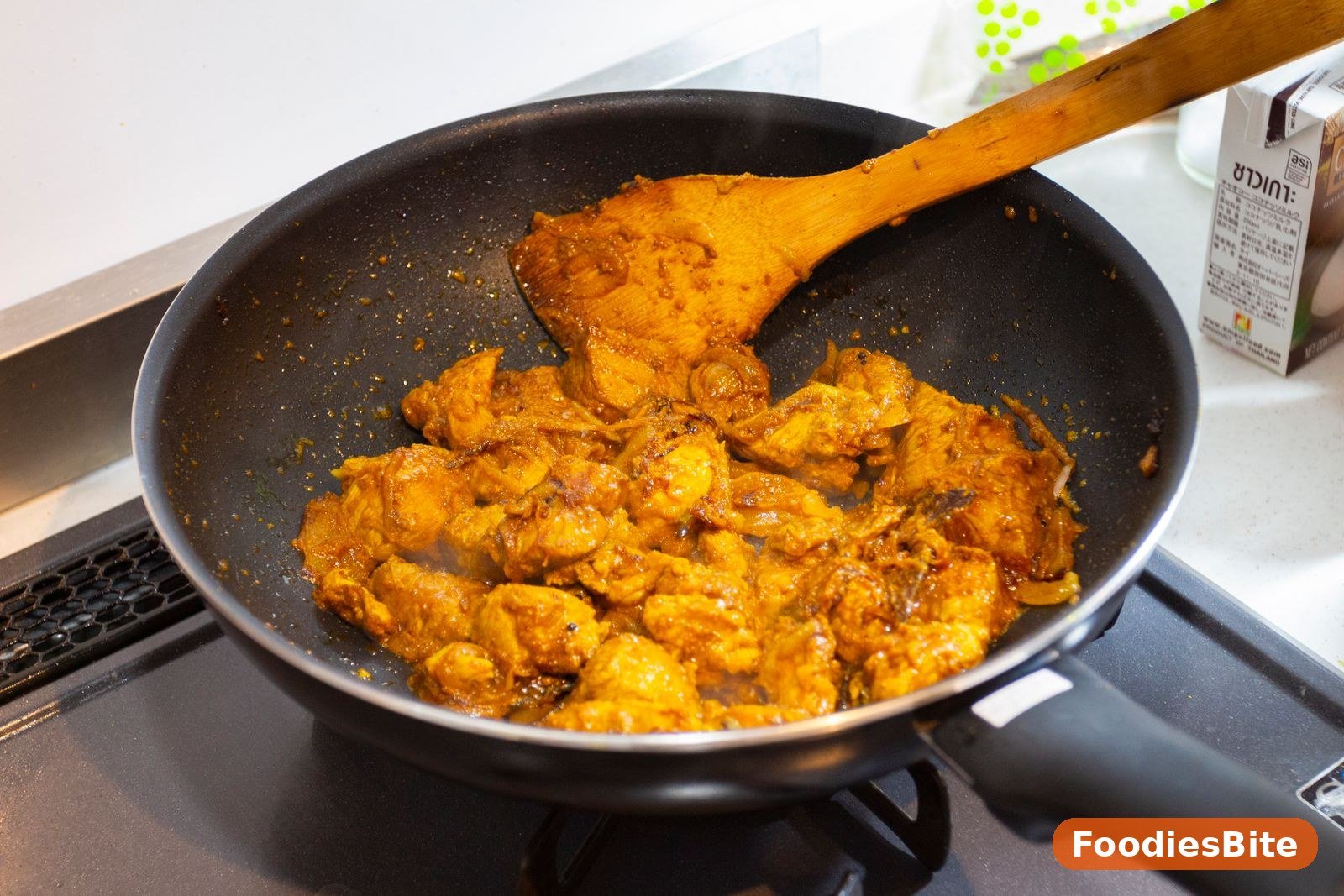
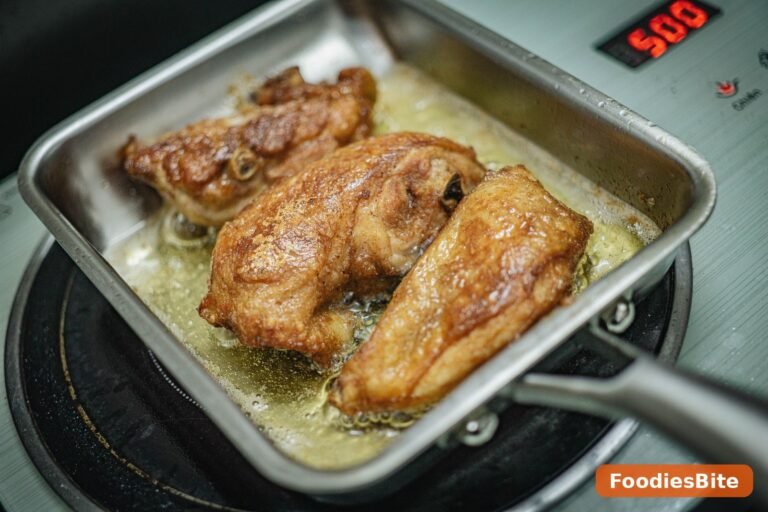
Heat the oil in a large, deep pan or a wide skillet over a medium-high heat, until it shimmers. Add the chicken pieces in a single layer, leaving space between them, and let them cook without moving them for three to four minutes, until the undersides are golden brown. Then turn them and brown the other side for another three minutes. You are not cooking the chicken through at this stage. You are building flavour on the outside, and that browning, which comes from the sugars and proteins in the meat reacting to the heat, is what gives the curry its depth. If you crowd the pan, the chicken will steam instead of browning, so cook it in two batches if your pan is small. When the chicken is browned, lift it out onto a plate and set it aside. It will finish cooking in the sauce later.
Lower the heat to medium and add the chopped onion to the same pan, with a pinch of salt. Cook it for five to six minutes, stirring regularly, until it is soft and golden, scraping up the browned bits from the bottom of the pan as you go. Those browned bits are flavour, and the onion and a little moisture will lift them into the sauce. Add the garlic and ginger and cook for another minute, until they smell fragrant, then add the tomato paste and cook it for a minute more, stirring, until it darkens slightly. Then add the spice mix, all at once, and stir it for thirty seconds, until the spices smell warm and toasty. This is the moment to be careful. Spices burn quickly in a hot pan, and burnt spices taste bitter, so keep them moving and do not leave them for longer than a minute.
Pour in the chopped tomatoes and stir well, scraping the bottom of the pan again, then pour in the coconut milk and stir until the sauce is smooth and evenly coloured. Bring it to a gentle simmer, not a hard boil, and return the browned chicken to the pan, along with any juices from the plate. Add the sliced carrots, stir them in, and put a lid on the pan, leaving it slightly ajar so a little steam can escape. Let the curry simmer gently for fifteen minutes, stirring once or twice, until the chicken is cooked through and the carrots are starting to soften. The sauce should be bubbling gently, not boiling hard, because a hard boil can make the coconut milk split and the chicken tough.
After fifteen minutes, add the pepper strips, stir them in, and simmer for another five minutes, until the peppers are tender but still have a little bite. Then add the frozen peas, stir them in, and cook for three more minutes, until the peas are hot and bright green. Taste the sauce now, and adjust the salt, adding a little more if needed, and a squeeze of lime juice if the sauce tastes too rich. The lime is not essential, but it lifts the whole dish, adding a brightness that balances the coconut milk. If the sauce is too thin for your taste, simmer it for a few more minutes with the lid off, so some of the liquid evaporates. If it is too thick, add a splash of water or a little more coconut milk. Serve the curry hot, in wide bowls, over rice or with flatbread, sprinkled with fresh coriander and with lime wedges on the side.
For more chicken ideas, the BBC has a large collection of chicken recipes that covers everything from roasts to curries, and their guide to roasted vegetables is a useful reminder of how vegetables behave at different cooking times. If you like one-pan cooking, try our easy chicken and rice skillet recipe, which uses a similar method with rice cooked in the pan, and our one-pan lemon chicken and potatoes is another good weeknight option.
Tips for the Best Chicken Curry
Brown the chicken properly, and do not rush it. The browning is where much of the flavour comes from, and chicken that goes into the sauce pale and unbrowned will taste flat, no matter how good the spices are. Let the pieces sit undisturbed for a few minutes, so they develop a golden crust, and cook in batches if the pan is crowded. It takes a few extra minutes, but it is the single biggest improvement you can make to a home curry.
Cook the spices briefly, but do not burn them. Thirty seconds in hot oil, stirred constantly, is enough to wake them up and release their flavour. Longer than a minute, and they start to taste bitter, especially the turmeric and chilli. If you are worried about burning them, lower the heat before you add them, and add a splash of water with them if the pan looks dry. A little water gives you a margin of safety without diluting the sauce, because it evaporates as the curry simmers.
Simmer gently, not hard. A curry that boils vigorously will toughen the chicken, split the coconut milk, and reduce the sauce too quickly, leaving you with a thick, oily result. A gentle simmer, with the lid slightly ajar, lets the flavours meld slowly and the chicken stay tender. You should see small bubbles breaking the surface, not a rolling boil. If your hob runs hot, turn it down and give the curry a few more minutes. Patience here is rewarded.
Taste and adjust at the end, not at the start. Salt, lime, and heat all behave differently once the sauce has simmered and the flavours have come together, and what tastes right at the beginning may need adjusting at the end. A squeeze of lime, a pinch more salt, or a little extra chilli can transform a good curry into a great one, and it is easier to add those things at the end than to fix an over-salted or over-spiced sauce. Trust your taste, and adjust in small amounts.
Variations to Try
This curry is a base, and it adapts well to what you have. For a hotter version, add a finely chopped fresh red chili with the garlic and ginger, and increase the chilli powder to a full teaspoon. For a milder, creamier version, use a mild curry powder, leave out the chilli powder, and add a spoonful of yoghurt at the end, off the heat, so it does not split. A spoonful of peanut butter, stirred in with the coconut milk, gives a rich, nutty version that is lovely with rice, though it makes the sauce heavier, so serve it with a fresh salad.
You can change the vegetables easily. Sweet potato, cut into small cubes, works well if added with the carrots, because it needs a similar cooking time. Cauliflower florets, added with the peppers, soften nicely and soak up the sauce. Green beans, added in the last five minutes, stay crisp and add a fresh bite. Spinach, stirred in at the very end, wilts in a minute and adds colour and iron. The rule is simple: hard vegetables go in early, soft vegetables go in late, and leafy vegetables go in last.
The protein can change too. Chickpeas, drained and rinsed, make a good vegetarian version, added with the carrots so they have time to absorb the sauce. Prawns, added in the last five minutes, cook quickly and stay tender, though they need a gentler simmer. Tofu, pressed and cubed and browned first like the chicken, works well and holds its shape in the sauce. Whatever you use, keep the method the same, and adjust the cooking time to the protein, not the other way round.
Serving Ideas

Serve this curry in wide, shallow bowls, over a mound of steamed basmati rice, with the sauce spooned over the top so it soaks into the rice. A spoonful of yoghurt on the side, a few lime wedges, and a scattering of fresh coriander are all you need to finish it. Naan or flatbread is good too, for mopping up the sauce, and a simple cucumber salad, with sliced cucumber, red onion, and a little lemon juice, cuts through the richness and adds freshness. It is a complete meal on its own, and it does not need anything else, though a cold drink and good company help.
For a lighter meal, serve the curry with cauliflower rice, or with a smaller portion of rice and a larger salad, so the vegetables and sauce do most of the work. It also works as a filling for wraps, spooned into a warm flatbread with a little yoghurt and salad, which makes a good lunch the next day if you have leftovers. If you are cooking for friends, make a double batch and serve it family-style, with the pan in the middle of the table, rice in a large bowl, and everyone helping themselves. It is a generous, relaxed way to eat, and it suits this curry well.
This kind of one-pan cooking pairs well with other skillet dishes, and if you enjoy this, try our thai basil chicken stir-fry for a faster, fresher take on chicken in a pan, and our easy chicken fajitas skillet for another one-pan dinner that comes together quickly.
Storage and Reheating
This curry keeps well, and in fact it often tastes better the next day, after the flavours have had time to meld in the fridge. Let it cool completely, then store it in an airtight container in the fridge for up to three days. Store the rice separately, because rice stored in the sauce goes soft and the curry becomes harder to reheat evenly. When you reheat the curry, warm it gently in a pan over a medium-low heat, stirring occasionally, until it is hot all the way through. Add a splash of water or coconut milk if the sauce has thickened in the fridge, because it will have absorbed some liquid as it cooled.
You can also reheat it in the microwave, in short bursts, stirring between each one, though the pan is better, because it lets you adjust the sauce as it warms. Do not reheat the curry more than once, and do not leave it at room temperature for more than two hours. If you want to freeze it, let it cool completely, then freeze it in a freezer-safe container for up to three months. Thaw it overnight in the fridge and reheat it gently in a pan. The vegetables will be softer after freezing, but the flavour will still be good, and it is a useful meal to have in the freezer for a busy night.
Frequently Asked Questions
Can I use chicken breast instead of thighs?
Yes, but cut the breast into slightly larger pieces, add it later, and cook it more gently. Chicken breast dries out if it simmers for too long, so add it after the sauce has simmered for ten minutes, and check it early. It should be cooked through and still juicy, not stringy or dry.
How do I stop coconut milk from splitting?
Simmer gently, not hard, and do not boil the curry vigorously. Full-fat coconut milk is more stable than light coconut milk, and adding it to a sauce that is already simmering, rather than to a boiling pan, helps. If it does split a little, stir it well and it will usually come back together enough to serve.
Can I make this curry ahead of time?
Yes, and it often tastes better the next day. Make it fully, let it cool, and store it in the fridge for up to three days. Reheat it gently in a pan, adding a splash of water or coconut milk if the sauce has thickened. Store the rice separately.
Is this curry spicy?
It is gently spiced, with a mild warmth from the chilli powder. You can make it milder by leaving out the chilli powder and using a mild curry powder, or hotter by adding fresh chili and more chilli powder. Taste the sauce before serving and adjust to your liking.
What vegetables can I add to this curry?
Carrots, peppers, and peas are in this recipe, but sweet potato, cauliflower, green beans, and spinach all work well. Add hard vegetables early, soft vegetables later, and leafy vegetables at the very end, so they cook through without turning to mush.




2 Comments