
Easy Skillet Chicken Recipes for Beginners: Simple, Delicious Meals Anyone Can Make
If you are new to cooking, chicken in a skillet is one of the best places to start. It is affordable, forgiving, and fast, and it needs no special equipment: one pan, a stove, and a handful of ingredients are enough for a dinner you will be proud of. You do not need knife skills, fancy techniques, or a shelf of spices. You need a few basics, and this guide teaches them.
A skillet is a beginner’s best friend because it shows you what is happening. Unlike an oven, where food hides behind a door, a pan lets you see the colour change, hear the sizzle, and smell when something is ready. That feedback is how cooking confidence grows — not from following a recipe perfectly, but from watching, tasting, and adjusting.
This guide starts with the absolute basics: the pan, the chicken, and the heat. Then it walks through your first skillet chicken step by step, gives you three easy recipes to master, and covers the mistakes every beginner makes and how to avoid them. If you want another easy stovetop dinner after this one, try our one-pan chicken dinner, and browse the One-Pan & Skillet Meals collection for more.
What You Need to Start
The equipment list is short. You need a skillet or frying pan — any kind will do, though a heavy-bottomed one gives more even heat. A wooden spoon or spatula, a cutting board, a knife, and a plate are the rest. A lid is helpful but not essential; a large plate set over the pan works as a substitute. That is genuinely everything.
For ingredients, start with boneless, skinless chicken thighs or breasts, oil, salt, pepper, garlic, and one vegetable you like — peppers, green beans, or mushrooms are all good first choices. Add stock, tinned tomatoes, or cream later, once the basic method feels comfortable. Beginning with few ingredients is not a limitation; it is how you learn what each one does.
The most important beginner tool is not equipment at all: it is a small instant-read thermometer. It costs little, and it removes the single biggest worry for new chicken cooks — whether the meat is done. Chicken is safe at 74°C (165°F) at its thickest point. With a thermometer, you never have to guess, cut, and hope again.
Understanding Heat
Heat is the one thing beginners most often get wrong, and it is simpler than it seems. Think of three levels. Medium-high heat is for browning: it creates the golden colour and savoury flavour on the chicken’s surface. Medium heat is for cooking vegetables and building sauces. Low heat is for simmering: gentle bubbling that finishes cooking without toughening the meat.
A common beginner error is cooking everything on high heat from start to finish. High heat is right for the first few minutes of browning, but after that it burns garlic, dries out chicken, and reduces sauces to nothing. Learning to turn the heat down is one of the most valuable cooking skills there is, and it costs nothing.
How do you know the pan is ready? For browning, the oil should shimmer and move easily when you tilt the pan, and a drop of water should sizzle and evaporate quickly. If the oil is smoking heavily, the pan is too hot — take it off the heat for a moment and let it calm down. If the chicken makes no sound when it touches the pan, the pan is too cold, and the chicken will steam instead of browning.
Your First Skillet Chicken, Step by Step
Start with everything prepared before the pan gets hot. Cut the chicken into even, bite-sized pieces or leave breasts whole but pounded to an even thickness. Chop the vegetables. Measure any liquid. This habit, which cooks call preparation, is the difference between a calm dinner and a frantic one.
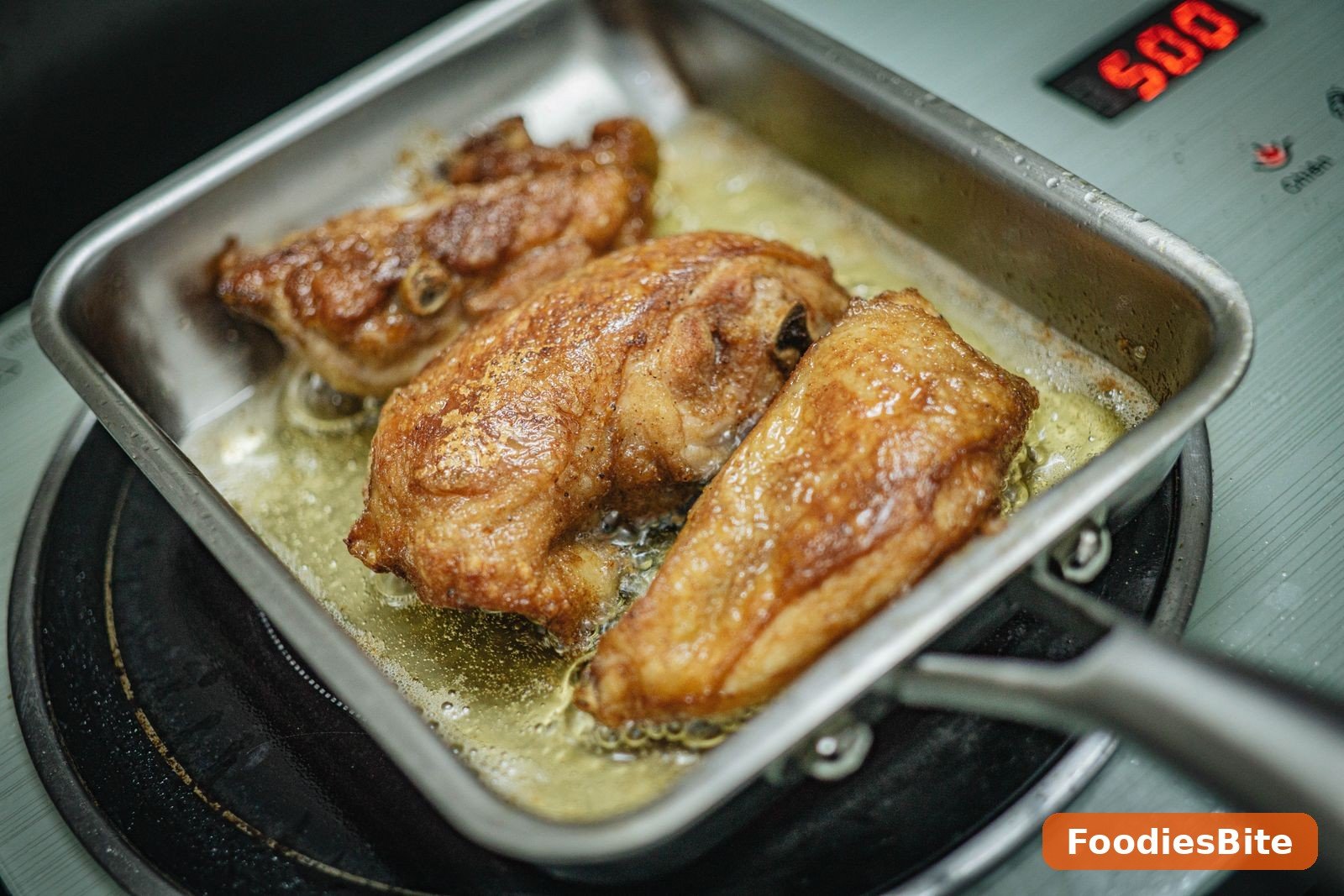
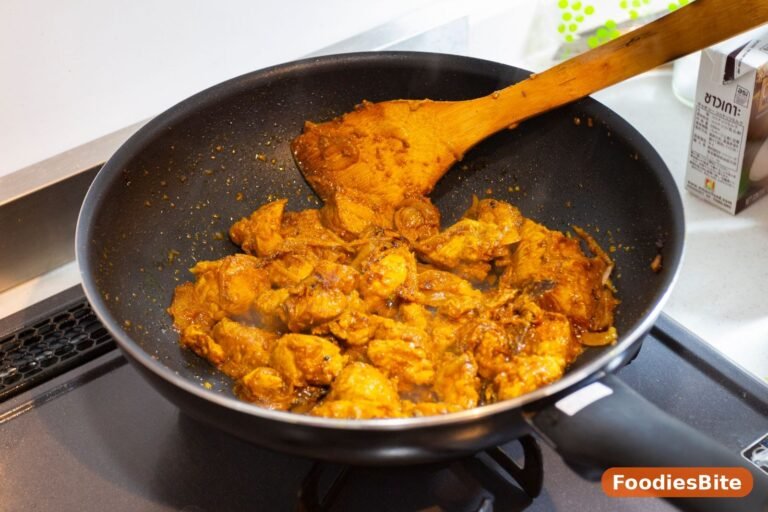
Pat the chicken dry with kitchen paper and season it with salt and pepper. Heat a tablespoon of oil in the skillet over medium-high heat until it shimmers. Lay the chicken in the pan in a single layer, leaving space between pieces, and do not touch it for four minutes. This is the hardest part for beginners: leaving food alone. But that undisturbed contact is what creates the golden crust, and moving the chicken early tears the crust off.
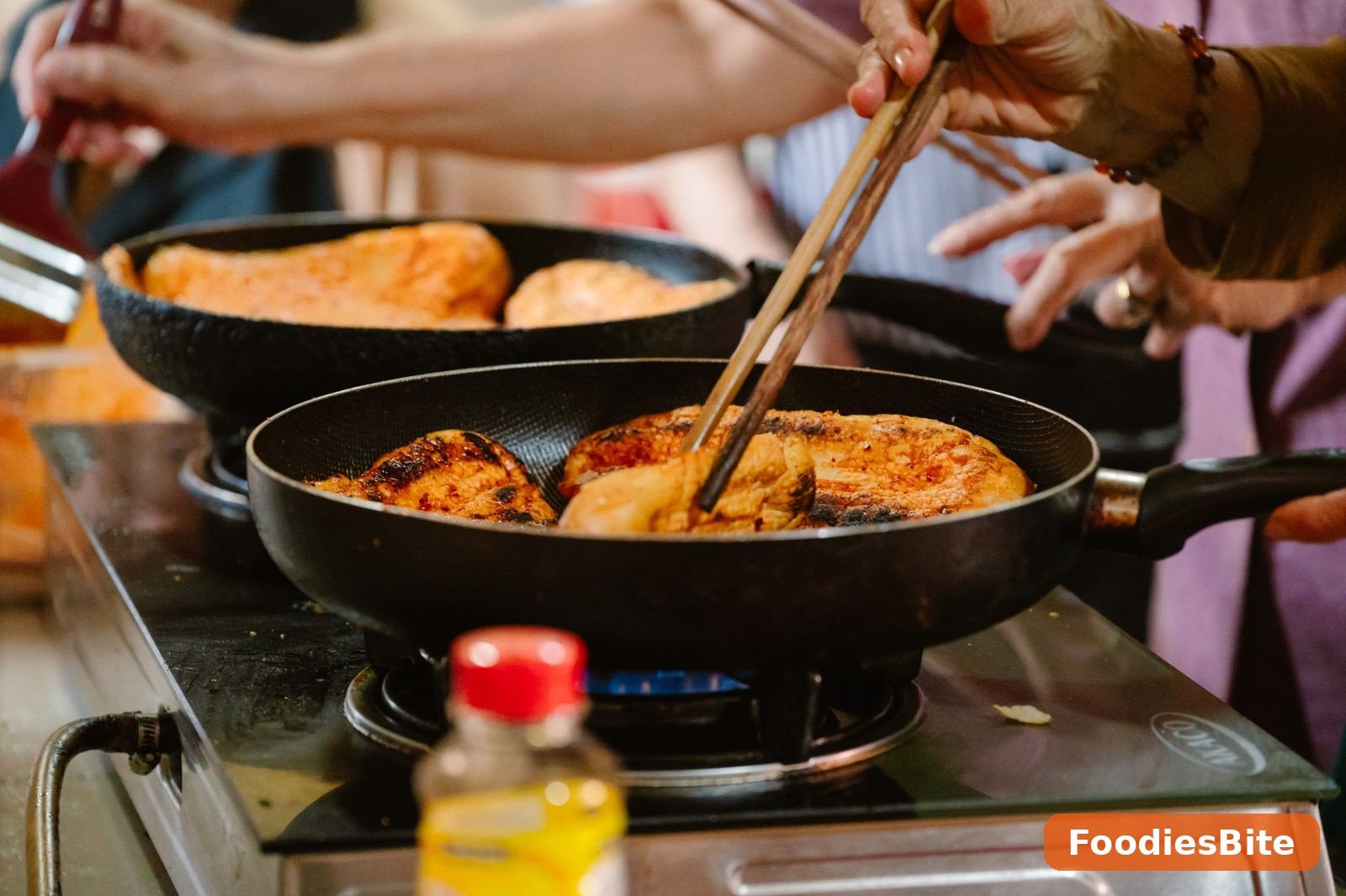
Turn the pieces and cook the other side for three or four minutes. The chicken should be golden on both sides. Remove it to a plate. Add your vegetables to the same pan with a little more oil if needed, and cook them for a few minutes, stirring, until they soften. Pour in about a cup of stock or water, scraping the bottom of the pan — those browned bits are pure flavour, and they dissolve into the liquid to make a simple sauce.
Return the chicken to the pan, cover it, turn the heat to low, and simmer for ten to fifteen minutes. Check the temperature: 74°C (165°F) means it is done. Taste the sauce, add salt if it needs it, and finish with a squeeze of lemon or a scattering of herbs if you like. That is your first skillet chicken dinner, and it used one pan and about thirty minutes.
Three Beginner Recipes to Master First
Garlic butter chicken is the simplest recipe worth learning. Sear seasoned chicken pieces, add butter and sliced garlic to the pan, and spoon the butter over the chicken as it finishes. Serve with bread or rice. It teaches browning, butter sauces, and timing, and it tastes far better than its four ingredients suggest.
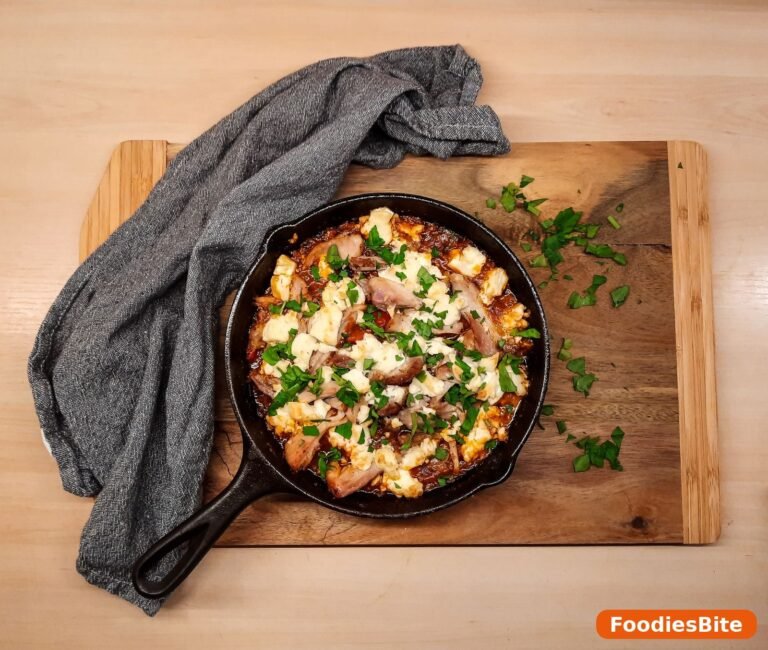
Tomato chicken is the next step. After browning the chicken, add a tin of chopped tomatoes, garlic, and a pinch of dried oregano, then simmer covered until the sauce thickens. This teaches pan sauces and simmering, and it is nearly impossible to ruin — if the sauce is thin, simmer longer; if it is thick, add a splash of water.
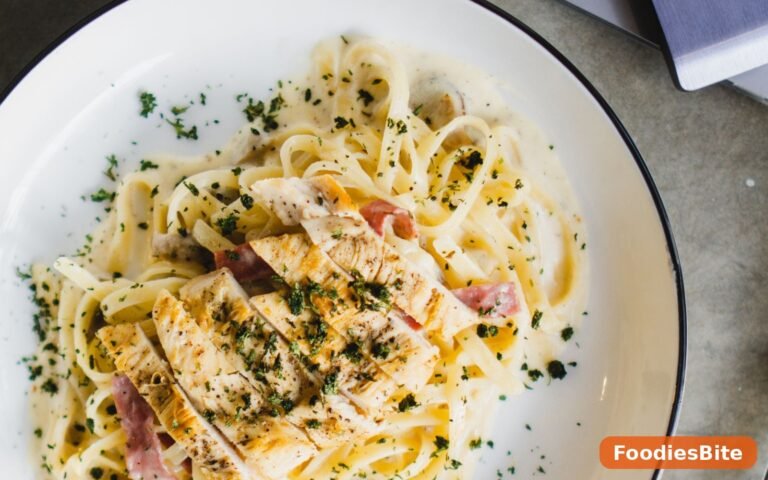
Creamy mushroom chicken introduces a richer sauce. Cook sliced mushrooms in the pan after removing the chicken, add a splash of stock and a few spoonfuls of cream, return the chicken, and simmer briefly. This teaches you how cream behaves in a hot pan — gentle heat, never a furious boil — and it pairs beautifully with pasta or mashed potatoes.
Master these three, and you have the foundation for dozens of variations. Change the herb, swap the vegetable, or add a different sauce, and each recipe becomes a new dinner. Cooking confidence comes from repeating a few good recipes until they feel easy, not from collecting hundreds you never cook twice.
Mistakes Every Beginner Makes
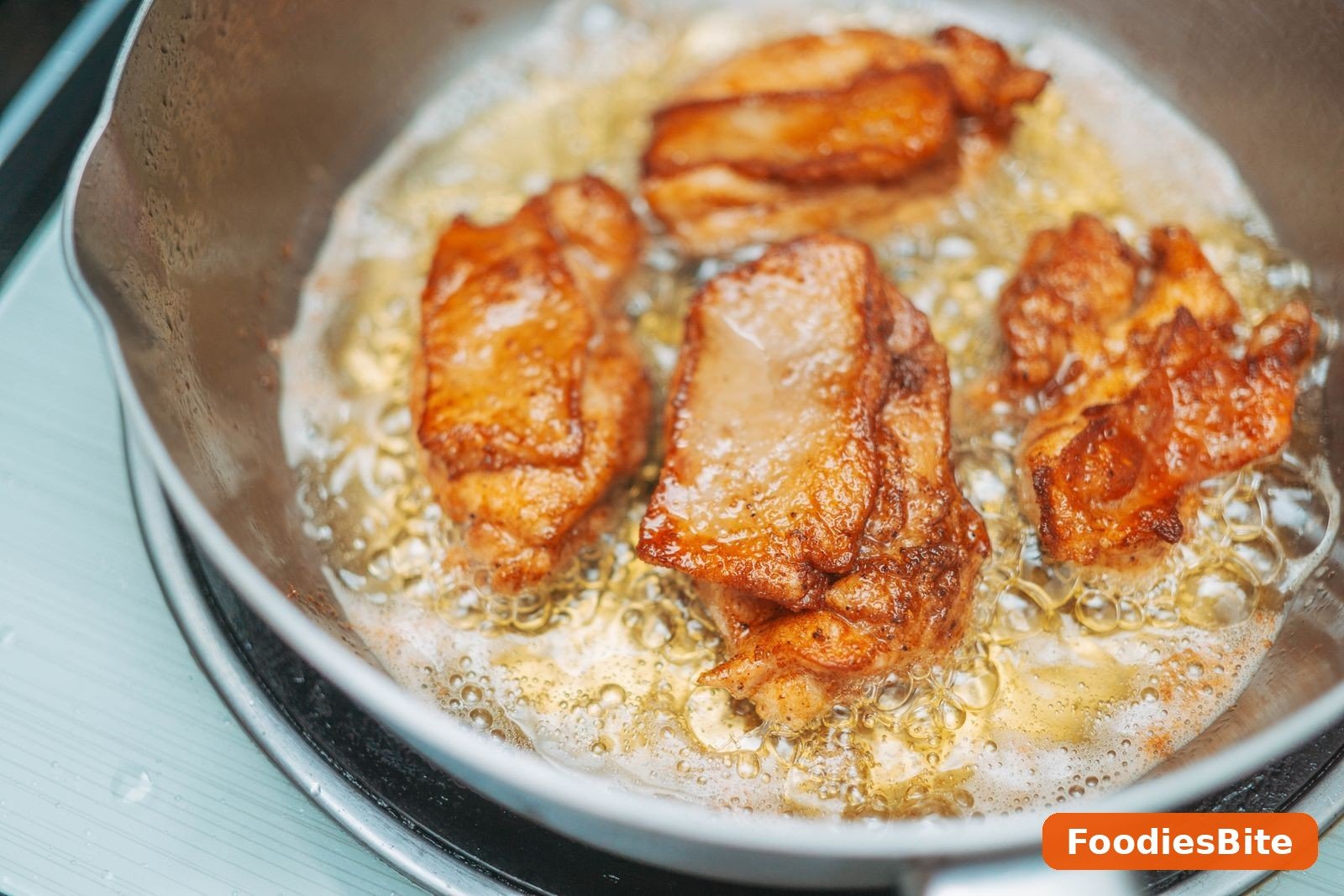
Crowding the pan is the most common mistake. When chicken pieces touch each other, moisture gets trapped, the temperature drops, and the chicken steams instead of browning. The result is pale, soft meat. Cook in batches if your pan is small — it takes a few extra minutes but transforms the result.
Moving the chicken too early is the second mistake. A crust needs time to form, and it releases naturally once it is ready. If the chicken sticks when you try to turn it, it is usually not ready yet. Wait another minute and try again.
Under-seasoning is the third mistake. Beginners often season timidly, and the result tastes flat. Salt the chicken, salt the vegetables, and taste the sauce before serving. Salt is not the enemy of good cooking; blandness is. Add salt gradually and taste as you go.
Skipping the rest is the fourth mistake. Cutting into chicken the moment it leaves the pan lets the juices run out onto the board. Five minutes of resting, loosely covered, keeps the meat juicy. It is a small wait with a big payoff.
Finally, many beginners throw away the browned bits stuck to the pan. Those bits are the best flavour in the whole dish. A splash of liquid and a wooden spoon turn them into sauce. Never wash them away — cook with them.
Building Confidence Week by Week
Confidence grows through repetition, not through difficulty. Cook the same garlic butter chicken twice in one week, and the second time will feel easier than the first. The third time, you will start changing things — adding mushrooms, trying a different herb — and that is when cooking becomes enjoyable rather than stressful.
Keep a short note of what worked. It does not need to be formal: a line in your phone saying “tomato chicken, 20 min simmer, needed more salt” is enough. Over a month, those notes become your personal cookbook, tuned to your taste, your pan, and your stove.
Do not compare your early dinners to restaurant food or social media photos. Home cooking has different goals: it should be tasty, affordable, and repeatable on a tired evening. A simple skillet chicken that you can cook without stress is a genuine achievement, and it is the foundation of a lifetime of good eating.
For a crisp variation once the basics feel easy, try our crispy chicken without breadcrumbs, and visit the FoodiesBite homepage for more easy dinners. A frying pan is the only pan this cooking needs, and chicken as food is one of the most forgiving ingredients a beginner can choose.
Your Second Week: What to Try Next
Once the first skillet chicken feels easy, the second week is about small experiments. Change one thing at a time, so you learn what each change does. Try a different vegetable in the same recipe and notice how the cooking time changes. Try a new herb and notice how it alters the sauce. Try finishing the dish with lemon instead of herbs and notice how much brighter it tastes. Single changes teach more than whole new recipes, because you can compare the result with a dinner you already know.
The next technique worth learning is deglazing, which sounds fancy but is simply pouring liquid into a hot pan to lift the browned bits. After browning chicken and removing it, pour in a splash of stock, wine, or even water, and scrape the pan with a wooden spoon as the liquid bubbles. The browned bits dissolve into a rich base for a sauce. Add cream, tomatoes, or mustard to that base, and you have a pan sauce that tastes like it took far longer than it did.
After that, try cooking without a recipe at all, using the method from this guide as a template. Brown chicken, cook vegetables, add liquid, simmer, season, serve. Choose the ingredients from what is in the fridge, and trust the method. The first attempt may be imperfect, but it will be edible, and the second will be better. That step — from following recipes to cooking from method — is the moment a beginner becomes a cook.
Keep your notes going. Write down what you changed and whether it worked. Over a month, those notes become a personal set of recipes that fit your taste, your pan, and your stove better than any cookbook could. Cooking confidence is not talent; it is a small collection of repeated successes, and a skillet chicken dinner is one of the best places to start collecting them.
Frequently Asked Questions
What is the easiest chicken cut for a beginner?
Boneless, skinless thighs are the most forgiving: they stay juicy even if slightly overcooked, and they brown well. Breasts also work but dry out faster, so they need more careful timing. Start with thighs if you are nervous, and move to breasts once the basic method feels comfortable.
How do I know when chicken is cooked without a thermometer?
Cut into the thickest piece: the meat should be white all the way through with clear juices and no pink. This works, but it lets juices escape, so a thermometer is still the better option. A small instant-read thermometer is inexpensive and removes all guesswork.
Why does my chicken stick to the pan?
Usually because the pan was not hot enough when the chicken went in, or because the chicken was moved before a crust formed. Heat the pan until the oil shimmers, pat the chicken dry, and leave it undisturbed for several minutes. It will release naturally once browned.
Can I cook skillet chicken without oil?
A small amount of oil is needed for browning and to prevent sticking, but one tablespoon is enough for a whole pan. Non-stick pans need even less. Cooking with no oil at all usually leads to sticking and uneven browning, so do not skip it entirely.
How long does beginner skillet chicken take?
About thirty minutes from start to finish: ten minutes of preparation, eight minutes of browning, and ten to fifteen minutes of covered simmering. It is one of the fastest routes to a proper homemade dinner, and it gets faster as the method becomes familiar.

3 Comments