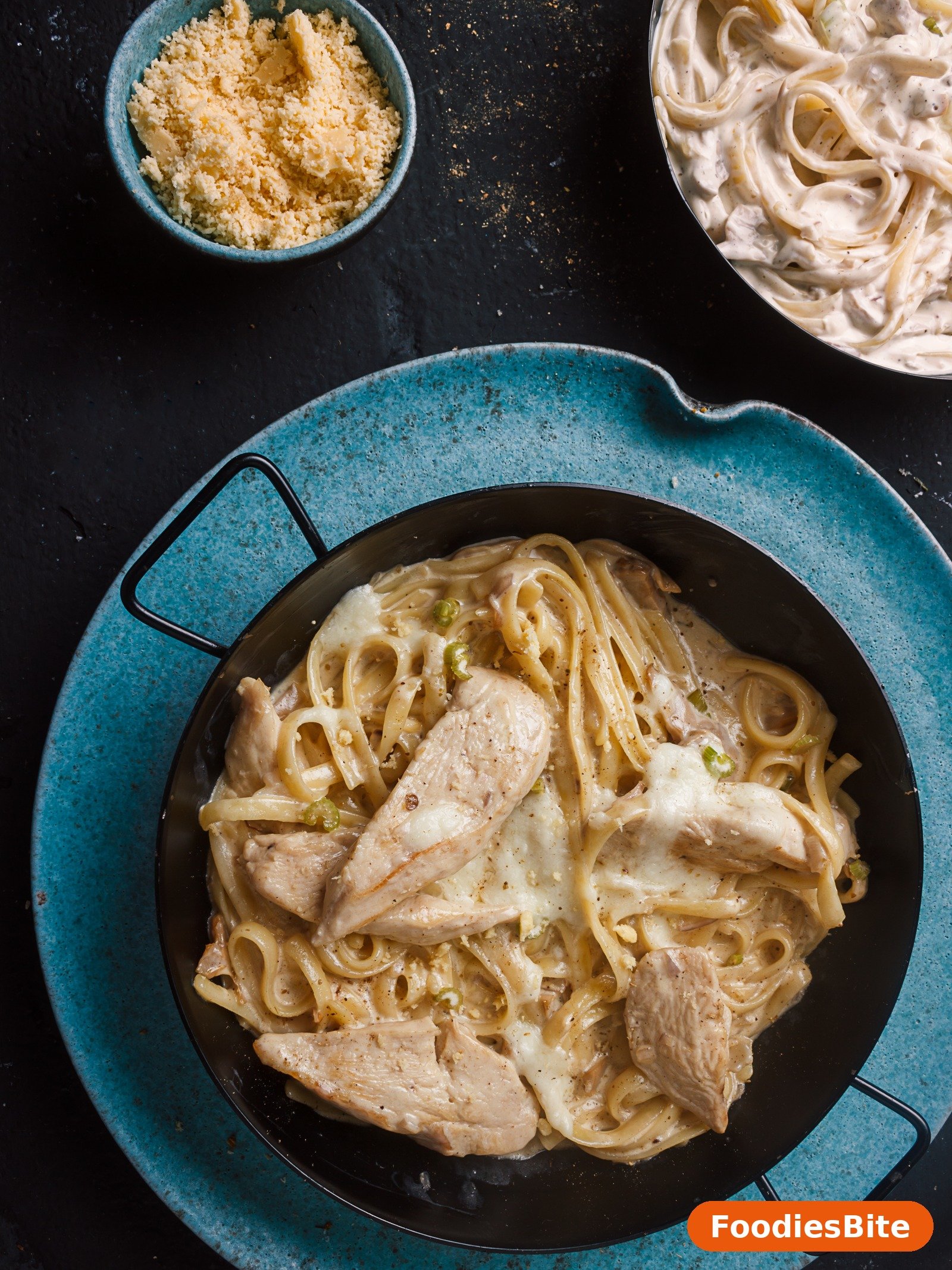
Chicken Tetrazzini
There is a certain kind of dinner that only exists because of leftover chicken. You open the fridge, you see the remains of last night’s roast, and you have two choices. You can slice it cold onto a sandwich and call it lunch, or you can turn it into something that feels like a proper meal all over again. Chicken tetrazzini is the second choice, and it is a very good one. It is spaghetti and chicken folded into a creamy mushroom sauce, scattered with Parmesan, and baked until the top goes golden and crisp at the edges. It tastes like comfort food, because it is, but it also tastes like somebody made an effort, which is the best kind of weeknight dinner there is.
I first came across tetrazzini years ago in an old community cookbook, the kind with the plastic spiral binding and somebody’s handwriting in the margins. The recipe was written in the shortest possible way, just a list of ingredients and four lines of instructions, and I almost skipped past it. It sounded too plain. Chicken, spaghetti, cream of mushroom soup, cheese, bake. But I had a container of leftover roast chicken and a box of spaghetti, and it was a Tuesday, and Tuesdays do not reward ambition. So I made it. And it was far better than it had any right to be. Rich without being heavy, creamy without being bland, and the sort of thing where everyone at the table went quiet for the first few bites, which is the highest compliment a Tuesday dinner can get.
This version is the one I have settled on after making it more times than I can count. The sauce is made from scratch, which sounds like more work than it is, and I will show you why it is worth the extra ten minutes. The mushrooms are cooked properly, until they are properly browned, because that is where the flavour lives. The chicken can be leftover roast chicken, rotisserie chicken, or chicken you cook just for this, and I will tell you how to do each one. The topping is a simple mix of Parmesan and panko, which goes golden and crunchy in the oven and gives you that lovely contrast against the creamy pasta underneath. And the whole thing bakes in one dish, which means there is not much washing up afterwards, and that matters more than most recipes admit.
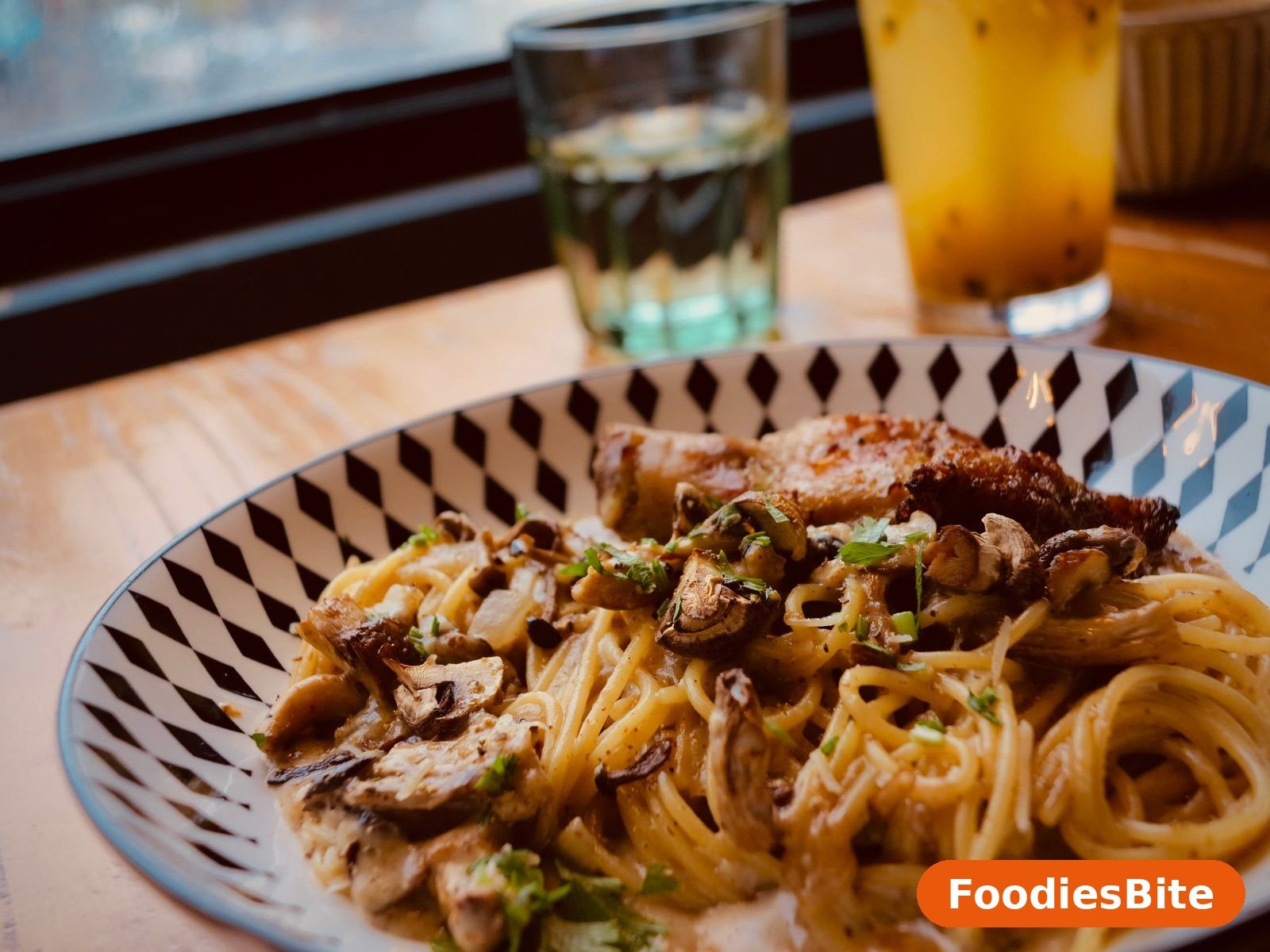
Why You’ll Love This Recipe
First, it is the best use of leftover chicken I know. A roast chicken gives you one great dinner and then a handful of meals that feel like afterthoughts, and tetrazzini is the one that does not feel like an afterthought at all. The chicken gets a second life in a rich sauce, and nobody at the table will think they are eating leftovers. If you do not have leftovers, a rotisserie chicken from the shop works beautifully, and it is what I use most of the time. It is already seasoned, already tender, and it saves you a whole step. Our chicken pot pie with flaky crust is another favourite way to use up leftover chicken, and it uses the same trick of letting a good sauce do the heavy lifting.
Second, it is a proper one-dish dinner. Everything goes into one baking dish, it bakes for half an hour, and you serve it straight from the dish at the table. There is no juggling of pans, no timing three different things to finish at once, and no pile of washing up afterwards. On a busy evening, that is worth as much as the taste, and the taste is very good. It is also the kind of dish that scales up easily. Double the recipe, use two dishes, and you have fed a crowd without doubling the work.
And third, it is a make-ahead and freezer-friendly casserole in the best sense. You can assemble the whole thing in the morning, keep it in the fridge, and bake it when you get home. You can freeze it before baking and pull it out on a day when cooking feels like too much. It reheats well, it travels well to a neighbour or a friend who has just had a baby, and it is the kind of food that makes people ask for the recipe. A casserole that does all of that, and still tastes like a treat rather than a chore, earns a permanent place in the rotation.
Ingredients You’ll Need
Here is what to gather for a 9×13-inch baking dish, which serves six people generously as a main course. If you are cooking for a smaller table, halve everything and use an 8×8-inch dish. The baking time stays about the same.
- 12 ounces spaghetti — Spaghetti is the traditional choice, and it is the right one. The long strands tangle together in the sauce and hold it in a way that short pasta does not. Break the spaghetti in half before cooking if you like, so it is easier to serve, or leave it whole. Linguine or fettuccine work too, but spaghetti is what this dish was built around.
- 3 cups cooked chicken, shredded or cut into bite-size pieces — Leftover roast chicken is ideal, and rotisserie chicken is the easiest option of all. If you are cooking chicken just for this, poach two large chicken breasts in salted water for about fifteen minutes, then shred them with two forks. The chicken should be tender and moist, not dry, because it will spend another half hour in the oven.
- 8 ounces cremini or white button mushrooms, sliced — Mushrooms are not optional in tetrazzini, and they do real work here. They give the sauce its savoury depth and its earthy flavour. Slice them fairly thin so they cook down and fold into the sauce rather than sitting on top of it in big pieces.
- 4 tablespoons unsalted butter — Half of this is for cooking the mushrooms and the onion, and the rest goes into the sauce. Butter is the base of the whole dish, and it is what gives the sauce its richness, so use the real thing.
- 1 small onion, finely diced — A small onion, cooked until soft and sweet, is the quiet backbone of the sauce. It should disappear into the background, not stand out, so dice it fine and cook it gently.
- 3 cloves garlic, minced — Garlic goes in after the onion has softened, and it only needs about a minute in the pan. Any longer and it will burn and turn bitter, and bitter garlic is very hard to fix once it is in a sauce.
- 1/4 cup all-purpose flour — This is what thickens the sauce. It is cooked with the butter and the mushrooms for a minute or two to get rid of the raw flour taste, and then the liquid goes in. It gives the sauce body without making it gluey.
- 2 cups low-sodium chicken broth — Broth is the backbone of the sauce, and it brings the savoury flavour that milk alone cannot. If you have homemade stock, use it. If not, a good shop-bought low-sodium broth is fine. Taste the sauce before you add salt, because broth varies a lot in saltiness.
- 1 cup heavy cream — Cream is what makes the sauce silky and rich. Half-and-half works if that is what you have, but the sauce will be a little thinner. Whole milk will work in a pinch, but the sauce will not be as luxurious, and it is more likely to split if it boils hard. Cream is the safer choice.
- 1/4 cup dry sherry (optional, but recommended) — A splash of sherry is the old-fashioned touch, and it is the ingredient that makes people ask what is in the sauce. It adds a nutty, slightly sweet depth that you cannot quite name. If you do not have sherry, a splash of dry white wine works, and if you would rather skip the alcohol entirely, just leave it out. The dish will still be very good.
- 1 cup freshly grated Parmesan cheese, divided — Freshly grated Parmesan melts smoothly into the sauce and gives it a salty, nutty flavour. The pre-grated kind in a tub does not melt as well and can make the sauce grainy, so if you can, grate it yourself. Half goes into the sauce, and half goes on top with the panko.
- 1/2 teaspoon dried thyme — Thyme and mushrooms are a natural pair, and a little dried thyme in the sauce ties the whole dish together. If you have fresh thyme, use a tablespoon of the leaves instead.
- 1/4 teaspoon ground nutmeg — Just a pinch. Nutmeg in a cream sauce is one of those things you cannot taste directly, but you would miss it if it were not there. It rounds out the richness and makes the sauce taste more like itself.
- Salt and black pepper, to taste — Season the sauce as you go, and taste it before you mix in the pasta. The Parmesan is salty, the broth is salty, so go gently and adjust at the end.
- 1/2 cup panko breadcrumbs — Panko is what gives the topping its crunch. Regular breadcrumbs work too, but they are finer and softer, and they do not crisp up in quite the same way. Panko stays light and crunchy, which is exactly what you want on top of a creamy casserole.
- 2 tablespoons chopped fresh parsley, for serving — A little parsley scattered over the top before serving is not just decoration. It adds a fresh, green note that cuts through the richness, and it makes the dish look finished.
How to Make Chicken Tetrazzini
There are four stages to this dish: the pasta, the sauce, the assembly, and the bake. None of them is difficult, and the whole thing comes together in about an hour, with most of that time being hands-off while it bakes. Here is how it goes, step by step.
Start by heating the oven to 375°F (190°C) and buttering a 9×13-inch baking dish. Getting the oven hot and the dish ready first means you will not be scrambling later, and it is a good habit for any casserole. Bring a large pot of salted water to a boil and cook the spaghetti until it is just short of done, about two minutes less than the packet says. This matters, because the pasta will keep cooking in the oven, and pasta that goes into the oven already fully cooked will come out soft and mushy. You want it to still have a bit of bite when you drain it. Drain it, toss it with a teaspoon of olive oil so the strands do not stick together, and set it aside.
While the pasta cooks, make the sauce. Melt the butter in a large, deep skillet over medium heat. Add the sliced mushrooms and cook them, stirring now and then, for about eight minutes. At first they will release a lot of water, and the pan will look wet. That is normal. Keep cooking, and the water will evaporate, and then the mushrooms will start to brown. This is the step people rush, and it is the one that matters most, because browned mushrooms taste like mushrooms and pale mushrooms taste like nothing much at all. Wait for the edges to turn golden and the pan to go dry. It is worth the patience.
Add the diced onion to the pan and cook for three or four minutes, until it is soft and translucent. Then add the garlic and the thyme and cook for one more minute, just until you can smell the garlic. Sprinkle the flour over the top and stir it in, cooking for about two minutes while you stir. The flour will coat the mushrooms and the onion and turn the mixture into a thick paste. This is your roux, and cooking it for a couple of minutes now is what stops the finished sauce from tasting like raw flour.
Now pour in the sherry, if you are using it, and stir and scrape the bottom of the pan for a minute. The sherry will bubble and reduce, and it will lift up all the browned bits stuck to the pan, which is where a lot of the flavour is. Then pour in the chicken broth, a little at a time, stirring all the while, so the sauce stays smooth and does not go lumpy. Once all the broth is in, add the cream and the nutmeg, and let the sauce come to a gentle simmer. It will thicken as it heats. Let it bubble gently for three or four minutes, stirring now and then, until it coats the back of a spoon. It should be the consistency of thick cream, not paste. If it gets too thick, add a splash more broth. If it is too thin, let it simmer for another minute or two.
Take the pan off the heat and stir in half a cup of the Parmesan, a handful at a time, until it melts into the sauce. Then taste it, and season with salt and pepper. Be honest with yourself here. The sauce should taste a little bit more seasoned than you think it needs to, because the pasta and the chicken are both unseasoned, and they will soak up some of that flavour. If it tastes flat, it needs more salt. If it tastes rich and savoury and you want to keep eating it with a spoon, it is ready.
Add the cooked spaghetti and the shredded chicken to the sauce, and toss everything together gently with tongs until the pasta is coated and the chicken is mixed through. You want every strand to be covered, and you want the chicken spread evenly, not sitting in one clump. If the mixture looks a little dry, add a splash of the pasta cooking water or a little more broth. The sauce will thicken further in the oven, so it should look slightly looser than you think it needs to be at this stage. That is a good sign, not a problem.
Tip the whole thing into the buttered baking dish and spread it out evenly. Scatter the remaining half cup of Parmesan and the panko breadcrumbs over the top, and dot the surface with a few small pieces of butter, about a tablespoon in total. Those little pieces of butter melt in the oven and help the topping go golden and crisp instead of dry. Cover the dish loosely with foil and bake for twenty minutes, then take the foil off and bake for another ten to fifteen minutes, until the top is golden brown and the sauce is bubbling at the edges. The foil first is important. It lets the inside heat through and the sauce finish thickening without the topping burning. The uncovered time at the end is what gives you the crunch.
Let the tetrazzini rest for ten minutes before you serve it. This is the hardest part, because it will smell wonderful and everyone will be hungry. But those ten minutes let the sauce settle and thicken, so it holds together on the plate instead of running all over it. A casserole cut too soon falls apart. A casserole given ten minutes slices cleanly and tastes better for it. Scatter the chopped parsley over the top, and bring the dish to the table. If you are using leftover chicken, it is worth remembering that cooked chicken should be reheated to 165°F (74°C) all the way through, and the USDA safe minimum internal temperature chart is the reference I keep bookmarked for exactly that kind of check.
The Sauce: The Heart of the Dish
Everything about tetrazzini comes down to the sauce, so it is worth understanding what makes it work and what can go wrong with it.
A cream sauce is really just three things: fat, flour, and liquid, cooked in the right order. The butter and flour make a roux, which is the thickener, and the broth and cream are the liquid that turns that thickener into a sauce. The order matters. If you add the liquid before the flour has cooked, the sauce will taste of raw flour. If you add the flour after the liquid, it will go lumpy and you will be whisking for ten minutes trying to fix it. Butter, flour, cook it for two minutes, then liquid, a little at a time, stirring all the while. That is the whole technique, and it is the same one behind a hundred other sauces, from a white sauce for lasagne to a gravy. Learn it once and you have it for life.
The other thing that matters is the mushrooms. Tetrazzini is sometimes made with canned cream of mushroom soup, and I understand why. It is fast, it is easy, and it is what a lot of us grew up with. But a from-scratch sauce tastes like a different dish entirely. The difference is the mushrooms themselves, cooked until they are browned, and the sherry, and the Parmesan melted in at the end. None of it is hard. It is just a few more minutes in the pan, and the result is a sauce that tastes like you made it, because you did.
If your sauce ever turns out too thick, do not panic. It is the easiest problem in this recipe to fix. Add a splash of broth, or a splash of the pasta cooking water, which is starchy and helps the sauce cling to the pasta, and stir it in. If it is too thin, let it simmer for another minute or two. It will thicken. And if it splits, which can happen if the cream boils too hard, take it off the heat and whisk in a spoonful of cold cream. That usually brings it back together. The sauce is forgiving. It just wants a little attention and a gentle heat.
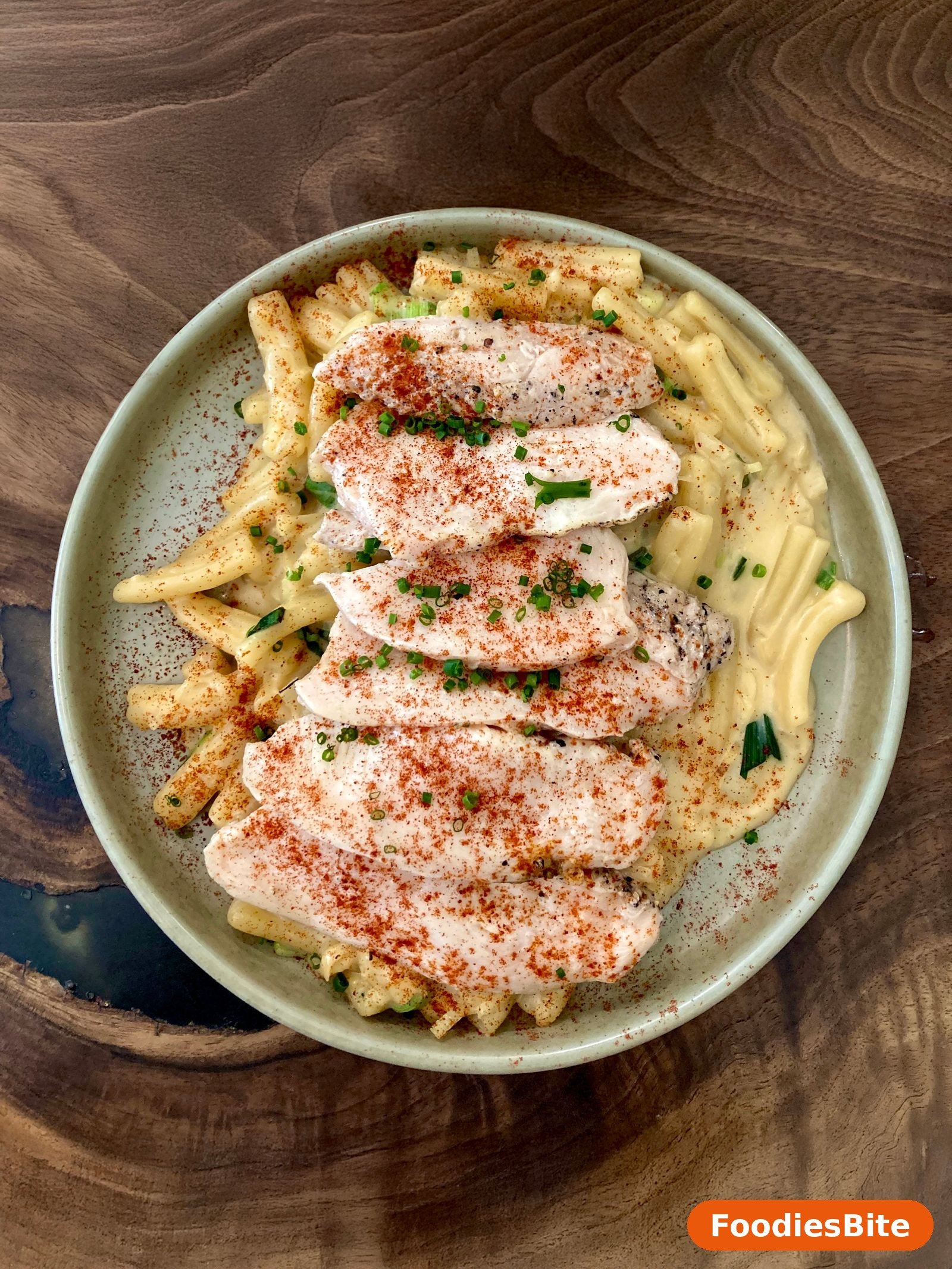
Tips for the Best Chicken Tetrazzini
A few small things I have learned from making this dish more times than I can count.
Do not overcook the pasta. This is the single most common mistake with tetrazzini, and it is the one that ruins the texture more than anything else. The pasta cooks twice, once in the pot and once in the oven, and if it is fully cooked before it goes into the dish, it will be soft and mushy by the time it comes out. Two minutes less than the packet says. It will feel underdone when you drain it, and that is exactly right. It finishes in the oven, in the sauce, and that is what keeps it firm enough to hold its shape.
Brown the mushrooms properly. I said it above and I will say it again, because it is the difference between a sauce that tastes like something and a sauce that tastes like nothing. Mushrooms need time and space in the pan. If you crowd them, they will steam instead of browning, so use a wide skillet and do not stir them too often. Let them sit, let them release their water, and then let them brown. Eight minutes is about right, and you will know they are ready when the pan goes dry and the edges turn golden.
Use freshly grated Parmesan. The pre-grated kind has anti-caking agents in it that stop it melting smoothly, and it can make a cream sauce grainy. A block of Parmesan and a box grater take about two minutes, and the sauce will be noticeably smoother for it. It is one of those small things that adds up.
Taste the sauce before you add the pasta. This is the last moment you can fix the seasoning easily, so use it. The sauce should taste a little too salty and a little too rich on its own, because the pasta and the chicken will dilute it. If it tastes perfect on its own, it will taste under-seasoned in the finished dish. Season boldly here and you will be rewarded later.
And let it rest. Ten minutes, minimum, after it comes out of the oven. I know it is tempting to serve it straight away, and I know the topping is at its crispiest right out of the oven. But a casserole that has rested for ten minutes holds together, the sauce thickens, and every serving looks like it was meant to be served that way. A casserole cut too soon falls apart on the plate and takes the topping with it. Ten minutes is not a long time to wait for a better dinner.
Variations to Try
Once you have made the classic version, tetrazzini is a very good base to play with, and the method stays the same, so you can change the flavours without learning anything new.
For turkey tetrazzini, swap the chicken for leftover turkey, which is exactly what this dish was made for after a holiday. It works the same way, and it is one of the best things you can do with the turkey that is left after Thanksgiving. The sauce, the pasta, the topping, all of it stays the same. If you like that kind of leftover magic, our Chicken Divan Casserole is another one built for exactly the same job, and it is just as good at turning last night’s dinner into tonight’s.
For a tuna tetrazzini, which is the other classic version of this dish, use two cans of tuna, drained, instead of the chicken. It is an old-school pantry dinner, and it is the version a lot of people grew up with. The tuna goes in at the same stage as the chicken, and everything else stays the same. It is a little more savoury and a little less rich, and it is a very good way to make a satisfying dinner out of things you already have in the cupboard.
For a mushroom tetrazzini with no meat at all, double the mushrooms and add a handful of baby spinach, stirred into the sauce until it wilts, just before you add the pasta. The dish is still rich and satisfying, because the sauce is the star, and the extra mushrooms give it enough body that you will not miss the chicken. It is a good option for a meat-free Monday, and it is the version I make when I have vegetarians at the table.
For a spicy tetrazzini, add a pinch of red pepper flakes with the garlic, and a spoonful of Dijon mustard to the sauce with the cream. The mustard adds a gentle sharpness that cuts through the richness, and the pepper flakes give the whole dish a little warmth at the back of your throat. It is a small change, but it makes the dish taste noticeably more grown-up, and it is my favourite variation when I am cooking just for the adults.
For a lighter tetrazzini, use half-and-half instead of heavy cream, and use a little less Parmesan in the sauce. The dish will be thinner and less rich, but it will still be creamy and satisfying, and it is a reasonable compromise if you are watching the richness. You can also add a cup of frozen peas to the pasta in the last minute of cooking, which adds colour and sweetness and makes the whole thing feel a little fresher.
What to Serve With Chicken Tetrazzini
Tetrazzini is a rich dish, and it is at its best with something fresh and simple alongside it to cut through the cream.
A green salad is the classic pairing, and it is the classic for a reason. Something crisp and sharp, like a simple salad with a lemon vinaigrette, or a Caesar salad with plenty of lemon in the dressing, gives you a cool, bright contrast to the warm, rich pasta. The acidity wakes your palate up between bites, and it makes the tetrazzini taste richer by comparison, which is a neat trick. Keep the salad simple. This is not the moment for a complicated salad with a dozen ingredients. Lettuce, a good dressing, and maybe some shaved Parmesan is all you need.
Garlic bread is the other obvious choice, and it is the one people will ask for. A few slices of crusty bread, brushed with garlic butter and toasted until golden, are perfect for scooping up the last of the sauce from the plate. If you have the oven on anyway, it takes five minutes, and it is the kind of thing that makes a weeknight dinner feel like a proper meal. Just do not serve both garlic bread and a heavy dessert. One rich thing at a time is enough.
Steamed or roasted vegetables work well too, especially something green. Roasted broccoli with a little lemon, or green beans with garlic, or asparagus if it is in season. The bitterness of green vegetables is a good counterpoint to the cream sauce, and it makes the plate look better too. A plate of creamy pasta on its own is a lovely thing, but a plate of creamy pasta with something green on the side looks like a meal somebody thought about.
And if you are serving tetrazzini as part of a bigger spread, it sits very happily next to other creamy, comforting dishes. Our creamy garlic chicken pasta is a good partner if you are feeding a crowd and want two pasta dishes on the table, and our one-pot chicken alfredo pasta is another one-pan favourite that uses the same pantry staples. That is the thing about a dish like this. It does not need much around it, but it plays well with others.
Storage and Freezing
Leftover tetrazzini keeps well, and it is one of those dishes that is almost as good the next day as it is on the day it was made, as long as you store it and reheat it properly.
In the fridge, tetrazzini will keep for three to four days in an airtight container. The sauce will thicken as it cools, and the pasta will soak up some of the cream, so when you reheat it, add a splash of milk or broth to loosen it back up. Reheat it in the oven at 350°F (175°C), covered with foil, for about twenty minutes, or in the microwave in short bursts, stirring in between. The oven is better, because it reheats the topping more evenly, but the microwave is fine for a single serving. Just do not reheat it more than once. Cooked chicken and cream sauce are not things to keep warming up and cooling down again.
To freeze tetrazzini, assemble it in a freezer-safe dish, but do not bake it. Cover it tightly with cling film and then with foil, and label it with the date. It will keep for up to three months. When you want to eat it, thaw it overnight in the fridge, then bake it as normal, adding ten minutes to the baking time. The topping will not be quite as crisp as a fresh one, but the flavour will be there, and you can always scatter a little extra Parmesan and panko over the top before baking to freshen it up. A frozen tetrazzini in the freezer is one of the best insurance policies a busy household can have.
You can also freeze the sauce on its own, without the pasta. Make a double batch of the sauce, freeze half of it in a container, and you have the base for your next tetrazzini ready to go. Thaw it overnight in the fridge, warm it gently in a pan, and toss it with freshly cooked spaghetti and chicken. It is a shortcut that still tastes homemade, because the sauce is homemade, and it is a good way to make a weeknight dinner feel like less of a production.
Frequently Asked Questions
Can I make chicken tetrazzini ahead of time?
Yes, and it is a very good make-ahead dish. Assemble the whole thing, cover it tightly, and keep it in the fridge for up to a day before baking. Add five to ten minutes to the baking time, because it will be going into the oven cold. You can also assemble it and freeze it unbaked for up to three months, then thaw it overnight in the fridge and bake as normal. If you want to get ahead even further, the sauce can be made a day ahead and kept in the fridge, then warmed gently and tossed with freshly cooked pasta and chicken when you are ready to bake.
Can I use rotisserie chicken?
Yes, and it is what I use most of the time. A rotisserie chicken is already seasoned and tender, and it saves you a whole step. Pull the meat off the bones, shred it or cut it into bite-size pieces, and use about three cups. You will need one medium rotisserie chicken for this recipe, and you will have a little left over. The dark meat is particularly good in tetrazzini, because it stays moist in the oven, but a mix of light and dark meat is the best of both worlds.
What pasta works best for tetrazzini?
Spaghetti is the traditional choice, and it is the one I recommend. The long strands hold the sauce well and give the dish its characteristic texture. Linguine and fettuccine are good substitutes, and they behave in much the same way. Short pasta like penne or rigatoni will work, but the dish will feel different, more like a pasta bake than a tetrazzini. If you do use a short pasta, cook it two minutes less than the packet says, just as you would with spaghetti. The dish is named for the opera singer Luisa Tetrazzini, and if you like food history, the story of tetrazzini is a good rabbit hole, full of early twentieth-century San Francisco restaurants and a singer who was apparently very fond of her pasta.
Can I make tetrazzini without mushrooms?
You can, but the dish will lose a lot of its flavour. Mushrooms are what give the sauce its savoury depth, and without them the sauce is just cream and cheese, which is pleasant but a bit one-note. If you really do not like mushrooms, or someone at the table is allergic, you can replace them with a cup of finely diced celery and a cup of frozen peas, cooked in the butter until soft, which will give the sauce some texture and sweetness. It will not be the same dish, but it will still be a good creamy chicken pasta bake, and sometimes that is enough.
Why is my tetrazzini dry?
A dry tetrazzini usually means one of two things. The first is that the sauce was too thick before it went into the oven. The sauce thickens as it bakes, so it should look slightly looser than you think it needs to be when you mix in the pasta. If it looks thick in the pan, add a splash of broth or pasta water before you assemble the dish. The second is that the pasta was overcooked before it went in, and it soaked up all the sauce in the oven. Cook the pasta two minutes less than the packet says, and it will absorb sauce without drying the dish out. And if the leftovers look dry the next day, a splash of milk or broth when you reheat them will bring the sauce back.
Can I freeze chicken tetrazzini after baking it?
Yes, but it is better to freeze it before baking. A baked tetrazzini that is frozen and reheated will be fine, but the pasta will be softer and the topping will lose its crunch. If you do freeze leftovers, let them cool completely, wrap them tightly, and freeze them for up to two months. Thaw overnight in the fridge and reheat in the oven at 350°F (175°C), covered with foil, for about twenty minutes, with a splash of milk or broth to loosen the sauce. The flavour will still be there, and a fresh scattering of Parmesan on top before serving will help it look and taste like a proper dinner again.