
Chicken Pot Pie with Flaky Crust
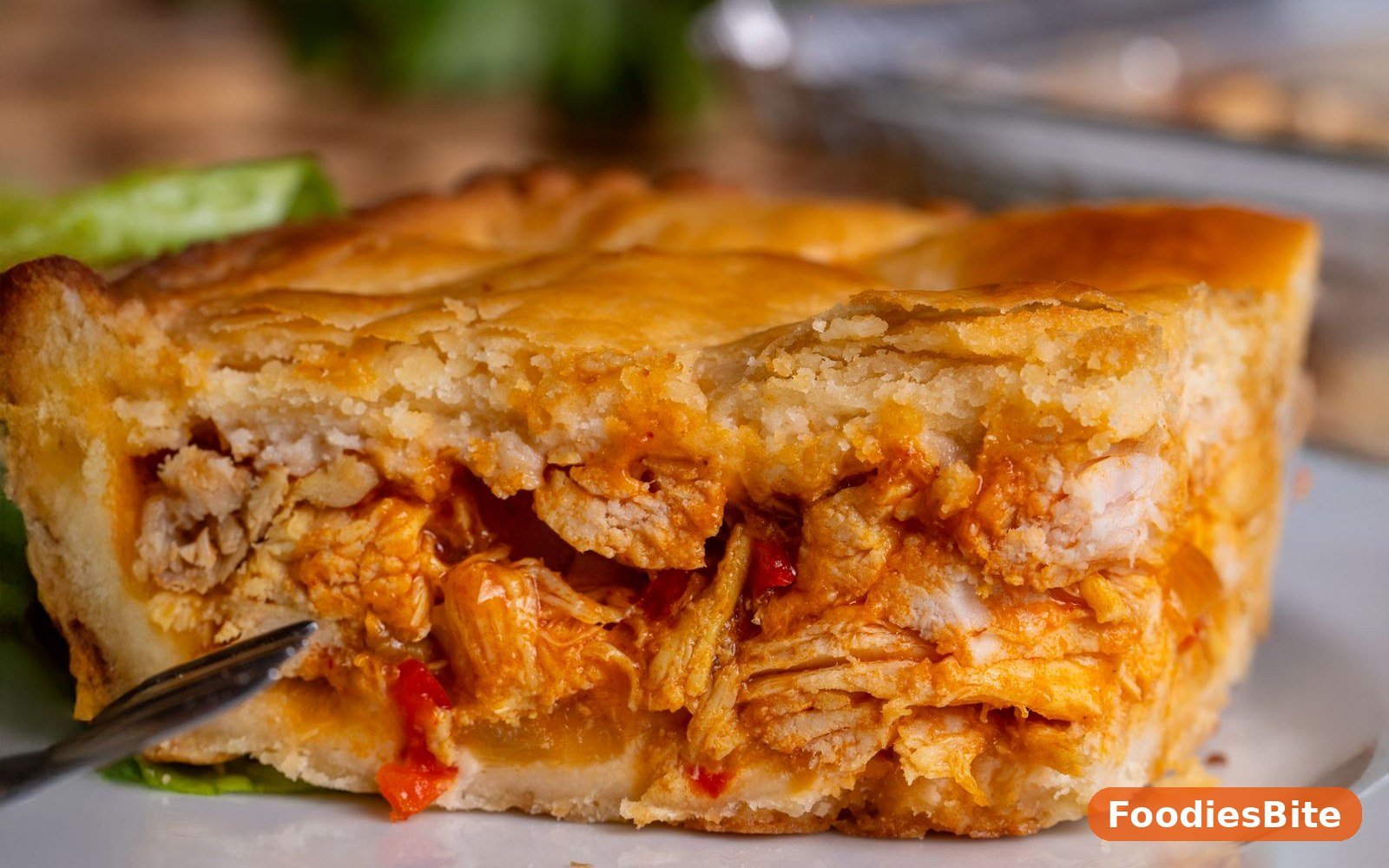
There is a particular kind of quiet that falls over a table when a chicken pot pie comes out of the oven. The crust is golden and puffed, butter glistening on top, and when you cut into it, steam rises up carrying the smell of chicken, thyme, and cream. Everyone leans in a little. That is what this recipe is about — not a fancy dinner, not a showpiece, just a deeply comforting meal that makes an ordinary evening feel like something worth sitting down for. Tender chicken, sweet carrots, and peas in a thick, creamy sauce, all tucked under a flaky pastry crust that shatters when your fork goes through it.
I learned to make pot pie the way most people learn the recipes that matter: standing next to someone who already knew how, watching and asking questions. My grandmother made hers on Sundays, usually with the leftover chicken from Saturday’s roast, and she never measured anything. A handful of flour, a splash of cream, “enough butter” — which, in her kitchen, meant more than you would think. The first time I tried it on my own, the filling was too thin and the bottom crust was soggy, and I ate it anyway, because even a mediocre pot pie is still pretty good. It took me a few tries to get it right, and the version below is the one I have made ever since, the one my family asks for when the weather turns cold or when someone has had a long week.
What makes this recipe work is balance. The filling needs to be thick enough to hold together when you serve it, but not so thick that it turns stodgy. The crust needs to be flaky and golden, not pale and soft, which means keeping the butter cold and the oven hot. And the whole thing needs enough seasoning — a pot pie with an under-seasoned filling is a sad thing, all cream and no character. This one has thyme, a little garlic, a pinch of nutmeg, and a good amount of black pepper, and those small things make the difference between a pie that is fine and a pie that people remember. If you have leftover roast chicken, this is a wonderful way to use it — our whole roast chicken with garlic and herbs makes a perfect starting point, and the leftovers practically ask to become pot pie.
It is also a more practical dinner than it looks. The filling comes together in one pan in about twenty minutes, the crust is a single sheet of store-bought pastry if you want it to be, and the oven does the rest. You can make the filling a day ahead, and it feeds a family of four generously, with enough left over for lunch the next day. For more ideas about what to do with chicken, the chicken recipes collection at BBC Good Food is a good place to browse.
Why You’ll Love This Recipe
The first reason is the crust. A good pot pie crust is flaky, buttery, and golden, and it is what separates a pot pie from a chicken stew with a lid. This recipe uses a double-crust approach in spirit — a sturdy base and a beautiful top — but keeps it simple: a single sheet of good puff pastry or pie dough on top, rolled out, draped over the filling, and crimped at the edges. As it bakes, the butter in the pastry melts and creates layers, and the top turns a deep golden brown. When you cut into it, it shatters into flakes, and those flakes soak up a little of the creamy sauce underneath. It is the best part of the dish, and honestly, it is the reason most people come back for seconds.
The second reason is the filling. This is not a thin, watery filling, and it is not a heavy, gluey one either. It is thick and creamy, with real pieces of chicken, carrots that are tender but not mushy, and peas that stay bright green. The sauce is made with butter, flour, chicken stock, and a splash of cream, and it coats everything without drowning it. Every spoonful has a bit of everything in it — chicken, vegetables, sauce, and a piece of crust — and that is exactly how a pot pie should eat. If you like creamy chicken dinners, you will also love our creamy garlic chicken pasta, which has the same rich, comforting sauce in a different form.
It is also a wonderful way to use up leftovers. A roast chicken from Sunday, a few carrots sitting in the vegetable drawer, a handful of frozen peas — that is most of this recipe already. Pot pie has always been a frugal dish, a way to turn yesterday’s chicken into today’s dinner, and there is something satisfying about that. It feels resourceful, not cheap. And if you do not have leftovers, a couple of chicken breasts poached in stock will do the job just as well, and the stock you make in the process becomes the base of the sauce.
Finally, it is a meal that brings people to the table. There is something about a pie coming out of the oven that makes everyone show up on time. It is a whole dinner in one dish — protein, vegetables, and pastry — so you do not need to fuss over three side dishes. A simple salad is all it needs. And it is the kind of food that makes a cold evening feel warm, a long day feel shorter, and an ordinary Tuesday feel a little bit special. That is not a small thing.
Ingredients You’ll Need
For a family-sized pot pie that serves four generously, you will need about two cups of cooked chicken, shredded or cut into bite-sized pieces — roughly two chicken breasts, or the meat from half a roast chicken. You will also need two tablespoons of butter, one onion finely chopped, two carrots peeled and diced, two celery stalks diced, two cloves of garlic minced, a third of a cup of all-purpose flour, two cups of chicken stock, half a cup of heavy cream, one cup of frozen peas, one teaspoon of fresh thyme leaves (or half a teaspoon of dried thyme), a pinch of nutmeg, salt and black pepper to taste, and one sheet of puff pastry or pie dough, thawed, plus one beaten egg for brushing the top.
The chicken is the heart of the dish, and it is worth using good chicken. Leftover roast chicken is ideal — it is already seasoned, already tender, and it has that roasted flavor that makes the filling taste like it has been cooking for hours. If you are starting from raw chicken, poach two chicken breasts gently in the stock you will use for the sauce, about fifteen minutes, until they are just cooked through, then shred them with two forks. Save the stock. It will taste better than stock from a carton, and it costs nothing extra. If you are in the mood for a different chicken dinner tonight, our easy lemon garlic chicken thighs are a quick, bright alternative.
The pastry is where you get to choose how much work you want to do. A sheet of store-bought puff pastry, thawed according to the package, makes a beautiful, flaky top crust with almost no effort, and I use it more often than not. If you prefer a traditional pie dough, that works wonderfully too, and it gives the pie a slightly sturdier, more old-fashioned crust. Either way, keep the pastry cold until you need it — cold pastry bakes up flakier, because the butter stays in distinct pieces until it hits the hot oven, and that is what creates the layers. If the pastry gets soft and sticky while you are working with it, pop it back in the fridge for ten minutes. It will be patient with you.
For the vegetables, carrots and peas are the classics, and they are classic for a reason: the carrots go sweet and tender, the peas stay bright and pop when you bite them, and together they give the filling color and texture. Celery adds a quiet, savory background note that you would miss if it were gone. If you want to add more, a cup of diced potato, cooked until just tender, is a lovely addition, and a handful of mushrooms, sautéed first, adds an earthy depth. The thyme is important — it is the herb that makes a pot pie taste like a pot pie — and the pinch of nutmeg is my grandmother’s touch. You will not taste it as nutmeg, but the sauce will taste rounder and warmer without you quite knowing why. For more on roasting a chicken to use in dishes like this, BBC Good Food has a lovely guide to roast chicken.
How to Make Chicken Pot Pie with Flaky Crust
Start by making the filling, because it needs a little time to cool before it goes under the pastry. Melt the butter in a large, deep pan over medium heat, and add the onion, carrots, and celery. Cook them for about eight minutes, stirring now and then, until the onion is soft and translucent and the carrots are just beginning to soften. They should not be fully cooked yet — they will finish in the oven — but they should have lost their raw edge. Add the garlic and cook for one more minute, just until it smells fragrant. Garlic burns quickly, so keep an eye on it and do not let it brown.

Sprinkle the flour over the vegetables and stir it in, cooking for about a minute until the flour smells toasty and coats everything in a pale, buttery paste. This is the roux, and it is what thickens the sauce, so do not skip this step — raw flour tastes chalky, and a minute of cooking fixes that. Then pour in the chicken stock a little at a time, stirring constantly, and watch the sauce come together. It will look thin at first, then it will thicken as it heats. Bring it to a gentle simmer and let it cook for three or four minutes, until it coats the back of a spoon. Stir in the cream, the thyme, and the pinch of nutmeg, and season generously with salt and black pepper. Taste it — the sauce should taste well-seasoned on its own, because the chicken and vegetables will dilute it a little.
Now fold in the chicken and the frozen peas. The peas do not need to be thawed; they will thaw in the hot sauce and cook in the oven, and adding them frozen helps them stay bright green instead of turning grey and mushy. Stir everything together and take the pan off the heat. Let the filling cool for about fifteen minutes. This matters more than it seems: if you put hot filling under cold pastry, the steam will make the crust soggy from underneath, and all your work on a flaky top will be wasted. While it cools, preheat the oven to 400°F (200°C) and take the pastry out of the fridge.
Spoon the filling into a deep pie dish or a nine-inch baking dish, and spread it out evenly. Lay the pastry over the top, letting it drape over the edges, and trim away the excess, leaving about an inch of overhang. Crimp the edges with your fingers or press them down with a fork — this seals the pie and keeps the filling from bubbling out. Cut three or four small slits in the top so the steam can escape, and brush the whole surface with the beaten egg. The egg wash is what gives the crust its deep golden shine. Bake for twenty-five to thirty minutes, until the crust is puffed and deeply golden and the filling is bubbling up around the edges. If the edges start browning too fast, cover them loosely with a strip of foil. Let the pie rest for ten minutes before serving — the filling needs a moment to settle, and it will be hot enough to burn your mouth straight out of the oven. If you like one-pan chicken dinners, our one-pan lemon chicken and potatoes is another cozy weeknight favorite.
Tips for the Best Chicken Pot Pie
The most important tip is to keep the pastry cold and the oven hot. Flaky pastry is made by cold butter and high heat: the butter melts in the oven and creates steam, and the steam pushes the layers of dough apart. If the pastry warms up on the counter before it goes in, the butter melts early, the layers collapse, and you get a soft, flat crust instead of a flaky one. So keep the pastry in the fridge until the filling is ready, work quickly when you roll it out, and make sure the oven is fully preheated before the pie goes in. If your kitchen is warm, you can even pop the assembled pie into the fridge for ten minutes before baking.
The second tip is to let the filling cool before you add the pastry. I know it is tempting to move fast, but hot filling under raw pastry is the number one cause of a soggy top crust. Fifteen minutes on the counter is enough — the filling will still be warm, but it will not be steaming. While it cools, you can clean up the pan and set the table. It is a small pause that makes a real difference, and it is the kind of thing that separates a good pot pie from a great one.
Third, do not skimp on the seasoning. Cream and flour are bland on their own, and they need salt, pepper, and thyme to come alive. Taste the sauce before you add the chicken and peas, and adjust it until it tastes a little more seasoned than you think it should — the pastry and the chicken will soften the flavor. A pinch of nutmeg, a squeeze of lemon juice, or a dash of Worcestershire sauce can all add depth if the sauce tastes flat. And use good stock. The stock is the backbone of the sauce, and a weak, watery stock will give you a weak, watery filling.
Variations to Try
The simplest variation is the protein. This recipe works beautifully with leftover turkey, and it is the single best thing I know to do with the turkey after a holiday meal. Just swap the chicken for an equal amount of cooked turkey, and everything else stays the same. You can also make it with cooked ham, or with a mixture of chicken and ham, which is wonderfully savory. For a vegetarian version, leave out the chicken and add a cup of diced potatoes, a cup of sliced mushrooms, and a cup of chickpeas, and use vegetable stock instead of chicken stock. The sauce and the crust do most of the work, so the pie is still rich and satisfying.
For a richer filling, add a handful of sautéed mushrooms, a cup of diced potato, or a splash of white wine to the sauce before the stock goes in. The wine adds a lovely depth — let it cook for a minute until the alcohol smell fades. For a lighter version, use milk instead of cream, and add a little more stock. It will not be quite as rich, but it will still be creamy and comforting. You can also add a teaspoon of Dijon mustard to the sauce, which gives it a gentle tang that works beautifully with the chicken.
The crust is another place to play. A lattice top looks beautiful and lets the steam escape on its own — just cut the pastry into strips and weave them over the filling. You can also make individual pot pies in ramekins or small ovenproof bowls, which are wonderful for dinner parties or for kids, who love having a pie of their own. Just divide the filling between four ramekins, top each one with a round of pastry, and bake for about twenty minutes, until golden. And if you want a cheesy version, sprinkle a handful of grated cheddar over the filling before you add the pastry — it melts into the sauce and adds a savory richness.
Serving Ideas

Chicken pot pie is a complete meal on its own, so the sides should be simple. A crisp green salad with a sharp vinaigrette is the perfect partner — the fresh, acidic dressing cuts through the richness of the creamy filling and the buttery crust, and the crunch of the lettuce is a nice contrast to the soft, warm pie. A simple salad of mixed leaves, cucumber, and a lemon vinaigrette is all you need. Steamed green beans with a little butter, or roasted carrots, are also lovely alongside.
For a Sunday dinner, serve the pie in the middle of the table with the salad and a basket of bread, and let everyone help themselves. The pie is the star, and it deserves the attention. A glass of white wine — something dry, like a sauvignon blanc — goes beautifully with it, and sparkling water with lemon is a good non-alcoholic option. If you are serving children, a small glass of apple juice or milk is just right.
Storage and Reheating
Leftover chicken pot pie keeps well in the refrigerator for three to four days. Cover the dish tightly with foil or transfer individual slices to airtight containers. The crust will soften a little in the fridge — that is unavoidable — but it will crisp up again when you reheat it properly. The filling will also thicken as it cools, which is fine; it loosens up again when it is heated.
To reheat, the oven is the best tool. Place the pie or the slices in an ovenproof dish, cover loosely with foil, and heat at 350°F (175°C) for about twenty minutes, until warmed through. Remove the foil for the last five minutes so the crust can crisp up again. The air fryer also works well for individual slices: three to four minutes at 350°F, and the crust comes back beautifully. Avoid the microwave if you can — it will make the crust soft and chewy, and the filling can heat unevenly. If you must use it, reheat in short bursts and let it stand for a minute before eating.
Frequently Asked Questions
Can I use store-bought puff pastry for chicken pot pie?
Yes, absolutely, and I do it most of the time. A sheet of good-quality store-bought puff pastry makes a beautiful, flaky top crust with almost no effort, and the result is genuinely excellent. Just thaw it according to the package directions — usually about forty minutes on the counter, or overnight in the fridge — and keep it cold until you are ready to use it. Roll it out just enough to cover your dish, drape it over the filling, crimp the edges, and bake. If you prefer a more traditional crust, a store-bought pie dough works just as well. There is no shame in using store-bought pastry; even professional cooks do it.
Why is my pot pie crust soggy on the bottom?
A soggy bottom crust usually means the filling was too hot or too thin when it went under the pastry, or the oven was not hot enough. Let the filling cool for fifteen minutes before assembling the pie, and make sure the sauce is thick enough to coat a spoon — if it is runny, simmer it for a few more minutes before adding the chicken. A hot oven, 400°F, helps the pastry set quickly before the steam can soak into it. If you are using a bottom crust as well as a top, blind baking the base for ten minutes before adding the filling will keep it crisp. And always cut slits in the top crust so the steam has somewhere to go.
Can I make chicken pot pie ahead of time?
Yes, and it is a great make-ahead dinner. You can make the filling up to two days ahead and keep it in the refrigerator in an airtight container. You can also assemble the whole pie, cover it tightly, and keep it in the refrigerator for up to a day before baking — just add five minutes to the baking time, since it will be going into the oven cold. If you are assembling it ahead, wait to brush the top with egg until just before baking, so the egg wash stays fresh and the crust browns evenly. The assembled pie also freezes well for up to three months.
What is the best chicken to use for pot pie?
Leftover roast chicken is the best choice — it is already seasoned and tender, and it has a roasted flavor that makes the filling taste like it has been cooking for hours. If you are starting from raw chicken, poach two chicken breasts gently in the stock you will use for the sauce, then shred them with two forks. Rotisserie chicken from the supermarket is another excellent option, and it saves a lot of time. Avoid using chicken that has been cooked until dry, since it will not soften in the sauce. Dark meat, like thighs, stays more moist than breast meat, so a mixture of the two is ideal if you have it.
How do I know when the pot pie is done?
The pie is done when the crust is puffed and deeply golden brown, and the filling is bubbling up around the edges and through the slits in the top. That usually takes twenty-five to thirty minutes at 400°F. If the crust is browning too fast, cover the edges loosely with foil and keep baking until the filling is bubbling. The filling should be hot all the way through — if you have a thermometer, the center should reach 165°F. Let the pie rest for ten minutes before serving, so the filling can thicken and settle.
Can I freeze chicken pot pie?
Yes, chicken pot pie freezes very well, both baked and unbaked. Let a baked pie cool completely, then wrap it tightly in foil and plastic wrap, or freeze individual slices in freezer bags. It will keep for up to three months. Thaw overnight in the refrigerator, then reheat in a 350°F oven for about thirty minutes, until heated through and the crust is crisp. To freeze an unbaked pie, assemble it, wrap it tightly, and freeze for up to three months. Bake from frozen at 375°F for about fifty minutes, covering the top with foil for the first half so it does not burn, until the crust is golden and the filling is bubbling.
There is a reason chicken pot pie has been on family tables for generations. It is not a complicated dish, and it is not a fashionable one, but it is honest food — chicken, vegetables, cream, and pastry, cooked slowly and served hot, in a dish that you put in the middle of the table and share. It asks for a little patience and a little care, and it gives back far more than that: a warm kitchen, a full table, and a meal that people remember. Make it on a cold evening, when the day has been long and the house is quiet, and let the smell of it fill the kitchen. That is what it is for.




3 Comments