German Chocolate Cake
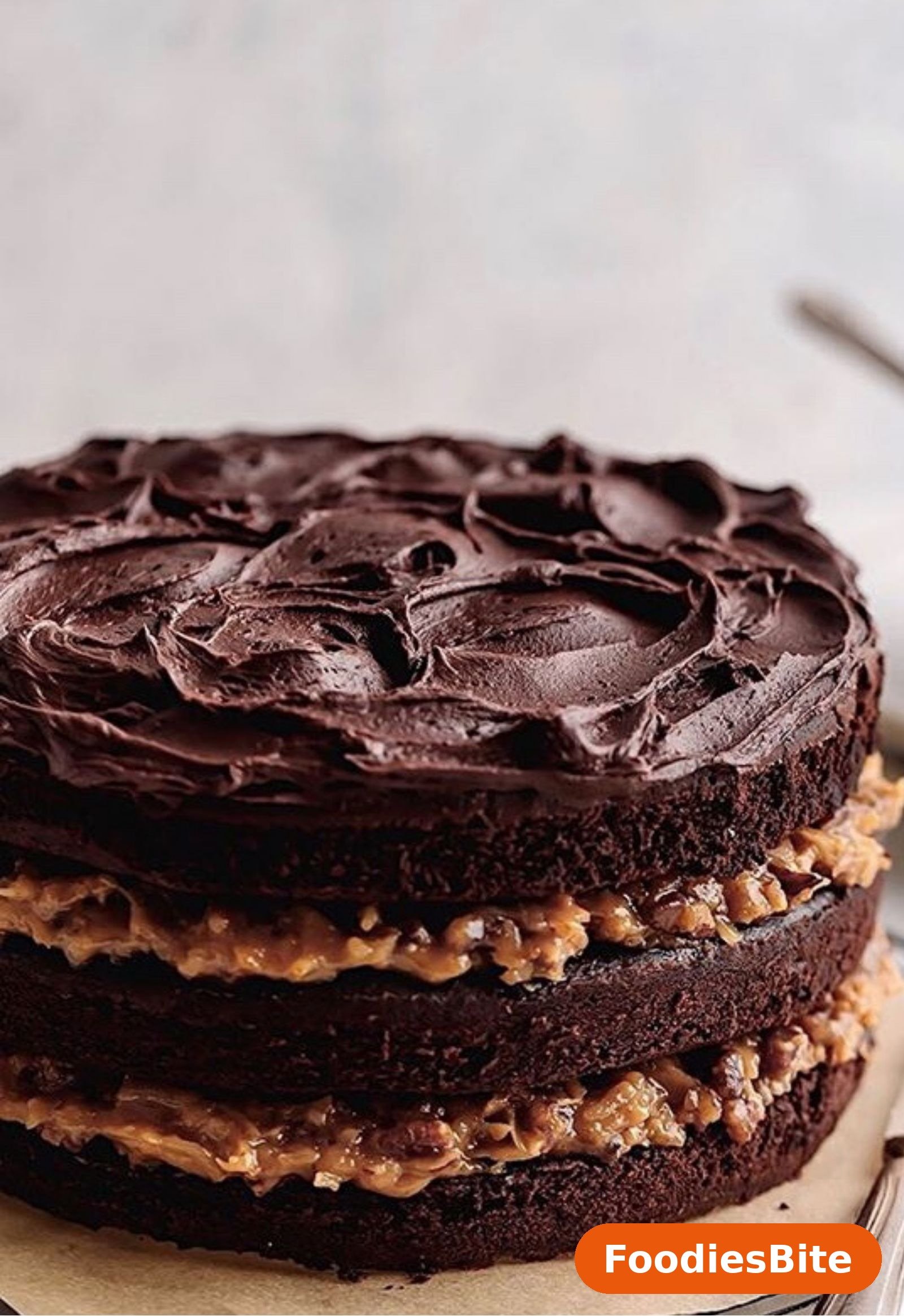
There are cakes you make once a year, and then there is German chocolate cake, which is the cake people ask for by name. It is three layers of soft, dark chocolate sponge, stacked with a thick, gooey frosting made from coconut and pecans, and it tastes like the kind of cake your grandmother made for birthdays, the one that never had leftovers. It looks impressive on the table, it slices beautifully, and it is far easier to make than it looks, as long as you know the two things that matter most: the cake layers have to stay moist, and the coconut-pecan frosting has to be cooked properly, not just stirred together.
I first made this cake for my father’s birthday, years ago, when I was still nervous about layer cakes in general. I had always thought a three-layer cake was something only confident bakers attempted, the kind of thing you needed a special occasion and a whole free afternoon for. What I found instead was a cake that forgives a lot. The sponge is oil-based, which means it stays moist even if you leave it in the oven a minute too long, and the frosting is cooked on the stove, which means you can see exactly when it is ready. The cake came out of the oven looking a little plain, and then the frosting went on, and suddenly it looked like a bakery cake, the kind with the golden, nutty filling peeking out between dark layers. My father had two slices before dinner was even served, and that is when I knew this recipe was a keeper.
The name causes a little confusion, and it is worth clearing up before you start, because it changes how you think about the cake. German chocolate cake is not German. It is named after Samuel German, an American chocolatier who developed a sweet baking chocolate for the Baker’s chocolate company back in the 1850s. The cake itself is thoroughly American, first published in a Texas newspaper in the 1950s, and it became famous because of that coconut-pecan frosting, which is unlike any other cake filling. There is no chocolate frosting on the outside of a classic German chocolate cake, just the coconut and pecan filling spread between the layers and over the top, with the dark chocolate sponge showing on the sides. That is the traditional way, and it is the way I still make it, because the contrast between the dark cake and the golden filling is half the charm.
What makes this cake special is not any one ingredient, it is the way the parts work together. The sponge is lighter than you would expect from a chocolate cake. It is made with sweet baking chocolate melted into hot water, which gives it a deep chocolate flavour without the bitterness you get from cocoa powder alone. The crumb is soft and tender, the kind that yields easily to a fork, and it stays moist for days because of the oil and the buttermilk. Then there is the frosting, which is not really a frosting at all in the usual sense. It is a cooked mixture of evaporated milk, sugar, egg yolks, butter, coconut, and pecans, stirred on the stove until it thickens into something rich and caramel-like, with a texture that is both creamy and chewy at the same time. It is sweet, but the pecans keep it from being too sweet, and the coconut gives it a flavour you cannot get from anything else. Put them together and you get a cake that is rich without being heavy, sweet without being cloying, and just a little bit old-fashioned in the best possible way.
Why You’ll Love This Recipe
First, it is a genuine celebration cake that you can make in an ordinary kitchen with ordinary equipment. You need three nine-inch cake pans, a bowl, a whisk, and a saucepan. There is no special technique, no piping bag, no crumb coat, no fondant. You bake the layers, you cook the frosting on the stove, you stack them up, and you are done. It looks like a cake from a bakery, but it is really just a straightforward sponge and a cooked filling, and once you have made it once, you will wonder why you waited so long to try it.
Second, the cake stays moist. This is the thing that ruins most homemade layer cakes, and it is the thing this recipe gets right. The sponge uses oil instead of butter, and oil keeps a cake moist far longer than butter does, because oil stays liquid at room temperature while butter firms up. It also uses buttermilk, which adds tenderness and a very slight tang that balances the sweetness of the frosting. The result is a cake that is just as good on the second day as it is on the first, which matters, because a cake this size is rarely finished in one sitting.
And third, the frosting is the star, and it is easier than it sounds. A lot of people hear “cooked frosting” and worry, but it is really just a matter of stirring a few things in a saucepan over a medium heat until they thicken. You can see it happen. It starts thin, and then it slowly turns into a thick, golden, spoonable frosting that holds its shape on the cake. There is no thermometer, no candy stage, no guesswork. If you can stir, you can make this frosting. And once you have made it, you will find yourself putting it on other things too. It is wonderful on brownies, on cupcakes, and on a plain vanilla cake, which is why I always make a little extra. Our carrot cake with cream cheese frosting is another old-fashioned layer cake that relies on its frosting to make it special, and the two cakes sit happily side by side on a dessert table.
Ingredients You’ll Need
Here is what to gather for a three-layer, nine-inch cake that serves twelve to fourteen people. Read through the list before you start, because the frosting ingredients are different from the cake ingredients, and it helps to have everything measured out and ready before the oven is hot.
For the chocolate cake layers:
- 4 ounces sweet baking chocolate, chopped — This is the chocolate Samuel German developed, and it is what gives the cake its name and its flavour. It is sweeter and milder than semi-sweet chocolate, and it melts smoothly into hot water. If you cannot find a bar labelled German’s sweet chocolate, you can use any sweet baking chocolate, or use four ounces of semi-sweet chocolate plus a tablespoon of sugar, though the flavour will be a little deeper and less sweet. Do not use unsweetened chocolate here, because the cake will turn out bitter.
- 1/2 cup boiling water — The hot water melts the chocolate and blooms its flavour, which means the cake tastes more chocolatey than it would if you just stirred the chocolate into the batter cold. Pour the boiling water over the chopped chocolate, let it sit for a minute, and then stir until it is completely smooth. Let it cool to room temperature while you measure the rest of the ingredients.
- 2 1/4 cups all-purpose flour — All-purpose flour is the right choice here. Cake flour would make the layers too delicate to hold the heavy frosting, and bread flour would make them tough. Spoon the flour into the measuring cup and level it off with a knife, rather than scooping straight from the bag, because scooping packs the flour down and you will end up with too much, which makes a dry cake.
- 1 teaspoon baking soda — Baking soda is the leavener in this cake, and it works with the acidity of the buttermilk to give the layers their lift. Make sure your baking soda is fresh. If it has been sitting open in the cupboard for a year, it may have lost its strength, and the cake will not rise properly. A quick test is to drop a pinch into a little vinegar. If it fizzes hard, it is fine.
- 1/2 teaspoon salt — Salt is not just for seasoning here, it makes the chocolate taste more like chocolate. Half a teaspoon is enough. It will not make the cake taste salty, but you would notice if it were missing. The cake would taste flat and a little dull, and the frosting would taste too sweet by comparison.
- 1 cup unsalted butter, softened — The butter is creamed with the sugar to give the cake its structure, so it needs to be properly softened. That means it should give easily when you press it with a finger, but it should not be shiny or greasy. Take it out of the fridge about an hour before you start. If you forget, cut it into small pieces and leave it on the counter for twenty minutes, and it will soften much faster.
- 2 cups granulated sugar — Two cups sounds like a lot, and it is, but this is a celebration cake, and the sugar does more than sweeten it. It helps the butter cream properly, it keeps the crumb tender, and it holds moisture in the finished cake. Do not reduce it by much. If you cut the sugar by a quarter, the cake will still bake, but it will be drier and less tender.
- 4 large eggs, at room temperature — Room-temperature eggs mix into the batter far more easily than cold ones, and they help the cake rise evenly. If your eggs are straight from the fridge, put them in a bowl of warm water for ten minutes and they will warm up nicely. Add them one at a time, beating well after each one, so the batter stays smooth and does not curdle.
- 1 teaspoon vanilla extract — Vanilla is a quiet flavour in this cake, but it rounds out the chocolate and gives the sponge a warmth that you would miss if it were not there. Use real vanilla extract if you can. The imitation kind works, but the flavour is thinner, and in a cake where the chocolate is the star, the supporting flavours need to be good too.
- 1 cup buttermilk, at room temperature — Buttermilk is what makes the crumb so tender, and its acidity activates the baking soda. If you do not have buttermilk, you can make a substitute by stirring a tablespoon of lemon juice or white vinegar into a cup of whole milk and letting it sit for ten minutes, until it looks slightly curdled. It is not quite the same as real buttermilk, but it works well in this cake. Our classic vanilla cupcakes with buttercream use the same buttermilk trick, and it is a good one to keep in your back pocket.
For the coconut-pecan frosting:
- 1 cup evaporated milk — Evaporated milk is not the same as sweetened condensed milk, and they are not interchangeable here. Evaporated milk is unsweetened milk with about half the water removed, and it gives the frosting its rich, creamy body without making it too sweet. Do not use regular milk, because the frosting will be too thin, and do not use sweetened condensed milk, because the frosting will be cloying and will not thicken properly.
- 1 cup granulated sugar — The sugar in the frosting is cooked with the milk and the egg yolks, and it is what makes the frosting thicken and turn golden. It needs the full cup. If you cut it back, the frosting will not set properly and will slide off the cake. This is a sweet frosting, and that is the point. The pecans and the coconut balance it.
- 3 large egg yolks — The egg yolks are what thicken the frosting and give it its rich, custardy texture. Use only the yolks, not the whole eggs, because the whites would make the frosting rubbery. Save the whites for meringues or an omelette. Whisk the yolks into the milk and sugar before the pan goes on the heat, so they are evenly mixed and do not scramble.
- 1/2 cup unsalted butter — The butter goes into the frosting for richness and shine, and it helps the frosting set into a soft, spreadable consistency as it cools. Cut it into pieces so it melts quickly and evenly. Use real butter, not a spread, because the frosting depends on the fat to set properly.
- 1 teaspoon vanilla extract — The vanilla in the frosting is more noticeable than the vanilla in the cake, because the frosting is cooked and concentrated. It adds a warm, caramel-like note that ties the coconut and the pecans together. Add it at the end, after the frosting comes off the heat, so the flavour stays bright.
- 1 1/3 cups sweetened shredded coconut — Sweetened shredded coconut is the classic choice, and it is what gives the frosting its chewy texture and its sweetness. If you only have unsweetened coconut, it will work, but the frosting will be less sweet and a little drier, so you may want to add an extra tablespoon of sugar. Toasting the coconut lightly in a dry skillet before you add it is a lovely touch, and it gives the frosting a deeper, nuttier flavour, though it is not traditional.
- 1 cup chopped pecans — Pecans are essential. They give the frosting its crunch and its nutty, buttery flavour, and without them it would just be sweet coconut. Toast them lightly in a dry skillet for three or four minutes, stirring often, until they smell fragrant, and let them cool before you chop them. Toasting makes an enormous difference to the flavour, and it is the one step people skip that they should not. Chop them into pieces about the size of a pea, so they distribute evenly through the frosting.
How to Make German Chocolate Cake
There are two parts to this cake, the layers and the frosting, and it helps to make the frosting while the layers are cooling, so the whole thing comes together in one afternoon. Start to finish, including cooling time, it takes about two hours, but most of that is waiting. The hands-on work is about forty-five minutes.
Heat the oven to 350°F (175°C). Grease three nine-inch round cake pans with butter, line the bottoms with circles of parchment paper, and grease the parchment too. Then dust the pans lightly with flour and tap out the excess. This sounds fussy, and it is, but a layer cake that sticks to the pan is a heartbreaking thing, and these three steps together are the most reliable way to make sure the layers come out cleanly. I have tried shortcuts, and I have regretted every one of them.
Chop the sweet baking chocolate and put it in a small bowl. Pour the boiling water over it, let it sit for a minute, and then stir until the chocolate is completely melted and smooth. Set the bowl aside and let the mixture cool to room temperature. It will thicken slightly as it cools, which is fine. You do not want it hot when it goes into the batter, because hot chocolate can melt the butter and make the batter greasy.
Whisk the flour, the baking soda, and the salt together in a medium bowl. This is a small step, but it matters, because it makes sure the baking soda is evenly distributed through the flour. If the baking soda is clumped in one spot, that part of the cake will rise too much and taste soapy, and the rest will not rise enough. A quick whisk now saves a lopsided cake later.
Beat the softened butter and the sugar together in a large bowl with an electric mixer on medium speed for three or four minutes, until the mixture is pale, fluffy, and noticeably lighter in colour. This is called creaming, and it is the step that gives the cake its structure, because the sugar crystals cut tiny air pockets into the butter, and those air pockets expand in the oven and lift the cake. Do not rush it. Three minutes of beating makes a real difference to the finished crumb. Then add the eggs, one at a time, beating well after each one, and add the vanilla with the last egg. The batter should look smooth and creamy. If it looks a little curdled after the eggs go in, do not worry. It will come back together when the flour goes in.
Stir the cooled chocolate mixture into the butter mixture until it is fully combined. The batter will turn a deep, rich brown, and it will smell wonderful. Then add the flour mixture in three parts, alternating with the buttermilk in two parts, beginning and ending with the flour. That means a third of the flour, then half the buttermilk, then a third of the flour, then the rest of the buttermilk, then the last third of the flour. Mix on low speed after each addition, just until the flour disappears. Do not overmix. Once the flour is in, the more you beat the batter, the tougher the cake will be, because you are developing the gluten in the flour. A few small streaks of flour are fine. They will disappear in the oven.
Divide the batter evenly between the three prepared pans. A kitchen scale is the easiest way to do this, and it is worth using one, because even layers bake evenly and stack neatly, and uneven layers make a wobbly cake. If you do not have a scale, use a measuring cup and eyeball it. Smooth the tops with a spatula, and tap each pan gently on the counter once or twice to bring any air bubbles to the surface.
Bake for twenty-five to thirty minutes, until the tops spring back when you press them lightly in the centre, and a toothpick pushed into the middle comes out with just a few moist crumbs on it. Do not wait until the toothpick comes out completely clean, because by then the cake is overbaked and will be dry. The layers should be pulling very slightly away from the sides of the pans. Let them cool in the pans for ten minutes, then run a thin knife around the edges, turn the layers out onto a wire rack, peel off the parchment, and let them cool completely. A warm layer will melt the frosting, so be patient. It takes about an hour for the layers to cool fully, and this is a good time to make the frosting.
Making the Coconut-Pecan Frosting
The frosting is cooked on the stove, and it takes about twelve minutes of stirring, so do not walk away from it. Put the evaporated milk, the sugar, the egg yolks, and the butter in a medium saucepan, and whisk them together before the pan goes on the heat. This is important, because if the egg yolks hit hot milk before they are mixed in, they will scramble, and you will have lumps in your frosting. Whisk until everything is smooth and the yolks are fully incorporated.
Put the pan over a medium heat and cook, stirring constantly with a wooden spoon or a heatproof spatula, for ten to twelve minutes, until the mixture thickens enough to coat the back of the spoon and leaves a clear trail when you run your finger through it. It will start thin, and then it will slowly turn golden and thick, and you will feel the spoon meet a little more resistance with each stir. That is how you know it is working. Do not let it boil hard. A gentle simmer around the edges is fine, but if it starts bubbling vigorously, turn the heat down. Boiling can make the egg yolks curdle, and the frosting will go grainy.
Take the pan off the heat and stir in the vanilla, the coconut, and the pecans. The frosting will look loose at first, and that is normal. Let it cool for thirty to forty minutes, stirring it now and then, until it is thick enough to spread and hold its shape on the cake. It should be the consistency of a thick jam, soft enough to spread with a spatula, but firm enough that it does not run off the sides. If it is still too runny after forty minutes, let it sit a little longer. It thickens as it cools, and patience here is rewarded. If it gets too thick, you can stir in a tablespoon of warm milk to loosen it.
To assemble the cake, put the first layer on a serving plate or a cake stand, flat side down. Spread about a third of the frosting over the top, all the way to the edges, letting a little of it drip over the sides, which is the traditional look. Put the second layer on top, flat side down, and spread another third of the frosting over it. Put the third layer on top, flat side up, so the top of the cake is smooth, and spread the remaining frosting over the top, letting it drip naturally over the edges. That is the classic German chocolate cake, with the dark chocolate sides showing and the golden frosting on top. If you prefer, you can spread a thin layer of frosting around the sides too, but the traditional cake leaves the sides bare, and I think it looks better that way.
Tips for the Best German Chocolate Cake
A few small things I have learned from making this cake more times than I can count, and most of them are about patience.
Let the layers cool completely before you frost them. I know this sounds obvious, and I know it is hard to wait when the cake smells as good as this one does, but a warm layer will melt the frosting and it will slide off the sides and pool on the plate. The cake needs to be at room temperature all the way through, not just cool on the outside. An hour on a wire rack is about right. If you are in a hurry, you can put the layers in the fridge for twenty minutes, but do not put them in the freezer, because they will dry out.
Toast the pecans. I mentioned it above, and I will say it again, because it is the single biggest difference between a good German chocolate cake and a great one. Raw pecans are soft and a little bland. Toasted pecans are crisp, fragrant, and deeply nutty, and they hold their crunch in the frosting instead of going soft. Three or four minutes in a dry skillet over a medium heat, stirring often, is all it takes. Watch them closely, because they go from perfectly toasted to burnt very quickly, and burnt pecans are bitter.
Do not overbake the layers. This is the most common mistake with this cake, and it is the one that turns a moist, tender sponge into a dry one. Start checking the layers at twenty-five minutes, even if the recipe says thirty. The toothpick test is your friend, but remember what you are looking for: a few moist crumbs, not a clean toothpick. A clean toothpick means the cake is already a little overbaked. And remember that the layers keep cooking for a few minutes after they come out of the oven, because the pans are still hot, so take them out when they are just done, not when they look done.
Measure the flour properly. Too much flour is the other reason layer cakes turn out dry, and it is a very easy mistake to make. If you scoop the flour straight from the bag with your measuring cup, you can end up with a quarter of a cup too much, which is enough to change the texture of the whole cake. Spoon the flour into the cup and level it off with a knife. It takes ten extra seconds, and it is worth it. Our banana chocolate chip muffins use the same spoon-and-level method, and it is the reason they stay soft instead of turning out dense.
Make the frosting while the layers cool. This is a matter of timing, and it makes the whole process feel much shorter. The layers need about an hour to cool, and the frosting needs about forty minutes to cool, so if you start the frosting as soon as the layers come out of the oven, the two will be ready at roughly the same time, and you can assemble the cake in one go instead of waiting around. It also means the frosting is at the perfect spreading consistency when you need it, rather than too thick from sitting too long.
Variations to Try
Once you have made the classic version, there are a few variations that keep the spirit of the cake while giving it a different feel, and none of them require learning anything new.
For German chocolate cupcakes, divide the same batter between two lined muffin tins and bake for eighteen to twenty minutes, until a toothpick comes out with a few moist crumbs. Let them cool completely, then spoon a generous amount of the coconut-pecan frosting over the top of each one. You will get about twenty-four cupcakes, and they are a wonderful option for a party, because people can take one without needing a plate and a fork, and children love them. The frosting is the same, the method is the same, and the result is just as good in miniature.
For a sheet cake version, bake the batter in a greased nine-by-thirteen-inch pan for thirty-five to forty minutes, until a toothpick comes out with a few moist crumbs. Let it cool completely in the pan, then spread all of the frosting over the top. This is the version I make when I need to feed a crowd and do not want to fuss with layers, and it is just as delicious. It travels well, it slices easily, and it is the version my neighbours ask for when there is a potluck. Our classic apple pie with flaky crust is another dessert that works beautifully in a casual, feed-a-crowd setting, and the two together make a very good dessert table.
For a chocolate-frosted version, make the classic cake and the classic coconut-pecan frosting, but spread the coconut-pecan frosting only between the layers, and then frost the top and sides with a simple chocolate buttercream. This is not traditional, and purists will tell you so, but it is a lovely cake, and it is a good choice if you are serving people who find the coconut-pecan frosting a little too sweet on its own. The chocolate buttercream balances it, and the cake looks more finished, with smooth, dark sides instead of bare sponge.
For a mocha version, dissolve a tablespoon of instant espresso powder in the boiling water before you pour it over the chocolate. The coffee does not make the cake taste like coffee. It deepens the chocolate flavour and makes it taste more intense, in the same way that a pinch of salt makes chocolate taste more like chocolate. It is a small change, but it makes a noticeable difference, and it is my favourite variation when I am making the cake for adults.
For a nut-free version, leave out the pecans and add an extra half cup of coconut instead. The frosting will be softer and sweeter without the crunch of the pecans, but it will still be delicious, and it is a good option if someone at the table has a nut allergy. Just be sure to check that your coconut is processed in a nut-free facility if the allergy is serious, because cross-contamination is a real concern.
What to Serve With German Chocolate Cake
This is a rich cake, and it is at its best with something simple alongside it that lets the cake be the star.
A cup of coffee is the first choice, and it is the one that makes the most sense. The bitterness of the coffee cuts through the sweetness of the frosting, and the warmth of the coffee makes the chocolate taste richer. A plain black coffee is best, or a coffee with just a splash of milk. Anything too sweet or too milky will compete with the cake, and the cake should win. If you are serving the cake in the evening, a decaf coffee works just as well, and nobody will mind.
Vanilla ice cream is the second choice, and it is the one people will ask for. A scoop of good vanilla ice cream next to a slice of German chocolate cake is one of the great dessert combinations. The cold, creamy ice cream softens the richness of the frosting, and the vanilla echoes the vanilla in the cake. Keep the scoop small, because the cake is already rich, and a big scoop of ice cream on top of a big slice of cake is too much of a good thing.
Fresh berries are the third choice, and they are the lightest one. A small handful of raspberries or sliced strawberries on the side of the plate adds colour, a little tartness, and a fresh flavour that balances the cake beautifully. The berries do not need anything on them. Just wash them, dry them, and put them on the plate. They are especially good in the summer, when berries are at their best and the cake feels a little heavy on its own.
And a glass of cold milk is the choice for children, and for anyone who grew up eating cake with milk. It is simple, it is nostalgic, and it works. The cold milk washes down the richness of the frosting, and the cake tastes like childhood, which is really what this cake is about.
Storage and Reheating
German chocolate cake keeps very well, which is one of the reasons it is such a good cake to make ahead of time for a party or a birthday.
At room temperature, the finished cake will keep for two days, covered with a cake dome or an upturned bowl, or loosely wrapped in plastic wrap. The oil in the sponge keeps it moist, and the frosting sets into a soft, sliceable layer that does not dry out. Keep it away from direct sunlight and away from the stove, because heat will soften the frosting and make it slide. In the fridge, the cake will keep for four to five days in an airtight container, or wrapped tightly in plastic wrap. The frosting will firm up in the cold, and the cake will be a little denser, so let a slice sit at room temperature for twenty minutes before you serve it. It will taste much better at room temperature than it does straight from the fridge.
I do not recommend freezing the finished cake, because the coconut-pecan frosting does not freeze well. It can go a little grainy when it thaws, and the texture is never quite the same. If you need to make the cake ahead of time, freeze the layers on their own, without the frosting. Wrap each cooled layer tightly in plastic wrap, then in foil, and freeze them for up to three months. Thaw them overnight in the fridge, then let them come to room temperature, and make the frosting fresh on the day you plan to serve the cake. The frosting takes twelve minutes to cook and forty minutes to cool, so it is not much extra work, and the finished cake will taste as though you made it that morning.
For food safety, the frosting contains egg yolks, which is why it needs to be cooked properly, and why the finished cake should not sit out at room temperature for more than two hours. The cooking step is what makes the yolks safe, so do not skip it or shorten it. The frosting needs to reach a temperature where it thickens properly, which is also the temperature where the yolks are cooked through. If you want to read more about the history of this very American cake, the history of German chocolate cake is a good place to start, and if you want to compare methods, the Taste of Home German chocolate cake recipe is a well-tested version that follows the same classic approach.
Frequently Asked Questions
Is German chocolate cake actually from Germany?
No, and this is the most common question about this cake. It is named after Samuel German, an American chocolatier who developed a sweet baking chocolate for the Baker’s chocolate company in the 1850s. The cake itself is American, first published in a Texas newspaper in the 1950s, and the name comes from the chocolate, not the country. There is no German version of this cake, and no German bakery will recognise it, which surprises a lot of people the first time they hear it.
Can I make German chocolate cake ahead of time?
Yes, and it is a very good cake to make ahead. You can bake the layers a day in advance, let them cool completely, wrap them tightly in plastic wrap, and keep them at room temperature overnight. You can also make the frosting a day in advance and keep it in the fridge in an airtight container, then let it come to room temperature and stir it well before you use it. If the frosting is too firm after a night in the fridge, stir in a tablespoon of warm milk to loosen it. Assemble the cake on the day you plan to serve it, and it will taste fresh.
Why is my coconut-pecan frosting runny?
The most common reason is that it was not cooked long enough, or it was not cooled long enough. The frosting needs ten to twelve minutes on the stove, stirring constantly, until it thickens enough to coat the back of a spoon, and then it needs thirty to forty minutes off the heat to cool and thicken further. It will look loose when it first comes off the stove, and that is normal. Give it time. If it is still runny after forty minutes, put it back on a low heat and cook it for another two or three minutes, stirring constantly, and then let it cool again. It will thicken.
Can I use cocoa powder instead of sweet baking chocolate?
You can, but the cake will taste different. Sweet baking chocolate gives the sponge a mild, sweet chocolate flavour that is the signature of this cake. If you use cocoa powder, replace the four ounces of chocolate and the half cup of boiling water with three-quarters of a cup of cocoa powder and an extra half cup of hot water, and add two tablespoons of sugar to make up for the sweetness you lose. The cake will be darker and more intensely chocolatey, which some people prefer, but it will not taste like a classic German chocolate cake. If you can find sweet baking chocolate, use it.
Can I make this cake without pecans?
Yes. If someone at the table has a nut allergy, or if you simply do not like pecans, leave them out and add an extra half cup of coconut instead. The frosting will be softer and a little sweeter without the crunch of the pecans, but it will still be delicious. You can also use walnuts instead of pecans, which is a common substitution, though the flavour is a little more bitter. Just be sure to toast whichever nuts you use, because toasting makes a real difference to the flavour.
How do I store leftover German chocolate cake?
Cover the cake with a cake dome or an upturned bowl, or wrap it loosely in plastic wrap, and keep it at room temperature for up to two days. In the fridge, it will keep for four to five days in an airtight container. Let a slice sit at room temperature for twenty minutes before you serve it, because the cake tastes much better at room temperature than it does cold. I do not recommend freezing the finished cake, because the frosting does not freeze well, but you can freeze the unfrosted layers for up to three months, wrapped tightly in plastic wrap and foil.