

Thai Basil Chicken Stir Fry
Thai basil chicken stir fry is the dinner I make when I want something that tastes like it came from a Thai restaurant, but I want it on the table in twenty minutes and I do not want to leave the house. It is fast, fragrant, and just a little bit fiery: bite-sized pieces of chicken seared in a screaming-hot pan, tossed with garlic, chilies, and a savory-sweet sauce, then finished with a huge handful of basil that wilts into the heat and perfumes the whole dish. Served over steamed rice with a fried egg on top, it is one of the most satisfying weeknight meals I know.
The first time I ate this dish properly was at a tiny Thai restaurant where the menu was laminated, the tables were wobbly, and the food was extraordinary. I ordered the basil chicken because it was the cheapest thing on the menu and I was a student with about twelve dollars to my name. What arrived was nothing like the polite, sweet stir fries I had eaten before. It was salty, garlicky, spicy, and intensely aromatic, with basil that tasted almost like anise and chilies that made my lips tingle. I ate the whole thing standing up at the counter because there were no free tables, and I have been chasing that flavor at home ever since.
What makes this recipe so good is how little it asks of you. The sauce is four ingredients stirred together in a small bowl. The chicken cooks in about five minutes. The basil goes in at the very end and does all the aromatic work for you. There is no marinating, no deep frying, and no special equipment — a large skillet works fine if you do not own a wok. The whole thing comes together faster than delivery, and it tastes better than most takeout, because you control the heat, the salt, and the amount of basil, which should be generous. This is one of those recipes that earns a permanent place in your weeknight rotation, right alongside other fast favorites like our quick chicken fried rice, which uses the same hot-pan, fast-cooking approach.
One thing worth knowing before you start: this dish is properly called pad krapow gai in Thailand, and the traditional version is made with holy basil, which has a peppery, almost clove-like flavor. Holy basil can be hard to find outside Southeast Asia, so most home cooks — including most Thai restaurants outside Thailand — use Thai sweet basil instead, which is what this recipe calls for. It is slightly sweeter and more anise-like, and it is delicious. If you can find holy basil at an Asian grocery, by all means use it; if not, Thai basil is the right choice, and regular Italian basil will work in a pinch, though the flavor will be milder.
Why You’ll Love This Recipe
The first reason is speed. From the moment you start chopping to the moment dinner is on the table, this recipe takes about twenty minutes, and most of that is preparation. The actual cooking takes less than ten. On nights when you are tired, hungry, and tempted to order in, this is faster than waiting for a delivery driver, and it costs a fraction of the price. It is the kind of recipe that makes you feel like you have your life together, even on a Tuesday when you definitely do not.
The second reason is flavor. This is not a shy dish. The sauce is salty, a little sweet, and deeply savory, with garlic and chilies providing heat and fragrance, and the basil tying everything together with its warm, anise-like aroma. Every bite has something going on: the juicy chicken, the crunch of the chilies, the soft wilted basil, the savory sauce soaking into the rice. It is the opposite of bland, and it is the kind of food that makes you slow down and actually enjoy dinner instead of eating it on autopilot.
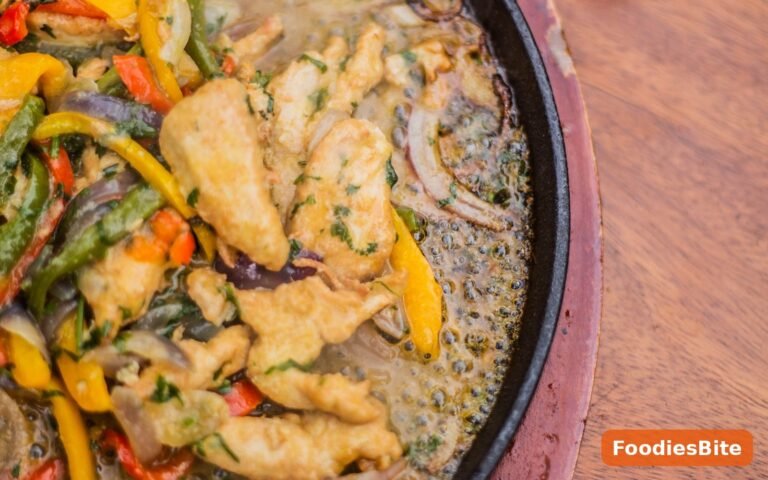
It is also endlessly adaptable. Like your food mild? Leave the chilies out. Want it fiery? Add more. Vegetarian night? Swap the chicken for tofu or mushrooms and use the same sauce. Need to use up vegetables? Bell peppers, green beans, and onions all work beautifully in the pan. The recipe below is the version I make most often, but it is really a template, and once you understand the sauce and the method, you can adjust it to whatever your household likes. If you enjoy bold, fast skillet dinners, you will also love our easy chicken fajitas skillet, which is built on the same idea: a hot pan, a good sauce, and dinner in minutes.
Finally, it is a one-pan meal with almost no washing up. One skillet, one small bowl for the sauce, a cutting board, and a knife. That is the whole cleanup. On a busy night, that matters almost as much as the flavor. Serve it over rice you made earlier in the week or a pouch of microwave jasmine rice, add a fried egg if you are feeling generous, and dinner is done.
Ingredients You’ll Need
For four servings of Thai basil chicken stir fry, you will need about one and a half pounds of boneless, skinless chicken thighs, cut into small bite-sized pieces. For the sauce, gather three tablespoons of soy sauce, two tablespoons of oyster sauce, one tablespoon of fish sauce, one tablespoon of brown sugar, and one teaspoon of dark soy sauce if you have it — it adds color and a deeper flavor, but it is optional. You will also need three tablespoons of neutral oil such as vegetable or sunflower oil, five cloves of garlic thinly sliced, two to three Thai bird chilies thinly sliced (or one jalapeño, sliced, for a milder heat), one small onion sliced, one red bell pepper sliced, and two big handfuls of Thai basil leaves, about two cups loosely packed, stems removed.
Chicken thighs are the right cut here, and I would encourage you not to substitute breasts unless you have to. Thighs stay juicy at high heat, they have more flavor, and they are forgiving if you overshoot the cooking time by a minute. Breasts work, but they dry out faster in a hot wok, so if you use them, cut them small and cook them quickly. Either way, cook the chicken until it reaches 165°F (74°C) at the thickest part — the USDA food safety guidelines are the standard to follow, and a quick-read thermometer makes it easy to be sure.
Thai basil is the soul of this dish, so it is worth finding the real thing. Look for it at Asian grocery stores, where it is usually sold in bunches near the other herbs. Thai basil has narrow, slightly purple-tinged leaves and a sweet, anise-like scent that is quite different from Italian basil. If you can only find regular basil, use it — the dish will still be good — but use a little more of it, since the flavor is milder. Holy basil, if you can find it, is the traditional choice and has a peppery, clove-like bite that is wonderful. Whichever basil you use, pick the leaves off the stems and do not chop them; whole leaves wilt beautifully into the hot sauce and look gorgeous on the plate.
Fish sauce is the ingredient that makes people nervous, and I understand why — it smells strong straight from the bottle. But in the pan, it disappears into the sauce and leaves behind a deep, savory flavor that salt alone cannot provide. It is the backbone of Thai cooking, and a tablespoon in this recipe will not make the dish taste fishy. If you truly cannot use it, soy sauce with a pinch of sugar is the closest substitute, but I encourage you to try the real thing at least once. Oyster sauce adds sweetness and body to the sauce, and together with the soy sauce and brown sugar, it creates that balanced sweet-salty flavor that defines the dish. For more chicken inspiration, the chicken recipes collection at BBC Good Food is a good place to browse.
How to Make Thai Basil Chicken Stir Fry
Start by mixing the sauce. In a small bowl, stir together the soy sauce, oyster sauce, fish sauce, brown sugar, and dark soy sauce if you are using it, until the sugar dissolves. Set it aside within reach of the stove. This takes thirty seconds, and it is worth doing before you turn on the heat, because once the pan is hot, everything moves fast and you will not have time to measure sauces. While you are at it, get the rice going if you are serving it fresh — jasmine rice takes about fifteen minutes, which is exactly the time you need to prep and cook the chicken.
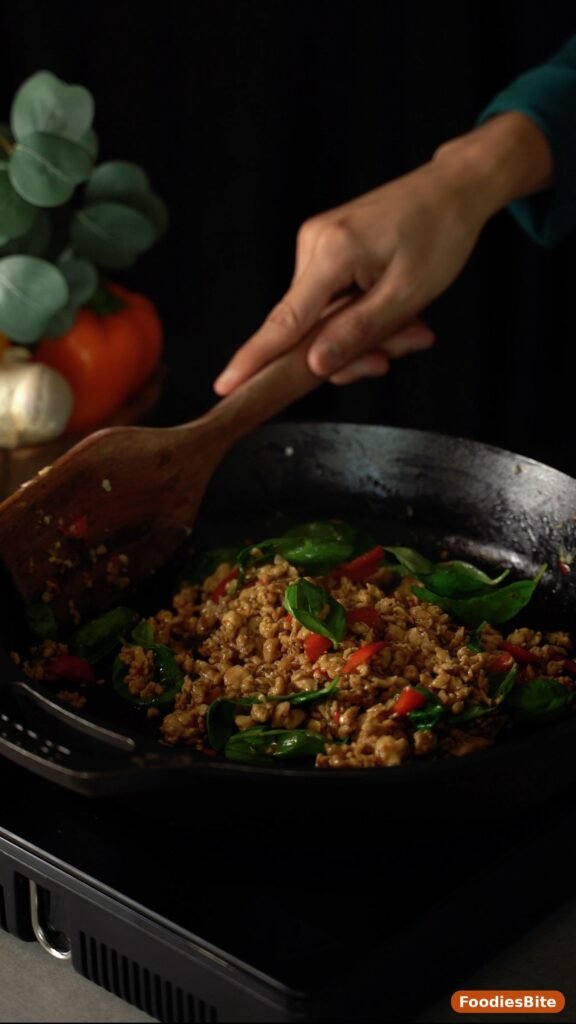
Prepare all of your ingredients before you start cooking. Slice the chicken into small, even pieces, about the size of a postage stamp, so they cook quickly and evenly. Slice the garlic thinly, slice the chilies, slice the onion and bell pepper, and pick the basil leaves off their stems. Put everything in small bowls or piles on a plate near the stove. Stir frying is a sprint, not a marathon: once the pan is hot, you will be adding ingredients every thirty seconds, and there is no time to chop an onion while the garlic is already in the pan. This kind of preparation is what makes the difference between a calm, delicious stir fry and a frantic, burnt one.
Heat the oil in a large wok or skillet over high heat until it shimmers and just begins to smoke. Add the chicken in a single layer and let it sear undisturbed for two minutes so it browns properly. Stir it and cook for another two to three minutes, until it is browned on the outside and cooked through. The chicken will release some liquid at first — this is normal. Let the liquid cook off and the chicken start to brown again before you move on. If your pan is small, cook the chicken in two batches; crowded chicken steams, and steamed chicken never gets those golden, slightly crisped edges that make a stir fry so good.
Push the chicken to one side of the pan and add the garlic, chilies, and onion to the empty space. Stir-fry for thirty seconds until the garlic is fragrant and the onion starts to soften, then add the bell pepper and cook for another minute. Now pour in the sauce, stirring everything together so the chicken and vegetables are coated. The sauce will bubble and thicken almost immediately — let it cook for one to two minutes, stirring constantly, until it clings to the chicken and the pan looks glossy rather than wet. Taste it now: if it needs more salt, add a splash of soy sauce; if it needs more sweetness, a pinch more sugar; if it needs more heat, another sliced chili.
Turn off the heat and add the basil leaves, tossing them through the hot chicken until they wilt — this takes about thirty seconds. The basil should be wilted and fragrant, not cooked to a dark mush, so do not leave the pan on the heat while you add it. The residual heat is more than enough. Serve immediately over steamed jasmine rice, topped with a fried egg if you like. The traditional Thai way is with a crispy-edged fried egg, the yolk still runny, and I highly recommend it: the yolk mixes into the rice and sauce and makes the whole plate richer and more satisfying. If you enjoy saucy one-pan chicken dishes with a completely different flavor profile, our chicken pot pie with flaky crust is the cozy, comforting cousin of this fast, fiery stir fry.
Tips for the Best Thai Basil Chicken
The most important tip is heat. A stir fry needs a genuinely hot pan — hotter than you think. If your pan is not hot enough, the chicken will steam instead of searing, and the whole dish will taste flat and watery. Heat the oil until it shimmers and just begins to smoke, then add the chicken and do not touch it for two full minutes. That contact with the hot metal is what creates the browning, and browning is where the flavor lives. If your stove is not very powerful, cook in smaller batches so the pan stays hot.
The second tip is to prep everything before you start. I said it above, and I am saying it again, because it is the single most common reason home stir fries go wrong. The cooking takes less than ten minutes, and every ingredient goes in at a specific moment. If you are still chopping the bell pepper while the garlic is in the pan, the garlic will burn, and burnt garlic tastes bitter and ruins the dish. Ten minutes of chopping before you turn on the heat saves the whole meal.
Third, do not skimp on the basil. Two cups of leaves looks like an enormous amount when you pick them, but basil wilts down to almost nothing in the hot pan, and it is the flavor that defines the dish. If you use a sad little sprinkle, the dish will taste like generic chicken stir fry. Be generous. And add the basil off the heat, so it wilts gently and keeps its bright color and fragrance instead of turning dark and bitter.
Finally, taste the sauce before you serve. Every brand of soy sauce and fish sauce is a little different, and the balance of salty, sweet, and spicy is a matter of personal taste. The recipe as written is balanced for most palates, but if you like it sweeter, add a pinch more sugar; if you like it saltier, a splash more soy sauce; if you like it hotter, another chili. The best stir fry is the one seasoned to your taste, not to a recipe’s. For another one-pan dinner built on the same principles, try our one-pan chicken and vegetable curry, which is just as fast and just as forgiving.
Variations to Try
The easiest variation is the protein. Tofu works beautifully here: use extra-firm tofu, press it well, cut it into cubes, and fry it until golden before adding the garlic and chilies. Ground chicken or ground pork are also traditional in Thailand, and they cook even faster than diced thighs — just break the meat up in the pan and let it brown well before adding the sauce. Shrimp is another excellent choice, though it cooks in just two to three minutes, so add it after the garlic and chilies and be careful not to overcook it. Mushrooms, especially shiitake or oyster mushrooms, make a wonderful vegetarian version with a meaty, savory flavor.
For a vegetable-packed version, add green beans, sliced carrots, or baby corn to the pan along with the bell pepper. Green beans are particularly good: they stay crisp and add a fresh, green crunch that contrasts nicely with the rich sauce. Just slice them into short pieces and give them an extra minute in the pan. A handful of sliced mushrooms added with the onion also works well, and they soak up the sauce beautifully.
If you want a different kind of heat, swap the Thai bird chilies for a sliced jalapeño, a pinch of dried chili flakes, or a spoonful of chili garlic sauce stirred into the sauce. Each one gives a slightly different heat — fresh chilies are bright and sharp, dried flakes are warmer and more lingering, and chili garlic sauce adds a garlicky depth. And if you are cooking for people who do not like heat at all, leave the chilies out entirely and add a little extra bell pepper; the dish will still be delicious, just milder.
For a heartier meal, serve the stir fry over noodles instead of rice. Rice noodles, egg noodles, or even spaghetti all work — just toss the hot noodles with the chicken and sauce in the pan for a minute before serving, and add a squeeze of lime. A fried egg on top is traditional and highly recommended whatever you serve it with, and a cucumber salad on the side — sliced cucumber with rice vinegar, sugar, and a pinch of salt — is the perfect cool, crisp contrast to the heat of the stir fry.
Serving Ideas
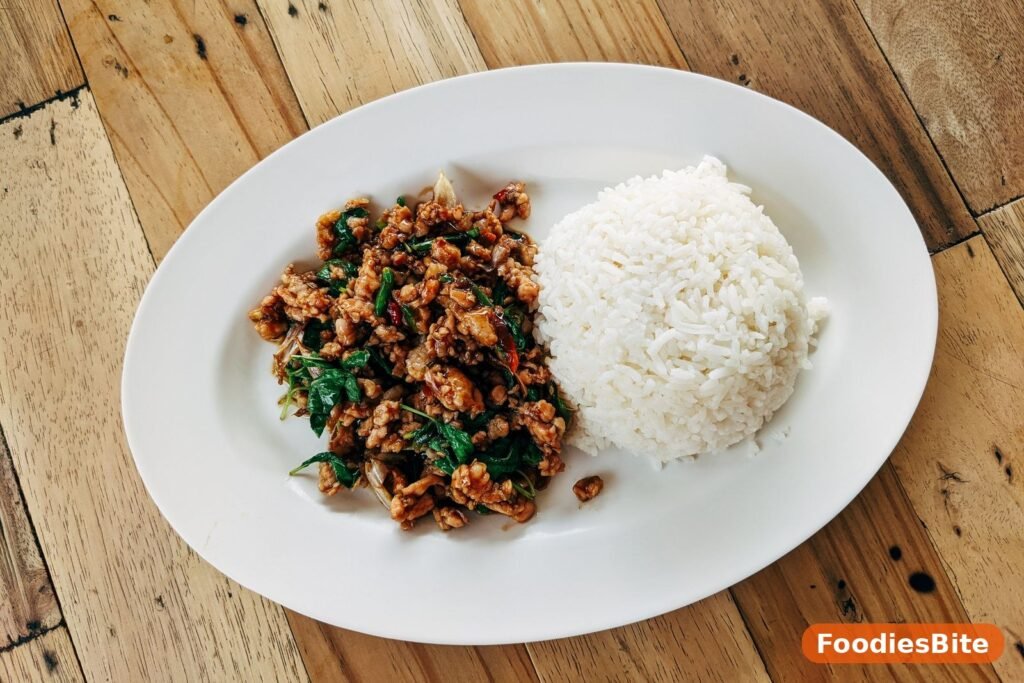
The classic way to serve Thai basil chicken is over a mound of steamed jasmine rice, with a fried egg on top. The rice soaks up the sauce, the egg yolk adds richness, and the whole plate comes together in a way that is greater than the sum of its parts. If you want the egg to be truly Thai-style, fry it in a little hot oil until the edges go crispy and lacy and the yolk is still runny — it takes about two minutes and it is worth the extra pan.
For a lighter meal, serve the stir fry over cauliflower rice or with a big pile of steamed vegetables on the side. It is also excellent wrapped in lettuce leaves, like a Thai-style lettuce cup, with a little rice and a squeeze of lime. If you are feeding a crowd, set up a small buffet: a big bowl of rice, the stir fry in the pan, fried eggs, sliced cucumber, and a bottle of chili sauce on the table, and let everyone build their own plate. It is casual, fun, and it means you are not stuck in the kitchen plating while everyone else is eating.
As for drinks, a cold beer or a glass of iced tea is the traditional accompaniment, and both work well with the heat of the chilies. A simple cucumber salad — sliced cucumber, rice vinegar, a pinch of sugar, and a little salt — is the best side dish, because it is cool, crisp, and refreshing against the spicy, savory chicken. A small bowl of clear soup, like a simple chicken broth with greens, is also lovely if you want to make the meal feel more complete.
Storage and Reheating
Leftover Thai basil chicken keeps well in the refrigerator for three to four days. Store it in an airtight container, with the rice stored separately if you have any left over. The basil will darken overnight — that is normal, and it does not affect the flavor — but if the color bothers you, stir in a few fresh basil leaves when you reheat it, and the dish will look bright and fresh again.
To reheat, warm the chicken in a skillet over medium heat, adding a splash of water or chicken stock to loosen the sauce. Stir it for two to three minutes until it is heated through, then serve it over freshly made rice. The microwave also works in a pinch: reheat in short bursts, stirring between each one, so the chicken heats evenly and does not dry out. I would not freeze this dish, though — the basil turns dark and mushy when frozen, and the sauce loses its freshness. It is so fast to make from scratch that there is rarely a reason to freeze it.
If you have leftover sauce ingredients, the sauce mixture itself keeps in the refrigerator for a week in a small jar, and it is wonderful drizzled over grilled chicken, tossed with noodles, or used as a stir fry sauce for whatever vegetables are in your fridge. I often make a double batch of the sauce on a Sunday and use it for two quick dinners during the week.
Frequently Asked Questions
What is the difference between Thai basil and holy basil?
Thai basil, also called sweet basil, has narrow leaves with a slightly purple stem and a sweet, anise-like flavor. Holy basil has a more peppery, clove-like flavor and is the traditional herb for pad krapow in Thailand. Both are delicious in this dish. Thai basil is much easier to find outside Southeast Asia, so it is what most recipes — including this one — call for. If you find holy basil at an Asian grocery, use it exactly the same way. Regular Italian basil is a fine substitute, though the flavor is milder and sweeter, so use a generous amount.
Can I make Thai basil chicken without fish sauce?
Yes, you can, though the flavor will be a little less complex. Replace the fish sauce with an extra tablespoon of soy sauce and a pinch of sugar. The dish will still be savory, sweet, and delicious — it just will not have quite the same depth that fish sauce provides. If you are avoiding fish sauce because of the smell, know that it disappears completely once it hits the hot pan, and the finished dish does not taste fishy at all. If you are avoiding it for dietary reasons, the soy sauce swap is the version to use.
How spicy is this recipe?
With two to three Thai bird chilies, this recipe is moderately spicy — a pleasant warmth that builds as you eat, but not so hot that it overwhelms the other flavors. Thai bird chilies are small but potent, so if you are sensitive to heat, start with one chili and taste before adding more. For a mild version, leave the chilies out entirely and add a little extra bell pepper. For a fiery version, add four or five chilies, or leave the seeds in — the seeds and membranes are where most of the heat lives. You can also serve sliced chilies in fish sauce on the side, so each person can add as much heat as they like.
Can I use chicken breast instead of thighs?
Yes, you can, though thighs are the better choice for this dish because they stay juicy at high heat. If you use breasts, cut them into small, even pieces and cook them quickly — they will dry out if they spend too long in the hot pan. Cook them in a single layer, do not overcrowd the pan, and pull them from the heat the moment they reach 165°F. Some cooks prefer to slice the breast very thinly, almost like a stir fry cut, which helps it cook fast and stay tender. Either way, the sauce and basil will still make the dish delicious.
What should I serve with Thai basil chicken?
Steamed jasmine rice is the classic pairing, and a fried egg on top is the traditional Thai way to serve it. The yolk mixes into the rice and sauce and makes the whole plate richer. A cucumber salad is the best side dish — cool, crisp, and refreshing against the heat of the chilies. You can also serve it with rice noodles, in lettuce cups, or over cauliflower rice for a lighter meal. A cold drink, like iced tea or a light beer, is the perfect accompaniment.
Can I make this ahead of time?
Thai basil chicken is best eaten fresh from the pan, when the basil is bright and the sauce is glossy. That said, it reheats well for three to four days in the refrigerator, and it makes excellent leftovers for lunch. Reheat it gently in a skillet with a splash of water, and stir in a few fresh basil leaves at the end to brighten it up. I would not make it more than a day ahead for guests, though, because the basil darkens overnight and the sauce loses a little of its freshness. If you are meal prepping, cook the chicken and sauce, store them separately from the rice, and add fresh basil when you reheat.

One Comment